
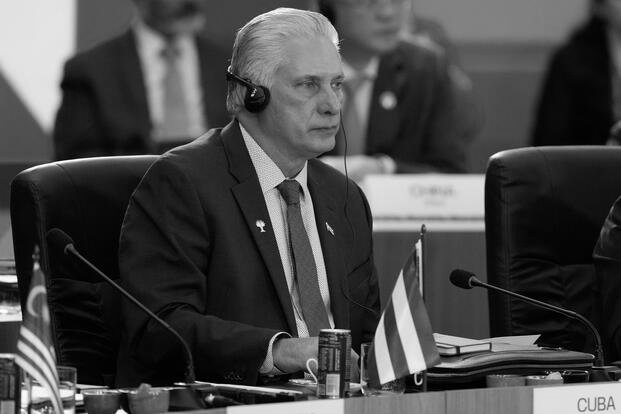
Cuban president says talks held with US recently to resolve differences
Cuba has confirmed that it recently held talks with the United States government, marking the first public acknowledgement of such exchanges as the island struggles with a deepening energy and economic crisis.
President Miguel Díaz-Canel said the discussions were aimed at finding solutions through dialogue to long-standing bilateral differences. He said international circumstances facilitated the exchanges but did not provide details. The White House did not immediately comment.
The confirmation comes as Cuba faces one of its most severe crises in decades. Diaz-Canel said the country has not received petroleum shipments for three months, which he blamed on a US energy blockade. The shortage has forced Cuba to rely on natural gas, solar power and ageing thermoelectric plants to generate electricity.
The lack of fuel oil and diesel has already forced two power plants to shut down and reduced output at solar facilities. Last week, a major blackout struck western Cuba, leaving millions without electricity and highlighting the fragility of the island’s power grid.
Cuba produces about 40 per cent of its petroleum domestically, but officials say that is far from enough to meet demand. The energy crisis has disrupted communications, transportation and education, while hospitals have postponed thousands of surgeries due to unstable electricity supply.
Daily life has become increasingly difficult for many Cubans, with frequent blackouts, food shortages and limited public transport . Authorities have converted more than 115 bakeries to operate using firewood or coal and have installed solar panels in rural homes and social centres.
Rising hardship has fuelled sporadic protests in recent years, including demonstrations over electricity shortages and high food prices. However, public protests remain rare because Cuba’s political system tightly controls dissent, and participants risk detention.
Diaz-Canel said the talks were intended to assess whether both countries could take concrete steps to address bilateral problems and explore cooperation to maintain regional security and stability.