
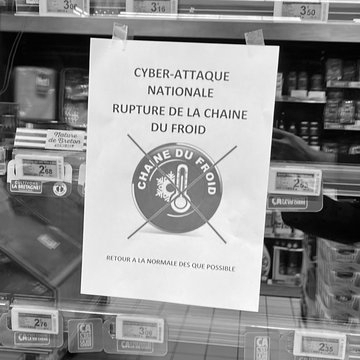
Cyberattacks Hit European Supermarkets, Disrupt Refrigeration At Hundreds Of Stores
Cyberattacks have disrupted refrigeration systems at hundreds of European supermarket stores, affecting food preservation in France and forcing Dutch retail giant Ahold Delhaize to shut down customer-facing websites across Europe and the United States.
French Finance Minister Roland Lescure told Parliament on Tuesday that around 700 of France’s 10,000 supermarkets had been affected. While he said the attacks posed no threat to the country’s food supplies, he described them as a serious challenge to food security. “It was a wake-up call for everyone,” he said.
French supermarket group Groupement Mousquetaires, which operates more than 4,000 stores across Europe, reported disruptions at 300 Intermarché and Netto outlets. Cooperative U CEO Dominique Schelcher said 80 of the chain’s 2,000 stores were affected, with some forced to discard food. Carrefour and Monoprix were also impacted.
According to French broadcaster BFM-TV, hackers manipulated refrigeration controls, triggering continuous defrost cycles and raising temperatures to as high as 50 degrees Celsius. Some refrigerated and frozen food display cases remained out of service on Tuesday. The Paris prosecutor’s cybercrime unit is investigating the attack, including reports of spoiled food and fires.
Meanwhile, Ahold Delhaize said its Albert Heijn stores in the Netherlands, Delhaize in Belgium, and Stop & Shop, Food Lion and Giant outlets in the US remained open, although their websites were offline. The company said it had found no evidence of customer or employee data theft.
France’s cybersecurity agency reported numerous compromises involving remote-control modules manufactured by Denmark’s Danfoss and US-based Copeland. Danfoss said most affected systems were older products no longer receiving security updates. Both companies said they were working with affected customers.
A US cybersecurity firm, Claroty, had identified vulnerabilities in refrigeration management platforms from both manufacturers in an August report. It warned that some Danfoss controllers were directly accessible over the public internet. The companies said the identified vulnerabilities had since been addressed or involved discontinued equipment.
Christopher Whyte, a homeland security professor at Virginia Commonwealth University, said such attacks could be relatively easy when supermarket controls were exposed to broader networks. Similar cyberattacks have targeted water systems and power infrastructure, while US military agencies are investigating separate refrigeration outages at military commissaries.
Experts said the French incident was unusual because of its scale and the apparent absence of ransom demands or data theft. Although investigators had not established whether artificial intelligence (AI) was involved, University of Illinois professor Varun Chandrasekaran warned that AI could increase cyberattacks. He also called for more proactive, AI-powered defensive systems to counter emerging threats.