
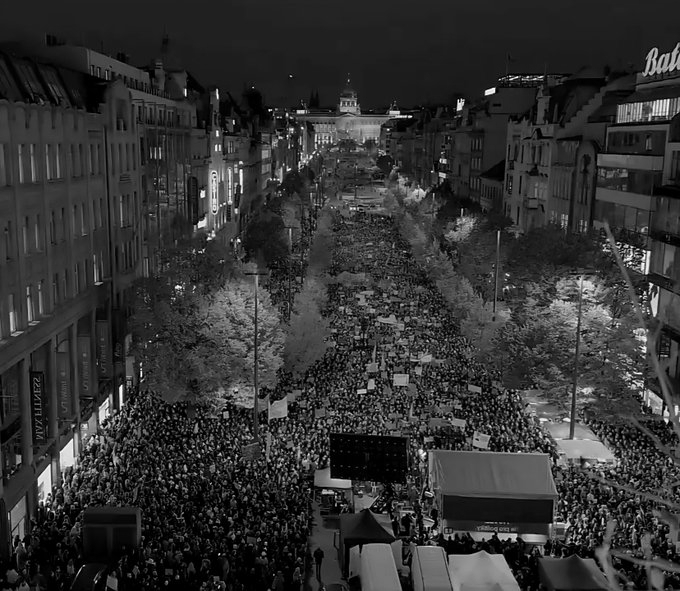
Czech Media Workers Strike Against Babis Government’s Funding Plan, Thousands Protest
Thousands of people took to the streets across the Czech Republic on November 3 as employees of public television and radio broadcasters staged an unprecedented one-day strike against Prime Minister Andrej Babis’ proposed changes to their funding system. The protesters fear the overhaul could weaken media independence by making public broadcasters financially dependent on the government.
Under the proposed legislation, Czech Television and Czech Radio would receive funding directly from the state budget instead of collecting regular licence fees from households, individuals and businesses. The change is expected to reduce their combined funding by approximately 15 per cent, or around 1.4 billion Czech crowns, potentially forcing staff layoffs, limiting production and leading to programme cancellations.
The strike disrupted regular broadcasting. Czech Television aired archived programmes and shorter news bulletins, while its news channel showed a darkened newsroom, with presenters dressed in black reading from scripts. Czech Radio replaced much of its regular programming with music, interrupted by a brief statement explaining the strike and a minute of silence.
The protest was supported by university students, labour unions, university deans, churches, artists, athletes and international media organisations. Thousands gathered at Prague's Wenceslas Square, demanding that the government withdraw the proposed legislation and hold a transparent public debate. Students also marched in Prague and other major cities.
Critics argue that shifting public broadcasters' funding to the state budget would give the ruling coalition greater influence over their finances and potentially their editorial decisions. They have pointed to Slovakia under Prime Minister Robert Fico and Hungary under former Prime Minister Viktor Orban as examples of how populist governments have challenged independent media.
The European Federation of Journalists, Reporters Without Borders and other organisations have warned that the proposed funding model could expose broadcasters to political pressure and threaten editorial independence.
However, Babis has rejected accusations that his government intends to take control of public media. He has defended the proposed changes as a way to reduce the financial burden on the public and has indicated that alternative funding arrangements could be discussed. The government maintains that the reform would not affect editorial independence.
The legislation passed its first parliamentary reading on October 24 but has not yet been finally approved. The government has also acknowledged that the changes will not take effect in January 2027 as initially planned, with further parliamentary discussions expected in January. The European Commission is separately examining the Czech government's response to concerns surrounding the proposed reform.