
'Death Traps' Across Mumbai: Congress Flags 4,446 Uncovered Manholes
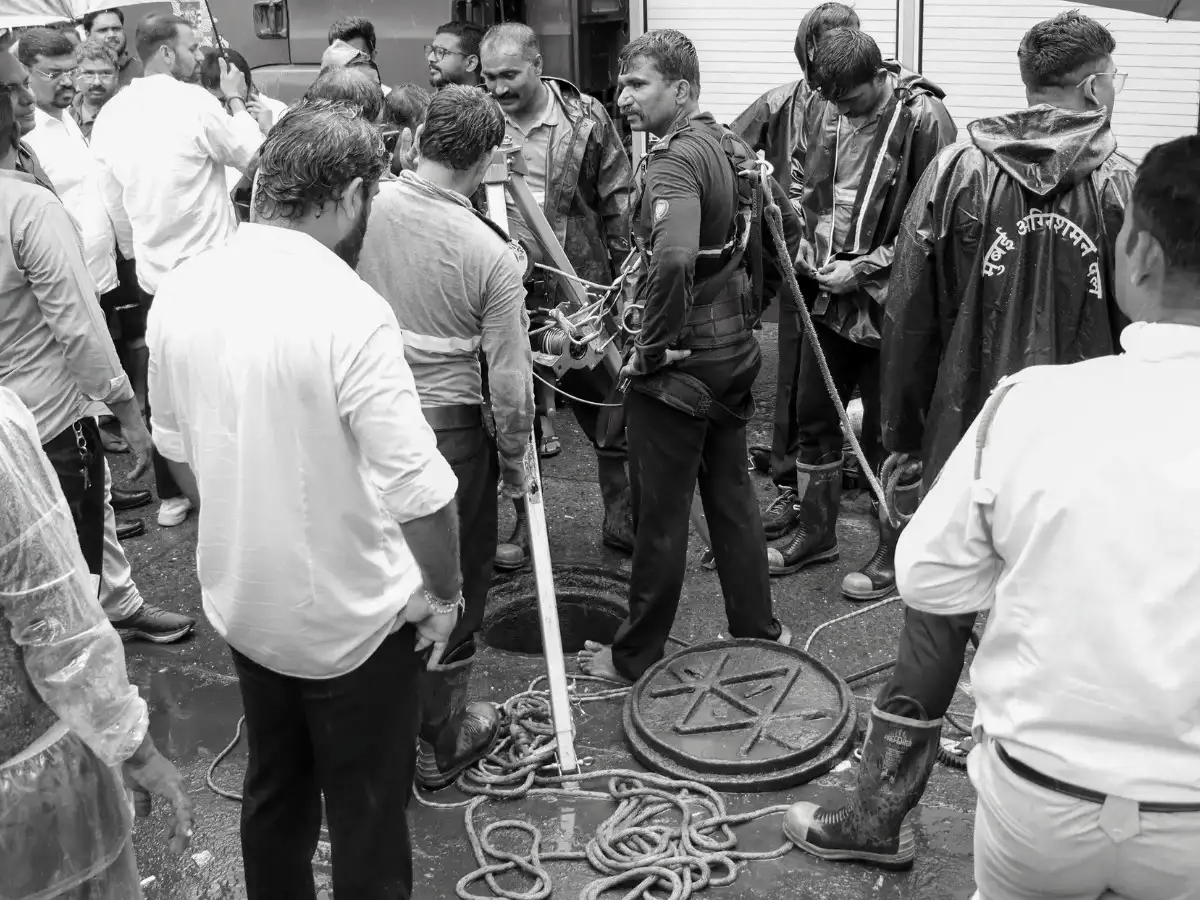
The tragic death of a 55-year-old man who fell into an open sewer during heavy rainfall has reignited concerns over Mumbai's drainage infrastructure , with the issue triggering sharp criticism in the Maharashtra Legislative Council on Friday.
Raising the matter in the House, Congress MLC Bhai Jagtap described the city's 4,446 uncovered manholes as "death traps" and urged the government to hold a detailed discussion on what he termed a serious public safety failure. According to Jagtap, Mumbai has 1,03,996 manholes , of which 96,383 are fitted with protective safety nets , leaving thousands still exposed despite recurring monsoon risks.
The remarks came a day after the fatal accident in which a man lost his life after falling into an open sewer amid incessant rains. The incident has once again highlighted the dangers posed by uncovered drainage openings, especially during the monsoon when waterlogging often conceals manholes from pedestrians and motorists.
Outside the House, Jagtap also questioned the progress of installing smart manholes , asking civic authorities how many such safety enabled systems have actually been deployed across the city. His remarks reflected growing concerns over whether promised technological upgrades have translated into improved public safety on the ground.
Following Thursday's tragedy, the Brihanmumbai Municipal Corporation (BMC) acted swiftly by suspending four civic officials and announcing the formation of a high level inquiry committee to investigate the circumstances that led to the incident. The civic body is expected to examine whether lapses in maintenance, inspection, or safety protocols contributed to the fatal accident.
The episode has once again put the spotlight on Mumbai's monsoon preparedness, with calls growing louder for stronger preventive measures and faster action to eliminate open manholes from public roads. Civic safety experts have long argued that even a single uncovered manhole can pose a life threatening risk during heavy rains, making comprehensive coverage and regular inspections essential to prevent such tragedies from recurring.