
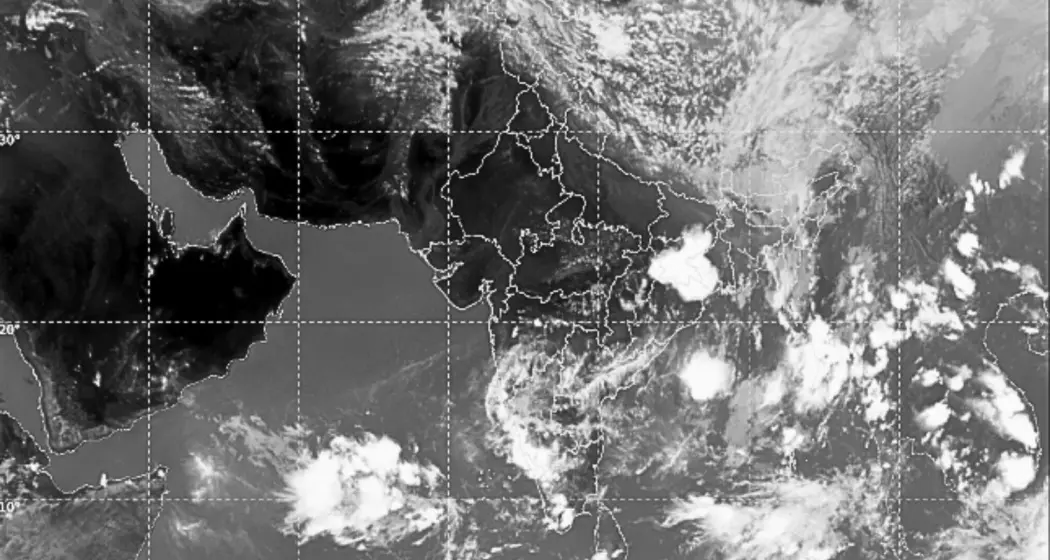
Delayed but Advancing: IMD Says Monsoon Activity Intensifies Over Southern Waters
The southwest monsoon has continued its gradual advance across the Arabian Sea , Lakshadweep and parts of the Bay of Bengal , even as Kerala missed the expected onset date of May 26, according to the India Meteorological Department (IMD) .
In its latest update issued on Wednesday, the IMD said weather conditions remain favourable for the monsoon to move further into additional parts of the southwest and southeast Arabian Sea, Lakshadweep region, eastcentral and westcentral Bay of Bengal, and parts of northeast Bay of Bengal over the next two to three days.
While the delay in Kerala’s onset has drawn attention, meteorologists clarified that such variations are not unusual. The monsoon typically arrives over Kerala around June 1 and marks the official beginning of India’s crucial four month rainy season extending from June to September. Last year, however, the monsoon had made an unusually early arrival on May 24 .
The progress of the southwest monsoon is closely watched across the country as it plays a critical role in India’s economy and agriculture. More than 70 per cent of India’s annual rainfall is received during these months, supporting crop cultivation, replenishing groundwater reserves, generating hydroelectric power and ensuring drinking water availability in several regions.
Despite the current advancement, concerns remain over the overall performance of this year’s monsoon season. Earlier in April, the IMD had forecast below normal rainfall for the country during the 2026 monsoon season. India is expected to receive nearly 80 cm of rainfall against the long period average of 87 cm .
The department has indicated that most regions may witness lower than normal rainfall, although parts of Northeast India , Northwest India and South Peninsular India could still receive normal to above normal showers.
One of the major factors behind the subdued forecast is the possible development of El Niño conditions over the Pacific Ocean. El Niño is generally associated with weaker monsoon activity over India and has historically impacted rainfall patterns and agricultural output.
According to the IMD, the currently neutral ENSO conditions are gradually moving toward El Niño. Similar conditions had previously developed in 2002, 2009, 2015 and 2023 , years that experienced rainfall stress in several parts of the country.
With the farming season approaching rapidly, farmers, policymakers and businesses are expected to closely monitor the monsoon’s pace and distribution in the coming weeks, as even small variations in rainfall can significantly impact food production, inflation and the broader economy .