
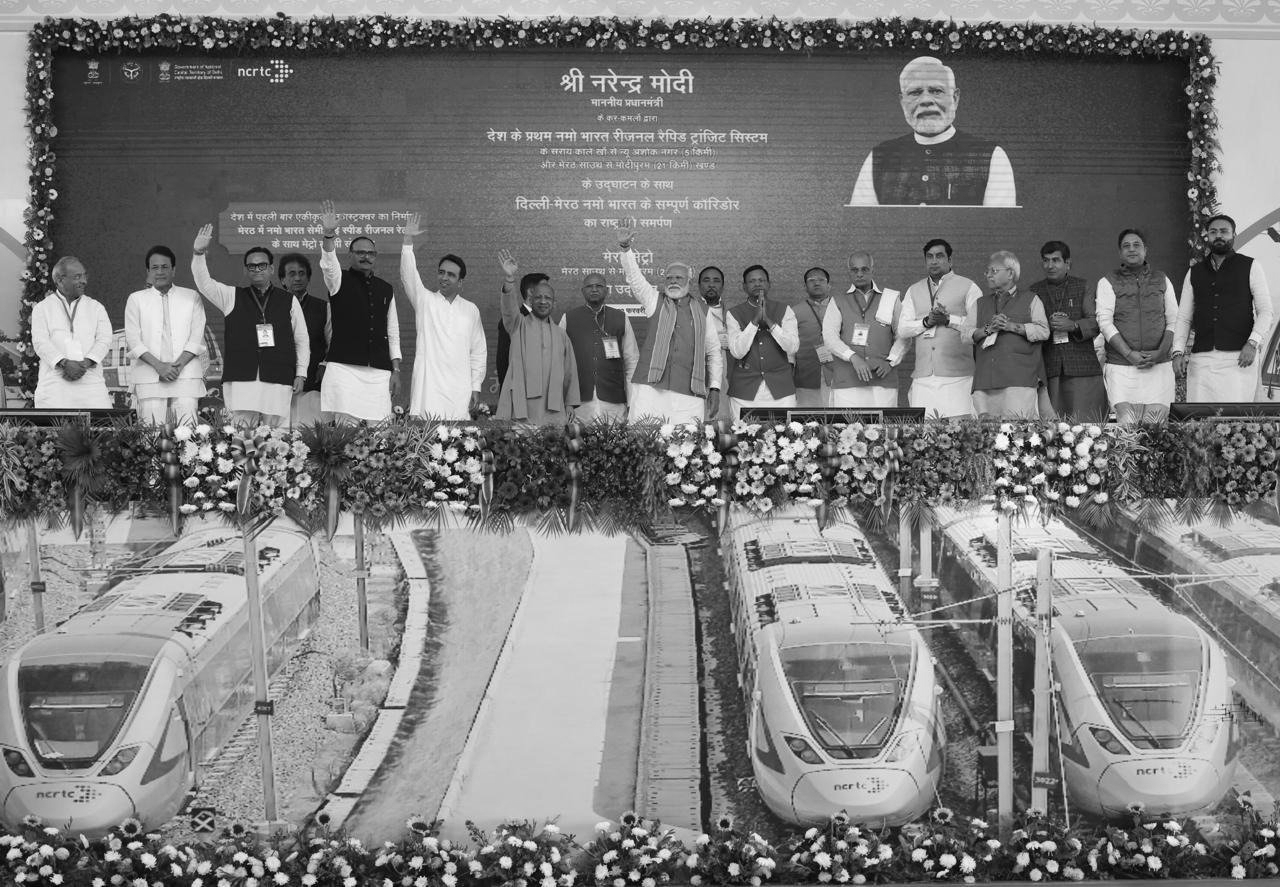
Delhi - Meerut Corridor Redefines Commuting with India’s First Rapid Regional Rail
Prime Minister Narendra Modi’s inauguration of the Namo Bharat Rapid Rail Transit System (RRTS) alongside the Meerut Metro marks a defining moment in India’s transport evolution, signalling a shift toward a multi-tier rail network built to meet diverse travel needs. The Delhi–Meerut corridor is historic not merely for enhancing connectivity in the National Capital Region (NCR), but for introducing a system where regional rapid rail and metro services operate from the same platform , allowing passengers to move seamlessly between city and intercity routes.
This project reflects India’s broader mobility transformation, where different train systems serve distinct passenger segments. Vande Bharat Express trains represent the country’s premium semi-high-speed intercity travel option. Designed for comfort, speed, and efficiency, they connect major cities with modern amenities, improved safety, and reduced travel times, offering a superior alternative to traditional express services.
At the other end of the spectrum, Amrit Bharat Express trains focus on affordability and capacity. Built to modernize long-distance non-AC travel, they provide improved seating, better luggage space, and enhanced passenger facilities while keeping fares accessible. These trains aim to improve travel conditions for the country’s largest passenger segment and gradually replace aging rolling stock.
Namo Bharat trains , however, introduce an entirely new category in India’s rail ecosystem. As part of the Regional Rapid Transit System, they are designed for high-speed daily commuting between cities within a 100–250 km radius. With speeds up to 160 km/h and high-frequency services during peak hours, they function like a high-speed metro linking urban clusters. The Delhi–Meerut route dramatically cuts travel time, making daily intercity commuting practical for workers, students, and businesses.
What sets Namo Bharat apart is its integration of speed, frequency, and multimodal connectivity. Stations link seamlessly with metros, buses, and conventional rail networks, enabling smooth transitions across transport modes. The system is expected to reduce congestion, curb pollution, and ease housing pressure in megacities by enabling people to live in satellite towns while working in major urban centres.
Indian Railways carries over two crore passengers daily, with conventional trains handling the vast majority. Premium services like Vande Bharat serve a growing intercity segment, while Amrit Bharat supports mass long-distance travel. Namo Bharat currently serves a smaller share due to its limited network, but ridership is expected to surge as new corridors become operational.
Over the next decade, India plans to expand RRTS corridors, deploy more Vande Bharat trains including sleeper variants, scale up Amrit Bharat services, and build integrated transport hubs. Together, these initiatives aim to reduce congestion, support regional growth, and enable transit-oriented development.
With Vande Bharat enabling fast intercity journeys, Amrit Bharat ensuring affordable long-distance connectivity, and Namo Bharat redefining regional commuting , India is building a future-ready mobility system tailored to a rapidly urbanizing nation.