

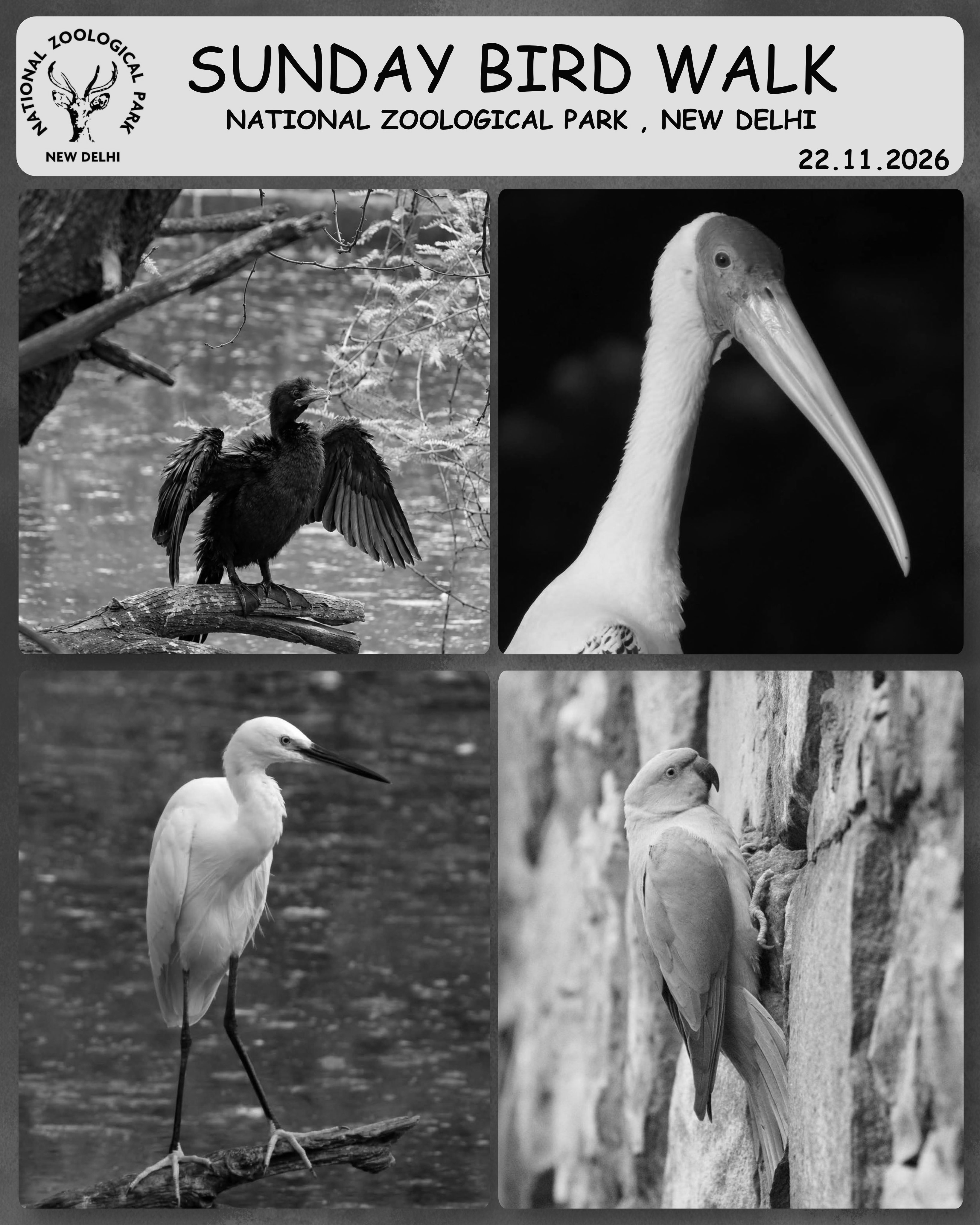
Delhi Zoo Records 45 Bird Species, Highlights Urban Biodiversity
The National Zoological Park (NZP) in New Delhi recorded 45 bird species and more than 400 individual birds during its 22nd Sunday Bird Walk on November 22, highlighting the ecological importance of its green spaces, ponds and diverse habitats in sustaining urban biodiversity. The three-hour exercise, conducted between 7.30 am and 10.30 am, brought together 10 nature enthusiasts, students, wildlife photographers and citizens, who documented the birds under the guidance of experts and volunteers.
The initiative promotes citizen science and wildlife conservation awareness, offering participants practical exposure to bird identification, behaviour and ecology. Addressing the participants, NZP Director Dr. Sanjeet Kumar emphasised that public participation in biodiversity documentation could strengthen conservation efforts. He highlighted the role of birds in natural pest control, maintaining ecological balance and indicating environmental health.
The latest findings add to the zoo's established biodiversity records. A scientific study titled Avifaunal Diversity of National Zoological Park, Delhi, published in e-Planet in June 2021, documented 124 species belonging to 52 families during observations conducted between January 20 and November 30, 2020. These comprised 69 non-passerines and 55 passerines, including 76 resident birds, 31 winter migrants, 12 summer migrants and five local migrants. Black Kites, Common Mynas, Jungle Babblers, Indian Peafowl, Grey Hornbills, Alexandrine Parakeets and Yellow-footed Green Pigeons featured among the prominent species.
The zoo's wetlands are particularly significant for waterbirds. The January 2026 Asian Waterbird Census recorded 1,310 birds belonging to 18 species, including approximately 930 Painted Storks. Other sightings included egrets, herons, cormorants, ducks, lapwings, pelicans and kingfishers. Painted Storks also use the zoo's ponds for breeding, with more than 300 birds reportedly involved in colonial nesting during September 2026. Hatchlings were observed in some nests.
The zoo's biodiversity is supported by ponds, shrubs, grasses and trees such as Neem, Mango, Jamun, Banyan, Peepal and Arjun. The 2020 study classified recorded birds into seven feeding groups: 52 insectivores, 20 piscivores, 15 omnivores, 14 frugivores, 14 carnivores, eight granivores and one nectarivore. The research also identified five Near Threatened and two Vulnerable species under the IUCN classifications used at the time.
Delhi's wider avian diversity stands at 471 recorded species, according to the Delhi Bird Atlas released in 2026. Meanwhile, the zoo's 21st bird walk on November 15 recorded 42 species and over 600 individual birds, with the Northern Shoveler added to its checklist.
The zoo accommodates 20–25 participants per walk, requiring prior registration through its official website or NZP Saathi mobile application. Regular monitoring, seasonal documentation and habitat protection could further strengthen its role as an important urban biodiversity refuge.