
Deputy CM Pawan Kalyan Calls for Social Unity, Rejects Caste-Based Politics
Andhra Pradesh Deputy Chief Minister and Janasena Party president Pawan Kalyan has asserted that he has never relied on caste-based politics and has no intention of doing so in the future, emphasising that any discussion on caste should be aimed at fostering social unity rather than creating divisions.
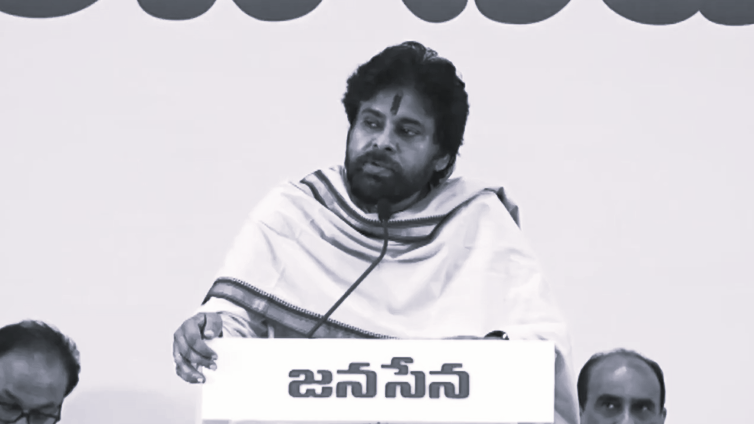
Addressing a meeting of Janasena’s Information Collection Committees for organisational development at the party headquarters in Mangalagiri, Pawan Kalyan outlined his vision for a more inclusive society and a stronger party structure. He said his long-term aspiration was to see a day when children from different social backgrounds live and learn together, rather than being separated into hostels based on caste categories.
The Janasena chief observed that leadership cannot be built on the support of a single community alone . He said anyone aspiring to lead society must earn the trust and confidence of people across all sections, adding that history has always favoured leaders who united diverse groups rather than those who sought to divide them.
Pawan Kalyan also criticised what he described as the growing tendency to view serious social issues through a caste lens. Referring to a recent incident involving the alleged abuse of a minor girl, he questioned the practice of extending support to individuals accused of grave crimes solely because they belong to a particular community. According to him, justice and humanity must take precedence over caste identity .
Without naming individuals, he accused the opposition YSR Congress Party of encouraging caste-driven political narratives and expressed concern over electoral strategies that focus on mobilising voters through social divisions. He said Janasena would continue to speak on issues based on what is right for society rather than what is politically convenient.
A significant portion of his speech focused on strengthening Janasena’s organisational framework . He said the newly formed Information Collection Committees were designed to identify and recognise dedicated grassroots workers who have contributed to the party over the years. The committees, he noted, comprise ordinary party activists, including homemakers, auto-rickshaw drivers, small business owners and daily wage earners, rather than outsiders.
Explaining their role, Pawan Kalyan said the committees were not meant to select leaders but to document the contributions of committed workers in a transparent manner . Their findings would be reviewed according to the party’s organisational guidelines.
He added that each parliamentary constituency would have a 28-member committee supported by a five-member team from his office. Stressing the importance of cadre-building, he said Janasena’s existing network of committed activists could become a formidable force if guided effectively, and urged party workers to prepare for future political challenges with discipline and dedication .