
Devji Ends 40-Year Underground Life, Chooses Legal Political Path
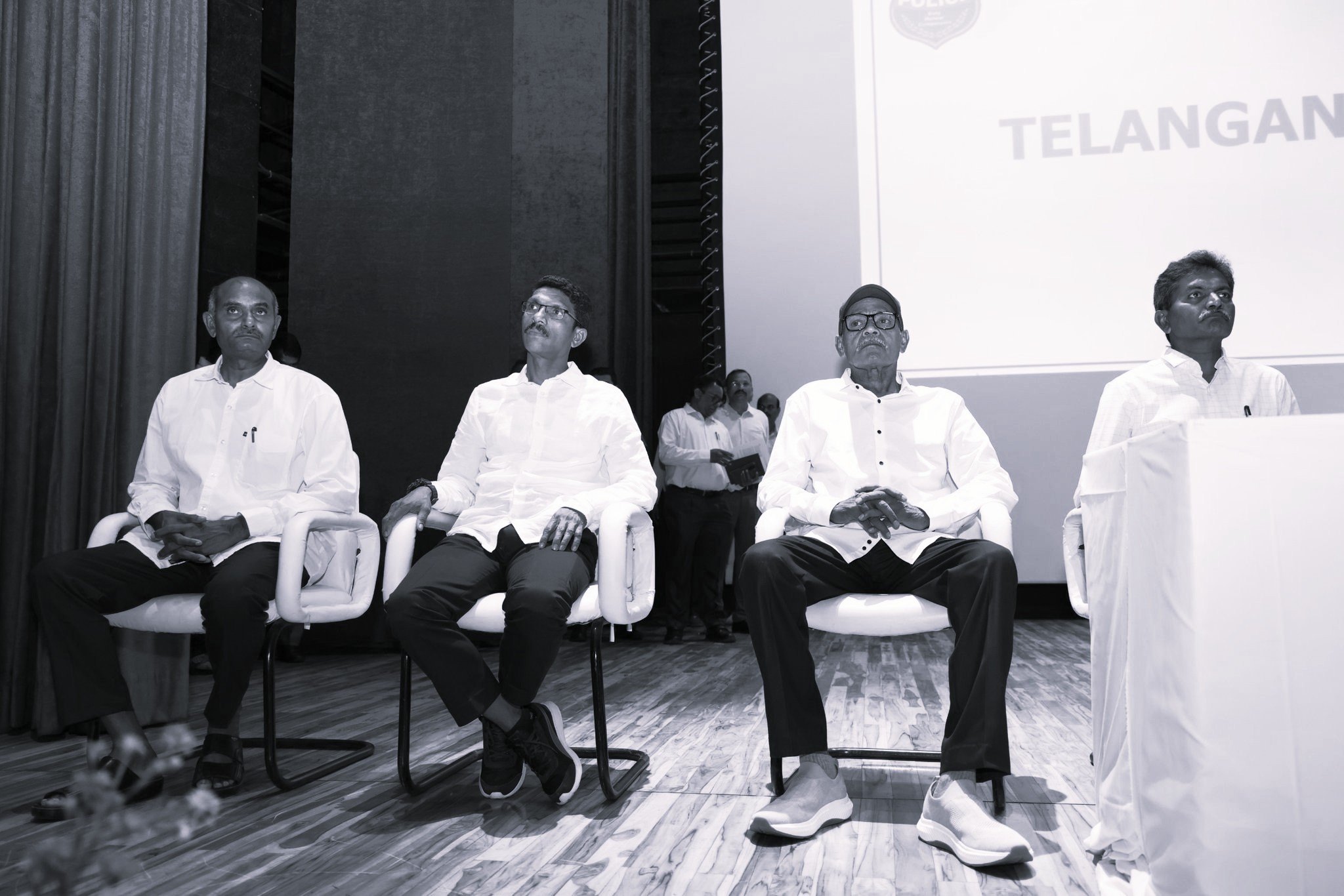
Tippiri Tirupati alias Devji , a senior leader of the banned CPI (Maoist) and a member of its Central Committee , has surrendered before Telangana police, ending more than four decades of underground life. The surrender took place in the presence of Telangana DGP B. Shivadhar Reddy , along with Central Committee member Malla Raji Reddy and state-level leaders Bade Chokka Rao alias Jagan and Noone Narasimha Reddy alias Ganganna, who also laid down arms and joined the mainstream. Police described Devji as a key strategist within the Maoist organisation. He became a Central Committee member in 2001 and has served as in-charge of the Central Military Commission since 2017. Officials said he was once viewed as a potential candidate for the party’s General Secretary role, but leadership meetings could not be convened due to sustained security pressure and internal constraints.
Speaking after his surrender, Devji said deteriorating health issues forced him to leave underground life. While reaffirming his commitment to his ideological beliefs, he stated that he would continue to raise public issues through legal and democratic means and pursue his political journey within the framework of the Constitution. Devji hails from Korutla in Jagitial district of Telangana and was born into a farming family. Influenced by radical student movements during his intermediate education, he entered political activism through the Radical Students Union and land rights struggles associated with the People’s War movement. He joined the movement in January 1982 and operated mainly in Chhattisgarh and Maharashtra , rising steadily through the ranks to become a Central Committee member and later assuming responsibility for military affairs.
Malla Raji Reddy, aged 76 and a native of Manthani in Peddapalli district , also surrendered after decades in the movement. He entered revolutionary politics through the Radical Students Union in the 1970s and, after surrendering, said they would continue participating in public struggles through lawful means while discussions continue with the government on outreach to remaining cadres. Officials consider these surrenders a major success of Telangana’s Surrender and Rehabilitation Policy . Chief Minister Revanth Reddy had appealed in October 2025 for Maoist cadres to renounce violence and return to mainstream society, and police sources say internal ideological differences, organisational fatigue, and the widening gap between doctrine and ground realities have weakened the movement’s cohesion.
The Telangana Police rehabilitation policy, introduced in 1993 , continues to play a crucial role in reintegration efforts. Since its inception, 5,865 Maoists have surrendered in the state. In 2025 alone , 544 underground cadres , including four Central Committee members, laid down arms. Rehabilitation support includes land allocation, financial assistance, education support, skill training, and livelihood opportunities, while pending criminal cases are reviewed sympathetically to facilitate reintegration. Security officials view the surrender of senior leaders as part of a broader strategy combining security measures with humanitarian outreach and development initiatives. Authorities have once again appealed to remaining Maoist cadres to abandon armed struggle and return to normal life, expressing confidence that with senior leaders choosing rehabilitation and lawful political participation, the movement is steadily losing organisational strength and ideological momentum in Telangana.