
Did Brexit Weaken Britain? PM Andy Burnham Says UK Lost More Than It Gained
UK Prime Minister Andy Burnham has criticised Brexit, saying Britain's departure from the European Union (EU) weakened the country's economy, damaged relations with European neighbours and undermined Europe's ability to counter Russia. Calling Brexit the “first domino” in a wider global shift towards isolationism and protectionism, Burnham argued that Britain had lost more than it gained over the past decade.
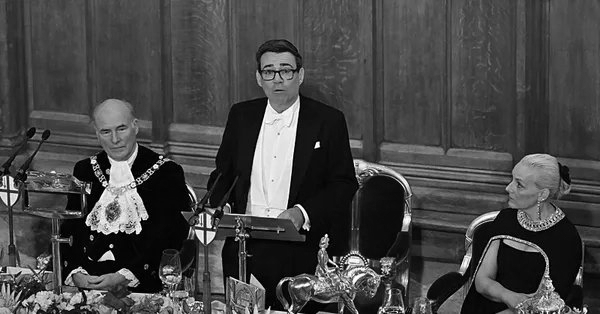
Speaking at the annual Lord Mayor's Banquet at Guildhall in London on Monday, Burnham said Brexit had contributed to divisions among Western allies at a time when international cooperation was increasingly important. He argued that Russia had wanted divisions within the North Atlantic Treaty Organisation (NATO) and a weaker Europe less capable of countering Moscow's actions in Ukraine.
“Looking back, Brexit was the first domino to fall in a global move towards more isolationism and protectionism,” he said, adding that vested interests rather than shared values were increasingly driving international affairs.
Burnham's remarks come ahead of the UK-EU summit scheduled for November 20 in Brussels, where he is expected to push for closer cooperation between Britain and the bloc. Using Hans Christian Andersen's fairy tale The Emperor's New Clothes, he questioned claims that Brexit had delivered the economic benefits promised to the British public.
“We have lost more than we have gained in the last 10 years. The hard Brexit we were given is not good enough for Britain,” he said.
Burnham cited estimates suggesting Brexit had reduced the size of the British economy by 4 to 8 per cent. The Office for Budget Responsibility (OBR) estimates a 4 per cent long-term reduction in GDP as a result of Brexit, although some other estimates suggest a larger impact. He acknowledged that financial services and technology had adapted well, while other industries continued to face difficulties.
However, Burnham stressed that his government was not seeking to reverse Brexit or abandon Labour's manifesto commitments. Instead, he called for practical changes that would improve the existing arrangements, deliver tangible benefits to ordinary people and remain consistent with the government's commitments.
Proposed areas of cooperation include reducing trade barriers and paperwork for farmers and food producers, improving energy cooperation and strengthening joint efforts against illegal immigration. Burnham said a closer relationship with the EU could potentially add up to 0.4 per cent to Britain's GDP.
He ruled out crossing the government's existing red lines before the next general election, while indicating that discussions about Britain's longer-term relationship with the EU would begin after the Brussels summit.
On defence and foreign policy, Burnham reiterated Britain's commitment to supporting Ukraine, strengthening NATO and increasing defence spending, while maintaining its close relationship with the United States. He also called for stronger Commonwealth engagement and cooperation with international partners on critical minerals, development finance and artificial intelligence.
Concluding his address, Burnham presented the proposed EU reset as an opportunity for Britain to regain international influence. “Britain is back in the game in a big way,” he said, describing a new approach based on shared values and international cooperation.