
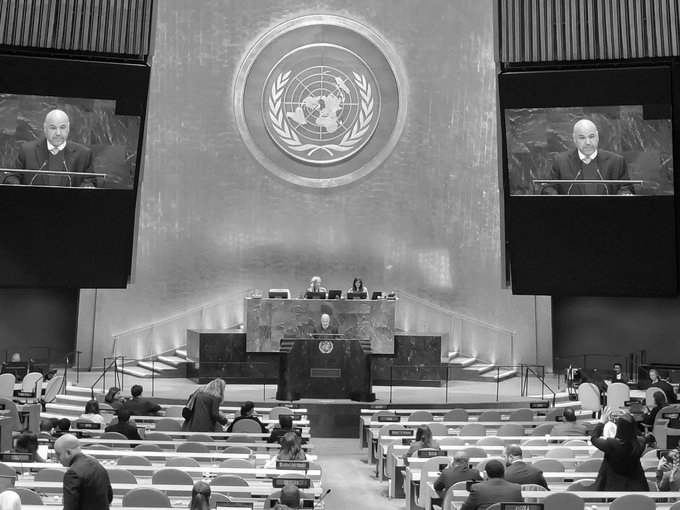
Done By Design, Not Mistake: India Slams Turkey Over Exclusion From UN Talks
India has strongly criticised Turkey for deliberately excluding New Delhi and several other countries from consultations on a United Nations resolution concerning cooperation between the UN and the Organisation of Islamic Cooperation (OIC). Calling the move “blatant and intentional”, India said the exclusion violated the principles of transparency, inclusivity and multilateral diplomacy.
India voted against the draft resolution, which was adopted by the UN General Assembly on Monday with 112 votes in favour, six against and 39 abstentions. Armenia, Cyprus, Greece, Israel and the United States also voted against it. Iraq introduced the resolution, while Turkey acted as its facilitator.
Explaining India's vote, Ambassador Yojna Patel, India's Deputy Permanent Representative to the UN, said the OIC's Permanent Observer Mission had excluded the Indian delegation and several other countries while circulating successive drafts of the resolution.
Expressing “deep dismay” over the negotiation process, Patel said objections raised by some delegations were ignored and basic procedures, including acknowledging inputs, were disregarded. She argued that the exclusions appeared to have been deliberate rather than accidental.
India said such practices set a dangerous precedent by allowing facilitators to exclude specific member states to advance their own agendas. Patel called on the President of the UN General Assembly to investigate the matter and prevent its recurrence, stressing that sovereign equality and inclusive participation were fundamental principles of the UN Charter.
New Delhi also questioned the substance of the resolution, particularly its attempt to expand the OIC's role in addressing other conflicts. Patel argued that the OIC was not a regional organisation and questioned the rationale for extending its responsibilities in this manner.
India raised particular objections to references to the ninth OIC Ministerial Conference on Women, held in Islamabad in July. The declaration adopted at the conference referred to Jammu and Kashmir, which India rejected as well as the accompanying resolution. Patel said the OIC had no authority to comment on India's internal affairs and accused the organisation of being used by one of its member states, in an apparent reference to Pakistan, to advance political allegations against New Delhi.
Pakistan is a founding member of the 57-member OIC. India urged the organisation to uphold objectivity, constructive dialogue and mutual respect, adding that sovereign governments were responsible for protecting the interests of all their citizens, irrespective of religion.
India was not alone in raising concerns over Turkey's handling of the negotiations. Cyprus and Greece also criticised the lack of transparency and said their delegations had been excluded from communications and discussions despite repeated requests to participate. Greece said European Union comments and proposed amendments had not been meaningfully addressed.
Speaking on behalf of the EU, Ireland said the bloc and several member states had not been given a meaningful opportunity to participate in the negotiations. The United States also called for future versions of the resolution to remove excessive language and contentious issues and focus on practical areas of cooperation that could achieve consensus.
Despite the objections, the resolution was adopted by the General Assembly, with India and five other countries voting against it.