
Dr. A.P.J. Abdul Kalam: From a Newspaper Boy to India's 'Missile Man' and People's President
Every year on July 27, India pauses to remember Dr. A.P.J. Abdul Kalam, one of the nation's most beloved scientists, visionary leaders and inspirational teachers. More than a decade after his passing, his life continues to resonate across generations as a story of extraordinary determination, unwavering humility and relentless dedication to national development. Revered as the "Missile Man of India" and affectionately known as the "People's President," Dr. Kalam left behind a legacy that extends far beyond science and politics. His remarkable journey from a modest home in Rameswaram to Rashtrapati Bhavan remains one of the most inspiring chapters in India's history, proving that dreams, when backed by hard work and perseverance, can transform not only an individual's destiny but also the future of a nation.
Born as Avul Pakir Jainulabdeen Abdul Kalam on October 15, 1931, in the temple town of Rameswaram, Tamil Nadu, Kalam grew up in a humble family that valued honesty, discipline and compassion above material wealth. His father, Jainulabdeen, owned a small boat that ferried Hindu pilgrims between the mainland and the island, while his mother, Ashiamma, was known for her generosity and deep concern for others. Though the family faced financial hardships, their home was rich in moral values, religious harmony and a strong belief in education. These formative experiences shaped Kalam's outlook on life and remained central to his personality even after he became one of India's most celebrated public figures.
Childhood was not easy for Kalam. During his school years, he sold newspapers every morning to supplement the family income before attending classes. While many children of his age struggled under similar circumstances, Kalam chose to view hardship as an opportunity to build resilience. His curiosity about science, mathematics and flight was evident from an early age. Teachers recognised his exceptional aptitude and encouraged him to pursue higher education despite the family's limited resources. Their encouragement became a turning point, instilling in him the confidence to dream beyond the boundaries of his circumstances.
After completing his schooling, Kalam graduated in Physics from St. Joseph's College, Tiruchirappalli, in 1954. Although he enjoyed physics, his true passion lay in understanding machines, aircraft and aerospace technology. Determined to fulfil that dream, he enrolled at the Madras Institute of Technology (MIT) to study Aeronautical Engineering. His years at MIT proved decisive in shaping his scientific thinking and engineering skills. Faced with demanding academic projects and financial constraints, Kalam worked tirelessly to prove himself, demonstrating the discipline and determination that would later define his career.
Soon after graduating, Kalam aspired to become a pilot in the Indian Air Force, believing that flying aircraft was his greatest ambition. However, destiny had other plans. He narrowly missed selection after finishing ninth, while only eight candidates were chosen. The disappointment was profound, but instead of allowing failure to define his future, Kalam accepted the setback with remarkable maturity. He later reflected that this rejection redirected him towards a greater purpose. The failed dream of becoming a pilot ultimately paved the way for his remarkable contributions to India's aerospace and defence capabilities.
In 1960, Kalam joined the Defence Research and Development Organisation (DRDO) as a scientist. His initial assignment involved designing a small indigenous hovercraft, providing him with valuable practical experience in engineering and defence research. Although he appreciated the opportunity, he felt that his aspirations extended beyond the projects he was handling. His opportunity to work on space technology arrived in 1969, when he joined the Indian Space Research Organisation (ISRO) under the visionary leadership of Dr. Vikram Sarabhai, regarded as the father of India's space programme.
At ISRO, Kalam found the environment he had long sought. He became the Project Director of the Satellite Launch Vehicle-III (SLV-III) programme, India's first indigenous satellite launch vehicle. Developing the SLV-III was an enormous technological challenge. The project demanded years of research, innovation, experimentation and collaboration at a time when India had limited resources and faced significant technological restrictions from developed nations. The first launch attempt ended in failure, a setback that deeply affected the team. However, Kalam's leadership during this difficult period became an example of resilience and scientific perseverance. Instead of assigning blame, he encouraged his colleagues to learn from mistakes and continue their work with renewed determination.
That perseverance paid off on July 18, 1980, when the Rohini satellite was successfully placed into Earth's orbit using the indigenous SLV-III. The achievement marked a historic milestone for India, making it one of the select nations capable of launching satellites independently. It also established Kalam as one of the country's leading aerospace scientists. His contributions during this period extended beyond SLV-III, as he also played an important role in technologies that later contributed to the development of the Polar Satellite Launch Vehicle (PSLV), which would go on to become one of the world's most reliable satellite launch systems, enabling India to launch domestic and international satellites with remarkable precision.
In 1982, Kalam returned to DRDO, where he assumed leadership of the ambitious Integrated Guided Missile Development Programme (IGMDP). The programme sought to reduce India's dependence on imported defence technology by developing indigenous missile systems capable of meeting the country's strategic requirements. Under Kalam's leadership, India successfully developed a family of missiles that included Agni, Prithvi, Akash, Trishul and Nag. Each of these systems addressed different operational needs, ranging from strategic deterrence to battlefield defence and air protection. The programme significantly strengthened India's defence preparedness and established the country's credibility in indigenous missile technology. These achievements earned Kalam the title "Missile Man of India," a recognition that would remain closely associated with his name for the rest of his life.
Kalam's influence extended well beyond missile development. Between 1992 and 1999, he served as Scientific Adviser to the Defence Minister, Secretary of the Department of Defence Research and Development, and Director General of DRDO. During this period, he played a crucial coordinating role in the successful Pokhran-II nuclear tests conducted in May 1998. Working closely with scientists from the Department of Atomic Energy, Kalam helped ensure the smooth execution of one of India's most significant strategic missions. The successful nuclear tests demonstrated India's technological capability and reinforced its strategic autonomy on the global stage. He also encouraged indigenous defence projects such as the Light Combat Aircraft (LCA) programme and consistently advocated technological self-reliance as a cornerstone of national security.
While Kalam became internationally recognised for his scientific achievements, his vision extended far beyond laboratories and missile systems. He believed that science and technology should directly improve the lives of ordinary citizens. As Chairman of the Technology Information, Forecasting and Assessment Council (TIFAC), he led a team of hundreds of experts in preparing Technology Vision 2020, a comprehensive roadmap outlining how India could become a developed nation through advances in education, agriculture, healthcare, infrastructure, manufacturing, information technology and innovation. The document reflected his conviction that scientific progress should serve society rather than exist solely as an academic pursuit.
Among his most influential ideas was PURA (Providing Urban Amenities in Rural Areas), a concept aimed at bridging the gap between rural and urban India. Kalam envisioned villages equipped with quality education, healthcare, digital connectivity, modern infrastructure and employment opportunities, enabling rural communities to prosper without migrating to cities. Years later, several national development initiatives echoed the principles he had championed under PURA, underscoring his ability to anticipate India's future developmental needs.
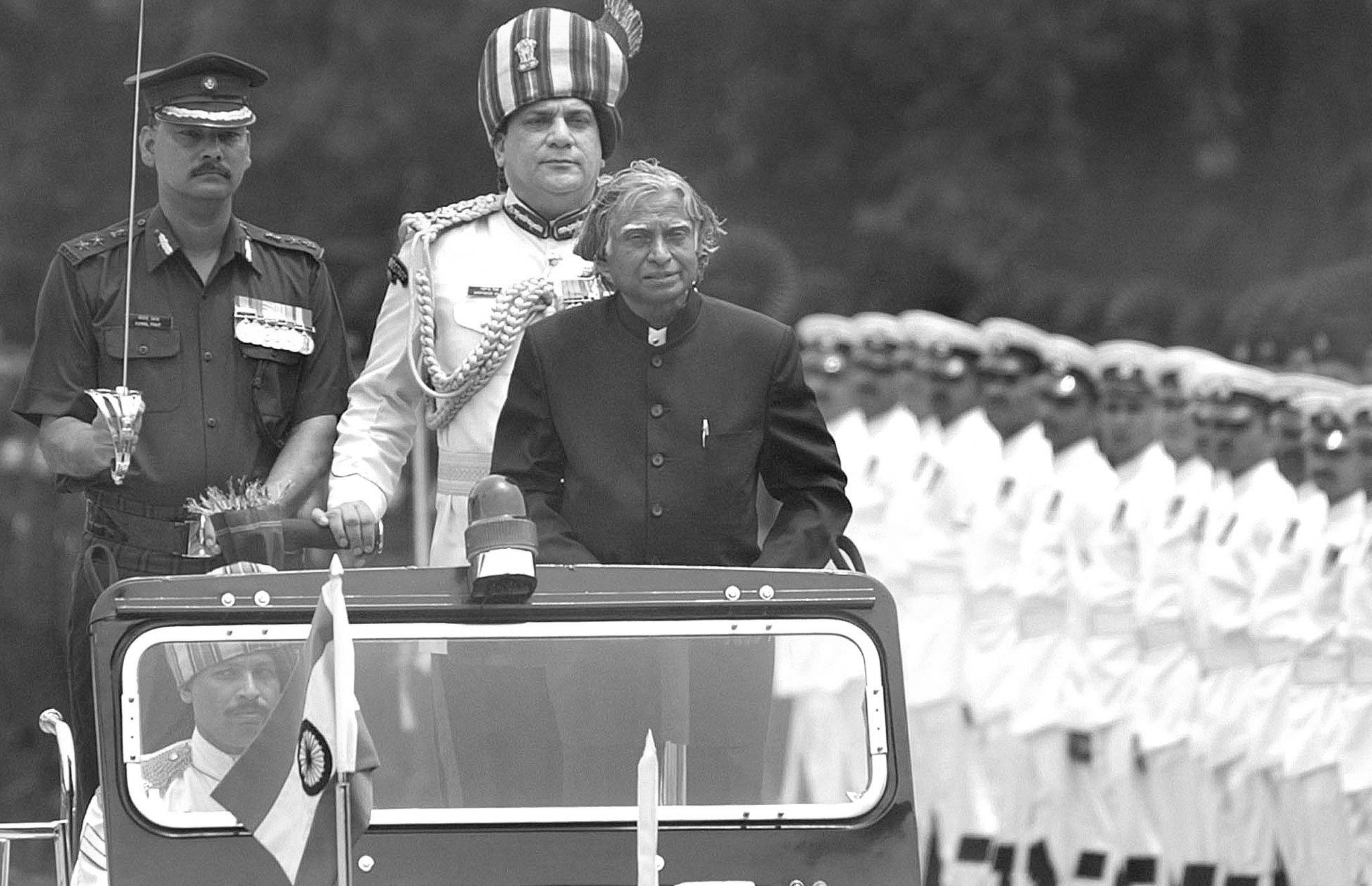
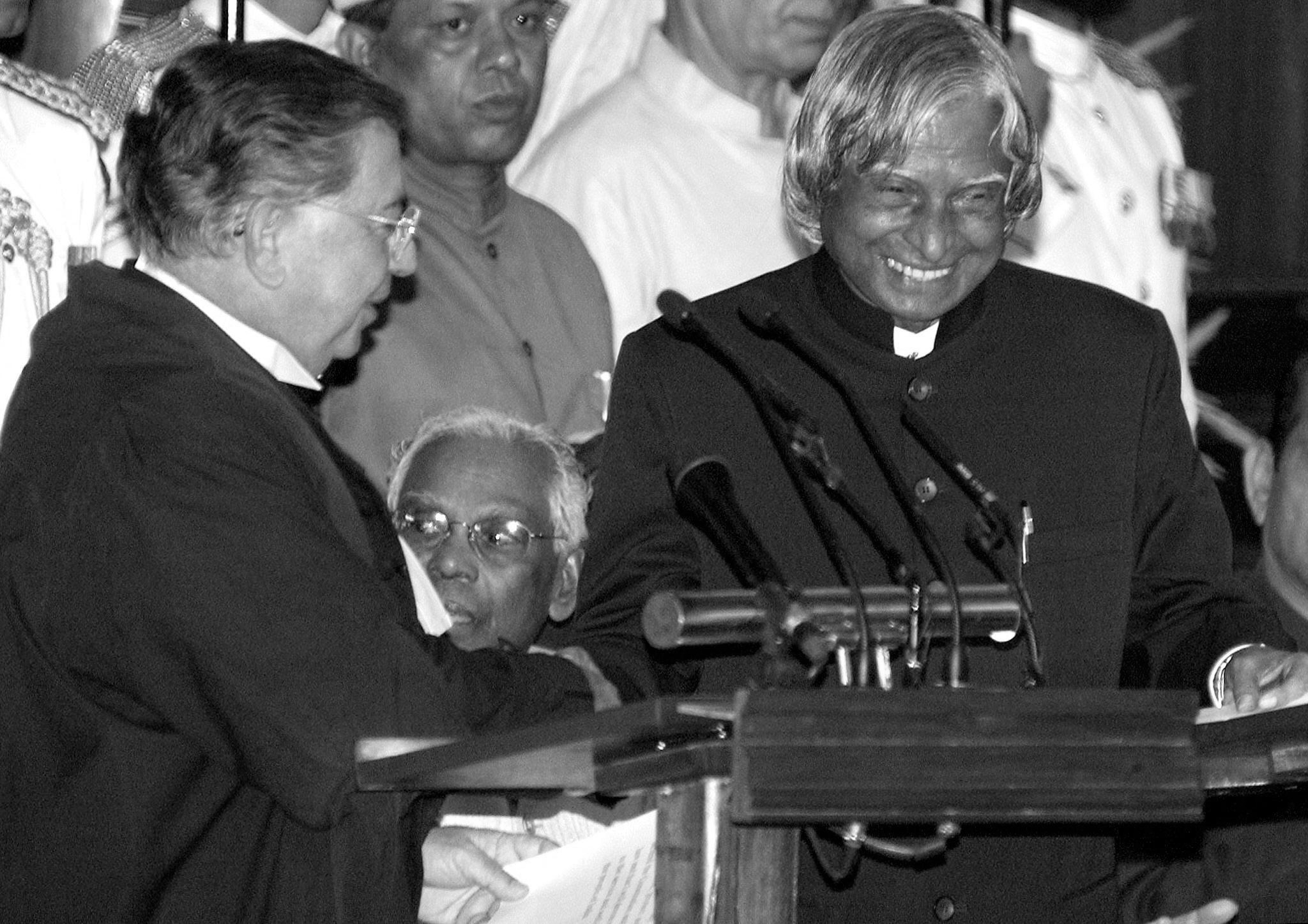
On July 25, 2002, Dr. Kalam took oath as the 11th President of India, becoming one of the few scientists to occupy the nation's highest constitutional office. His election reflected widespread respect across political parties and society. Unlike many of his predecessors, Kalam approached the Presidency with the mindset of a teacher rather than a politician. He transformed Rashtrapati Bhavan into a place that welcomed students, innovators and young achievers. Throughout his tenure, he travelled extensively, visiting schools, colleges and universities across the country, urging students to cultivate scientific thinking, creativity and ethical leadership.
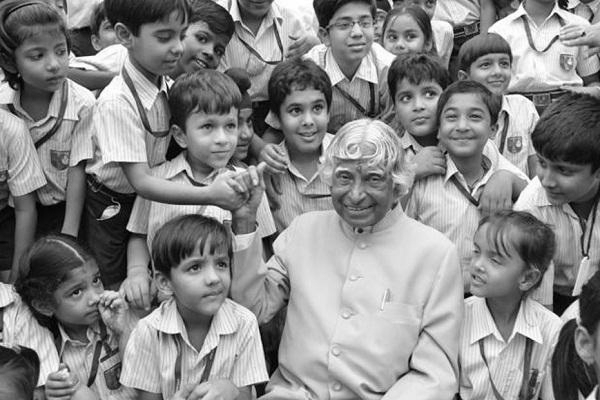
His interactions with young people became the defining feature of his Presidency. He consistently reminded students that India's greatest resource was not its minerals or industries, but its youth. He encouraged them to dream fearlessly, embrace failure as part of learning and dedicate themselves to nation-building. His speeches were filled with optimism, practical wisdom and unwavering faith in India's future. It was this genuine connection with ordinary citizens, particularly children and students, that earned him the enduring title "People's President."
After completing his Presidential term in 2007, Kalam returned to his first love, teaching. Rather than seeking political influence or retirement, he accepted academic positions at institutions including Anna University, the Indian Institute of Space Science and Technology, the Indian Institute of Management Shillong, and several other universities. He travelled almost continuously, delivering lectures, interacting with students and mentoring young innovators. Even in his eighties, his calendar remained packed with educational engagements because he believed inspiring young minds was the most meaningful contribution he could make to the nation.
Kalam was equally influential as an author. His autobiography, Wings of Fire, remains one of India's most widely read inspirational books, chronicling his journey from humble beginnings to national leadership. Other notable works, including Ignited Minds, India 2020, Turning Points, Mission India, My Journey and Indomitable Spirit, continue to inspire readers with their messages of perseverance, innovation, leadership and patriotism. His famous words, "Dream, dream, dream. Dreams transform into thoughts and thoughts result in action," have become a guiding philosophy for countless young Indians.
The nation recognised his exceptional contributions with its highest civilian honours. He received the Padma Bhushan in 1981, the Padma Vibhushan in 1990, and the Bharat Ratna in 1997, becoming one of India's most decorated scientists even before assuming the Presidency. Numerous universities in India and abroad also conferred honorary doctorates upon him in recognition of his contributions to science, education and public service.
Despite international acclaim, Kalam remained strikingly humble. He led a simple life, owned few personal possessions and believed that knowledge was the greatest wealth anyone could possess. His honesty, accessibility and integrity earned admiration across political, religious and social divides, making him one of the most respected personalities in contemporary India.
On July 27, 2015, while delivering a lecture titled "Creating a Livable Planet Earth" at the Indian Institute of Management Shillong, Dr. Kalam collapsed due to cardiac arrest. He passed away at the age of 83, spending his final moments doing what he loved most teaching and inspiring students. His death triggered an unprecedented wave of grief across the nation, with tributes pouring in from world leaders, scientists, educators and millions of ordinary citizens.
As India observes his 11th death anniversary, Dr. A.P.J. Abdul Kalam continues to inspire generations through his life, ideas and achievements. His contributions to space technology, missile development, strategic defence, scientific research, education and nation-building transformed India's global standing. More importantly, he demonstrated that humility, integrity and perseverance are the true foundations of greatness. His life remains a timeless reminder that no dream is too distant for those willing to work tirelessly, embrace failure as a teacher and dedicate themselves to a cause greater than personal success. From the shores of Rameswaram to the halls of Rashtrapati Bhavan, Dr. Kalam's journey remains one of India's most enduring stories of hope, resilience and national pride.