
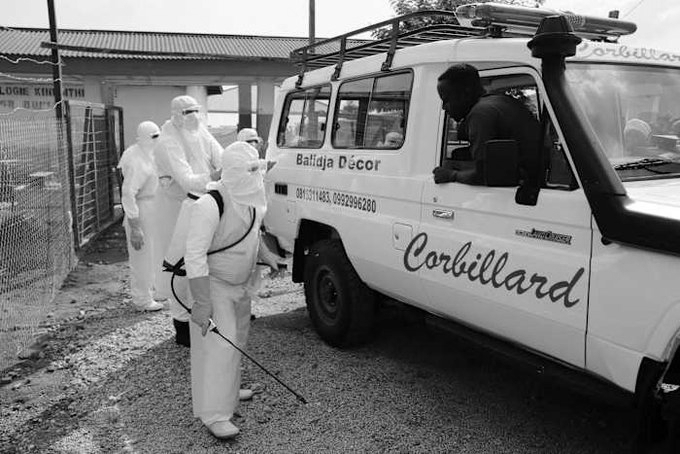
Ebola Outbreak In Congo: Over 1,500 Deaths As Hunger Crisis Worsens, UN Warns
The fastest-growing Ebola outbreak ever recorded in eastern Democratic Republic of Congo (DRC) is worsening a severe hunger crisis, with thousands of people struggling to find food as conflict, insecurity and the fight over valuable minerals continue to affect the region. The United Nations has warned that the health emergency is becoming a “crisis on top of a crisis” in one of Congo’s most vulnerable areas.
The warning came from World Food Programme (WFP) acting executive director Carl Skau, who visited Ituri province, the epicenter of the outbreak. He said the Ebola crisis has added further pressure to a region already suffering from years of violence and displacement.
According to the WFP, more than 5 million people across Congo are facing emergency levels of food insecurity, while nearly 10 million people in eastern Congo are experiencing crisis or emergency hunger conditions. In Ituri province alone, around 1.9 million people need food assistance.
The Ebola outbreak, declared on May 15, 2026, has spread rapidly across eastern Congo. Health officials have recorded more than 3,400 confirmed cases and over 1,500 deaths, making it the fastest-growing Ebola crisis ever reported in the country. The outbreak has affected multiple provinces, increasing pressure on an already weak healthcare system.
The outbreak is being caused by the Bundibugyo Ebola virus, a strain that has created additional challenges because there are currently no approved vaccines or specific treatments available. Health authorities are conducting vaccine trials, but officials said wider access could still take months.
The rapid spread has also damaged local economies. Measures introduced to control Ebola, including movement restrictions, border controls and limits on gatherings, have disrupted markets and supply routes, pushing up food and fuel prices.
WFP said food shortages are becoming worse in Ebola-affected areas, with more than 2.7 million people facing acute food insecurity across 48 affected health zones, including around 628,000 people in emergency conditions.
Funding shortages have also slowed the humanitarian response. WFP has reduced the number of people receiving assistance in Congo from 3 million last year to around 1 million this year. The UN’s wider humanitarian appeal for Congo, worth $2.1 billion, remains only partially funded.
Health workers in Ituri are reporting rising cases of malnutrition, including among communities affected by Ebola. In mining towns such as Mongbwalu, residents say insecurity and Ebola restrictions have made it harder for families to access farmland and earn a living.