
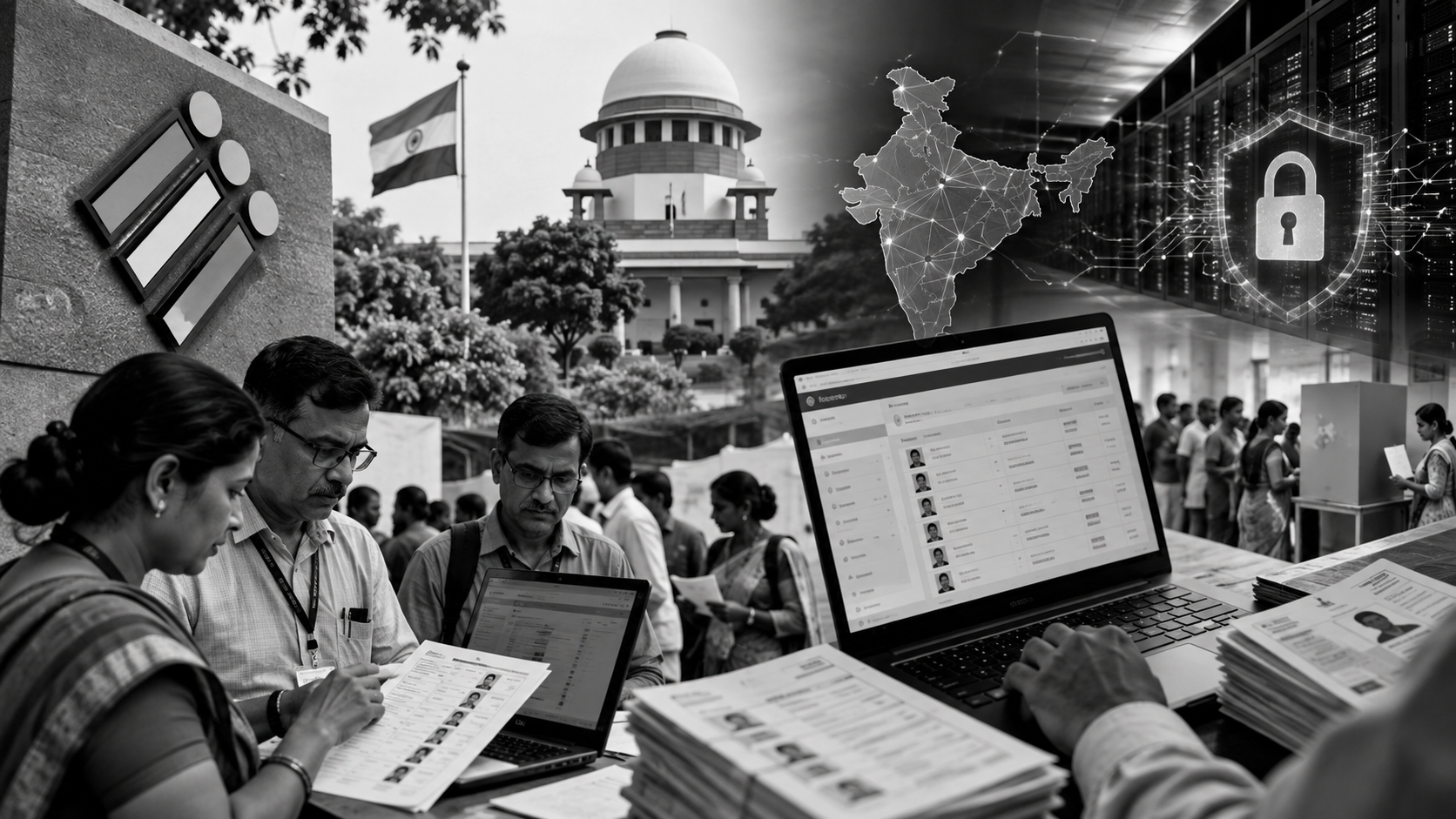
EC Defends ECINet as Decentralised, Says Field Officials Retain Powers
The Election Commission of India has defended its ECINet digital platform as a decentralised system, asserting that statutory functions relating to electoral rolls can be performed only by the election officials legally designated to carry them out and cannot be exercised by officials at the poll panel’s headquarters. The clarification comes amid concerns over the functioning of the Commission’s digital systems and allegations of a “gradual centralisation” of electoral-roll data and access.
According to EC officials, Booth Level Officers (BLOs), Assistant Electoral Registration Officers (AEROs), Electoral Registration Officers (EROs), District Election Officers (DEOs) and Chief Electoral Officers (CEOs) perform their respective statutory duties on ECINet using unique IDs and passwords. The Commission said no other official, including those at its headquarters, can perform these statutory functions on their behalf.
Launched in January 2026, ECINet brings together more than 40 ECI applications and portals and was developed after consultations involving 36 CEOs, 767 DEOs and 4,123 EROs. The platform was designed to serve nearly 100 crore electors, integrating voter registration, electoral-roll management, e-EPIC services, grievances and other election functions. At launch, the ECI said it had processed more than 10 crore registration forms, averaging 2.7 lakh daily, while over 11 lakh BLOs were registered and more than 150 crore documents had been digitised during the SIR exercise.
The earlier ERONET electoral-roll system has been integrated into ECINet as its Electoral Roll module. Under the Representation of the People Act, 1950, electoral-roll responsibilities are assigned to designated officials, including EROs and AEROs. The ECI says centralised technology and cybersecurity do not transfer these statutory powers to its headquarters.
However, concerns raised by Election Commissioners Sukhbir Singh Sandhu and Vivek Joshi have focused on whether software permissions could practically restrict powers that remain legally vested in field officials. The issue gained attention after 97 Goa voters reportedly found eligible during SIR could not immediately have their names restored because the software lacked a rollback facility.
The ECI has defended central cybersecurity arrangements, citing around 68 lakh malicious attempts on counting day. Separately, EC officials said ECINet recorded 98.3 crore hits across three poll days and an average of three crore hits per minute on counting day.
The controversy also overlaps with the Form 6 additional declaration required during SIR. The ECI says the provision was unanimously approved and included in orders covering 12 states and UTs in October 2025 and 19 in May 2026. Joshi and Sandhu had reportedly questioned whether Form 6 could be altered without amending the 1960 Rules.
The ECI has also cited the Supreme Court’s May 27, 2026 SIR judgment, which held that the exercise was traceable to Section 21(3) of the Representation of the People Act read with Article 324. The broader debate now centres on whether digital infrastructure consistently enables field officials to exercise the statutory powers assigned to them.