
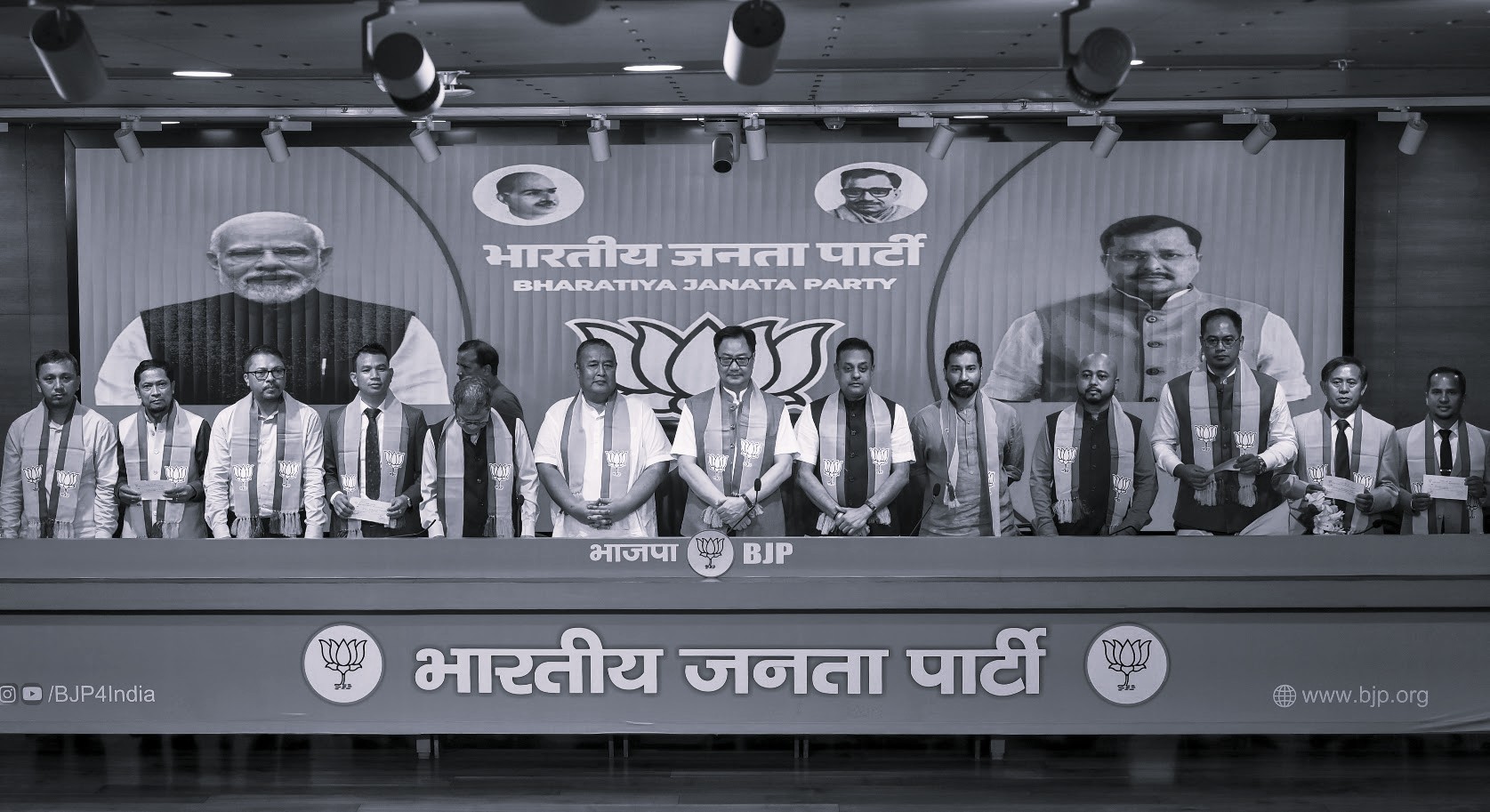
Eight Meghalaya UDP MLAs Join BJP, Reshaping State’s Political Landscape
Eight MLAs of Meghalaya’s United Democratic Party (UDP) joined the Bharatiya Janata Party (BJP) in New Delhi on Wednesday, ending weeks of speculation over a political realignment in the northeastern state and significantly changing the balance within the ruling Meghalaya Democratic Alliance (MDA).
The legislators - Lahkmen Rymbui, Pius Marwein, Kyrmen Shylla, Mayralborn Syiem, Matthew Beyondstar Kurbah, Ollan Sing Suin, Balajied Kupar Synrem and Synshar Kupar Roy Lyngdoh Thabah - joined the BJP at its headquarters in the presence of Union Minister Kiren Rijiju and BJP national spokesperson Sambit Patra. Rymbui is a serving minister, while Shylla is a former minister.
The move changes the arithmetic of the 60-member Meghalaya Assembly. The BJP’s strength rises from two to 10 MLAs, making it the second-largest party after the National People’s Party (NPP), which has 33 legislators. The UDP, which had 12 MLAs, is reduced to four. Both the BJP and UDP remain part of the NPP-led MDA government headed by Chief Minister Conrad K. Sangma, meaning the switch does not immediately threaten the government’s majority.
The move followed weeks of negotiations. Mawsynram MLA Ollan Sing Suin had earlier acknowledged talks with BJP leaders and said the legislators were seeking action on Meghalaya-specific issues rather than ministerial positions. The demands included Khasi’s inclusion in the Eighth Schedule, changes relating to coal mining, implementation or amendment of the Meghalaya Residents Safety and Security Act (MRSSA) and relocation of the Harijan Colony at Them Iew Mawlong in Shillong.
The Khasi language demand concerns constitutional recognition beyond its existing official status in Meghalaya, while the coal issue involves the state’s distinctive tribal land system, environmental restrictions and the long-running debate over legal and scientific mining. MRSSA reflects concerns over influx and protection of indigenous interests, while the Them Iew Mawlong dispute involves land, rehabilitation and community concerns.
Rijiju said the legislators were impressed by Prime Minister Narendra Modi’s leadership and the development of the Northeast, calling the move significant for the region and the country. The MLAs, meanwhile, have stressed Meghalaya-specific interests and greater access to the Centre.
The switch is particularly significant for the UDP, a major regional force founded in 1997. After winning 12 seats in the 2023 Assembly election, it has now lost two-thirds of its legislators. The eight-member group also represents two-thirds of the UDP’s former legislative strength, making the move relevant to the Tenth Schedule’s anti-defection provisions.
With the 2028 Assembly election approaching, the BJP now has a substantially larger legislative base, while the UDP faces the task of rebuilding its regional presence. The immediate government remains unchanged, but the internal balance of Meghalaya’s ruling coalition has been significantly reshaped.