
El Niño Could Trigger COVID-Like Crisis in Telangana, Warns CM Revanth Reddy
Chief Minister A. Revanth Reddy has warned that Telangana could face a severe drought situation due to the anticipated impact of El Niño, describing the emerging climate challenge as a crisis comparable to the COVID-19 pandemic. He cautioned that the state might not receive rainfall for the next eight months and called for collective preparedness to tackle the potential water shortage.
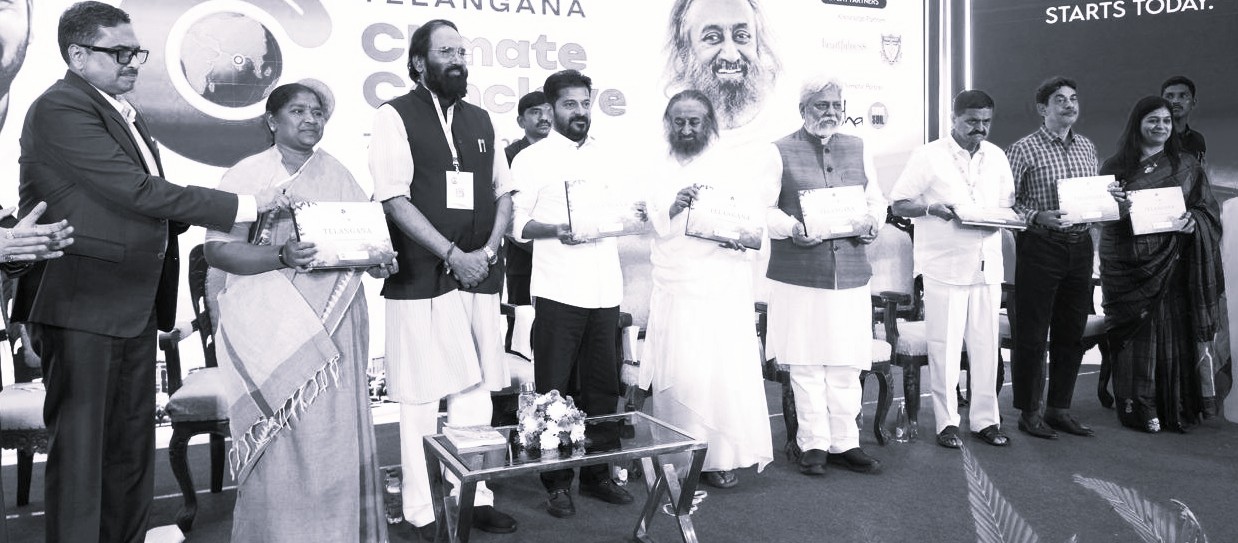
Speaking at the curtain-raiser event of the Telangana Climate Conclave, organised as part of the Invest Telangana Global Summit 2026, the Chief Minister said food grain stocks were adequate, but water availability could become a major concern. He stressed the need to alert farmers in advance and encourage them to make informed decisions about crop cultivation. He also suggested that farmers might have to sacrifice one crop to protect their livestock, as safeguarding water resources and animal wealth would be crucial during the anticipated crisis.
Revanth Reddy said droughts develop gradually but can have long-lasting consequences, unlike cyclones, floods and earthquakes, which cause immediate damage. He observed that summer-like conditions were already being experienced during the winter season, highlighting the changing climate patterns.
The conclave aims to develop a comprehensive roadmap for building a climate-resilient and environmentally sustainable Telangana. The Chief Minister said the government wanted to consult environmentalists, agricultural experts and other specialists rather than formulate policies through decisions taken behind closed doors. He emphasised that attracting investments and protecting the environment must go hand in hand.
Referring to Telangana's historical water conservation practices, Revanth Reddy recalled the construction of reservoirs such as Ramappa, Laknavaram and Pakhal during the Kakatiya period. He said the state had its own traditions and expertise in water management and did not need to blindly follow the Gujarat or Sabarmati models for the Musi River rejuvenation project.
He said Hyderabad once had hundreds of lakes, many of which disappeared due to encroachments and other factors. The government established HYDRAA to identify and restore these water bodies. Despite resistance from influential individuals and legal challenges, the government would continue removing encroachments, he asserted. He cited the restoration of Bathukamma Kunta as an encouraging example, noting that women had returned to the lake to celebrate Bathukamma.
The Chief Minister also pointed out that Hyderabad's drainage infrastructure was originally designed to handle just two centimetres of rainfall, whereas extreme weather events could now bring nearly 40 centimetres of rain. Encroachments on lakes and drainage channels had aggravated urban flooding, he said, adding that the government was committed to rejuvenating the polluted Musi while providing alternative housing to poor families living along its banks.
He also highlighted the state's Telangana Rising 2047 vision and initiatives such as EAGLE to combat drug trafficking and TG SAFE to prevent food adulteration.
Spiritual leader Gurudev Sri Sri Ravi Shankar, founder of the Art of Living, stressed that technological advancement should be accompanied by equal commitment to environmental protection. He welcomed the government's efforts to restore lakes and conserve nature.
Environmental activist and Waterman of India Rajendra Singh urged the government to accelerate lake restoration and provide treated wastewater to industries as reservoir levels decline. He also called for mapping Telangana's natural resources and cultural heritage, removing lake encroachments firmly and developing a distinct Musi rejuvenation model suited to the state's geographical and cultural conditions.
The conclave also featured Padma Shri award-winning farmer Chintala Venkata Reddy and several experts who shared suggestions on addressing emerging environmental challenges.