
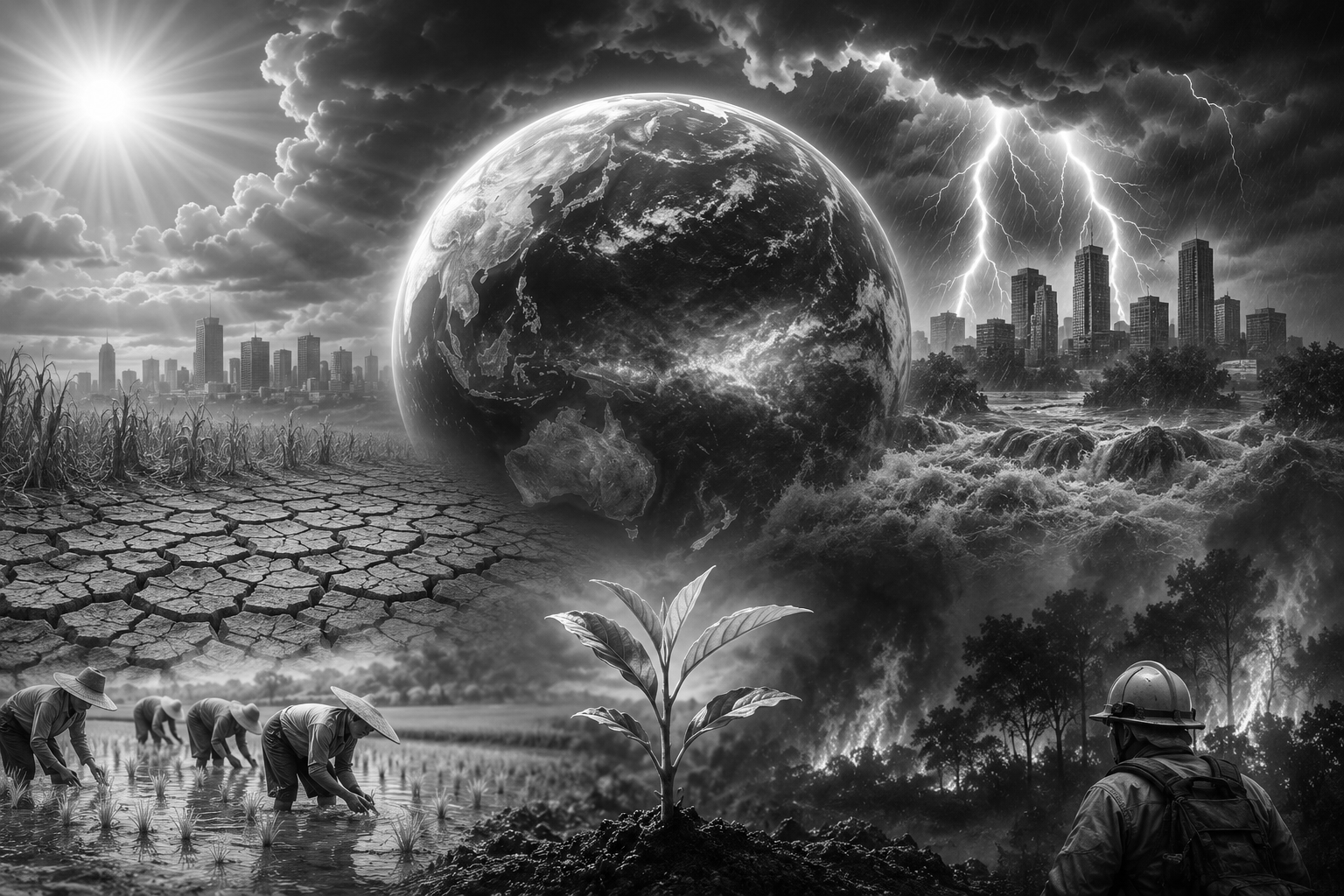
El Niño Returns: Scientists Warn of Extreme Heat, Floods and Global Disruption Ahead
The arrival of El Niño has once again placed climate scientists and governments on alert, with growing concern that the weather phenomenon could intensify heatwaves , trigger floods and droughts , disrupt agriculture , and place additional pressure on economies across the world, including India .
El Niño is a naturally occurring climate pattern that develops when surface waters in the Pacific Ocean near the equator become warmer than usual. Though the warming occurs far away from many countries it affects, the event alters global wind patterns and atmospheric circulation, influencing rainfall, temperatures, and storm systems across continents.
What makes this year’s development more concerning is timing. Scientists warn that El Niño is forming at a moment when global temperatures are already elevated because of climate change . The combination could amplify weather extremes and increase their economic and social consequences.
One of the most immediate concerns is rising heat. El Niño tends to release additional heat into the atmosphere, raising average temperatures globally and increasing the likelihood of longer and more intense heatwaves . Experts believe this may contribute to further temperature records in the coming years.
At the same time, El Niño does not affect every region equally. While some areas become hotter and drier, others may experience unusually heavy rainfall. Parts of South America often face flood risks during strong El Niño events, while drought and wildfire threats increase in regions such as Australia . Other parts of the world may experience sudden shifts between dry spells and intense rainfall.
Agriculture remains among the most vulnerable sectors. Irregular rainfall and extreme temperatures can affect sowing cycles, reduce crop productivity, damage standing crops, and increase pressure on food supply chains. These disruptions frequently translate into higher food prices and inflation.
For India , El Niño draws particular attention because of its historical relationship with the southwest monsoon , which supports agriculture, water resources, and rural livelihoods. Although El Niño does not automatically lead to weak monsoon rainfall, several past years with below normal rainfall have coincided with El Niño conditions. Concerns include stronger heatwaves , uneven rainfall distribution, stress on reservoirs, pressure on crop output, and increased electricity demand.
Economists also warn that extreme weather carries wider financial costs through infrastructure damage , lower productivity, and rising energy consumption.
Scientists stress that El Niño itself is a natural climate cycle, but in a warming world its effects can become more disruptive. The focus now is not on fear, but on preparedness .