
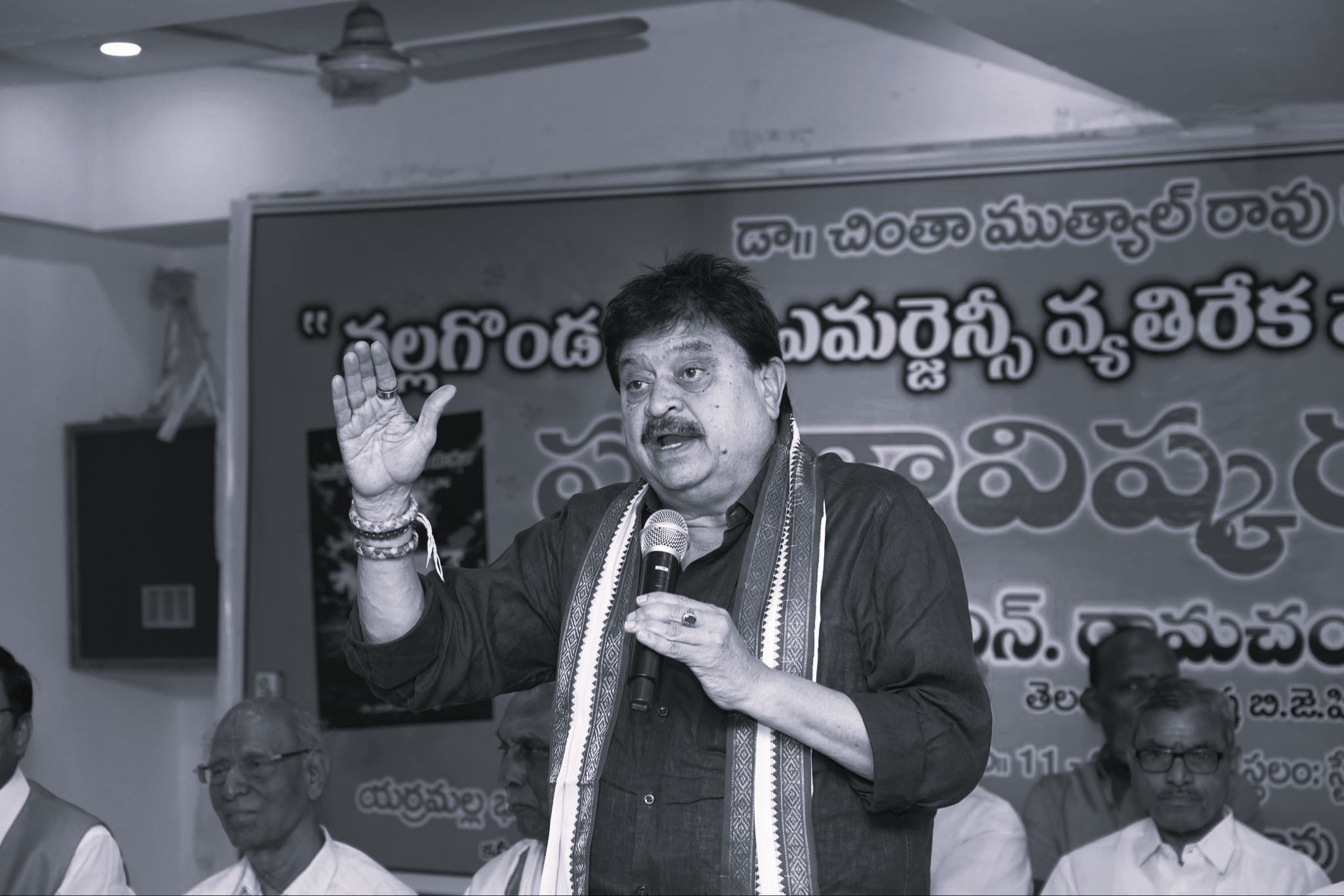
Emergency Was Darkest Chapter in India's Democratic History, Says Ramchander Rao
Telangana BJP president N. Ramchander Rao on Friday said the Emergency imposed in 1975 remains one of the darkest chapters in India's democratic history and stressed the need to educate younger generations about the events and consequences of that period.
Addressing a book release programme in Nalgonda organised to mark 50 years of the Emergency , Rao said it was important to ensure that the lessons of that era are not forgotten. He noted that understanding the past is essential for strengthening democratic institutions and protecting constitutional values in the future.
Rao said the Emergency witnessed several controversial actions, including forced sterilisation drives, large-scale demolitions, media censorship and the arrest of thousands of political leaders and activists . He argued that the present generation must be made aware of why the Emergency was imposed, the impact it had on democratic freedoms and the manner in which constitutional provisions were allegedly misused during that period.
The BJP leader alleged that the Emergency was declared to preserve political power after the Allahabad High Court verdict invalidated the election of former Prime Minister Indira Gandhi . According to him, the subsequent restrictions on civil liberties and democratic rights caused significant damage to the country's democratic framework.
Highlighting the role of those who opposed the Emergency, Rao said leaders and activists from different political backgrounds came together to defend democracy and the Constitution. Many of them, he said, endured imprisonment, police action and various hardships but remained committed to protecting democratic principles. Their sacrifices, he added, should be documented and conveyed to future generations.
Rao also urged journalists to study the restrictions imposed on the media during the Emergency, describing the period as a stark reminder of the importance of press freedom in a democratic society. He criticised the Congress party and said it should explain its role in the events that unfolded during that period.
Referring to other developments associated with the era, Rao claimed that actor Dev Anand faced obstacles in releasing his films after opposing the Emergency, while songs of renowned singer Kishore Kumar were reportedly barred from broadcast on All India Radio. He also alleged that attempts were made to restrict media freedom through legislative measures and constitutional changes.
Supporting the Centre's initiative to include the history of the Emergency in educational curricula, Rao said students should gain a comprehensive understanding of the period and its implications. He further criticised the Congress for not apologising to the nation over the events linked to the Emergency.
Reaffirming the BJP's commitment to protecting the Constitution, Rao said Prime Minister Narendra Modi had taken steps to promote wider recognition of the legacy of B. R. Ambedkar. He also accused the Congress of having historically worked against Ambedkar's political advancement.