
Expand Cancer Screening, Treatment to Rural Areas, Tier-2, Tier-3 Cities: ICS
The Indian Cancer Society (ICS) has called for expanding cancer-care services to tier-2, tier-3 and tier-4 cities as well as rural areas, stressing the need to improve screening, early diagnosis and access to initial treatment closer to patients.
The call was made at the ICS Delhi’s annual seminar on “Bridging Innovation and Affordability in Cancer Care”, which brought together public health experts, oncologists, hospital representatives, insurers and pharmaceutical industry professionals to discuss ways to make cancer treatment more accessible and affordable.
Delhi Lieutenant Governor Sardar Taranjit Singh Sandhu, the chief guest at the event, emphasised the need to strengthen coordination between different levels of the healthcare system so that patients can access appropriate care at an early stage.
“Healthcare should be accessible, available and affordable to all. One of the most effective ways of making cancer care more affordable is to detect the disease early. Screening and early detection can make a fundamental difference,” Sandhu said.
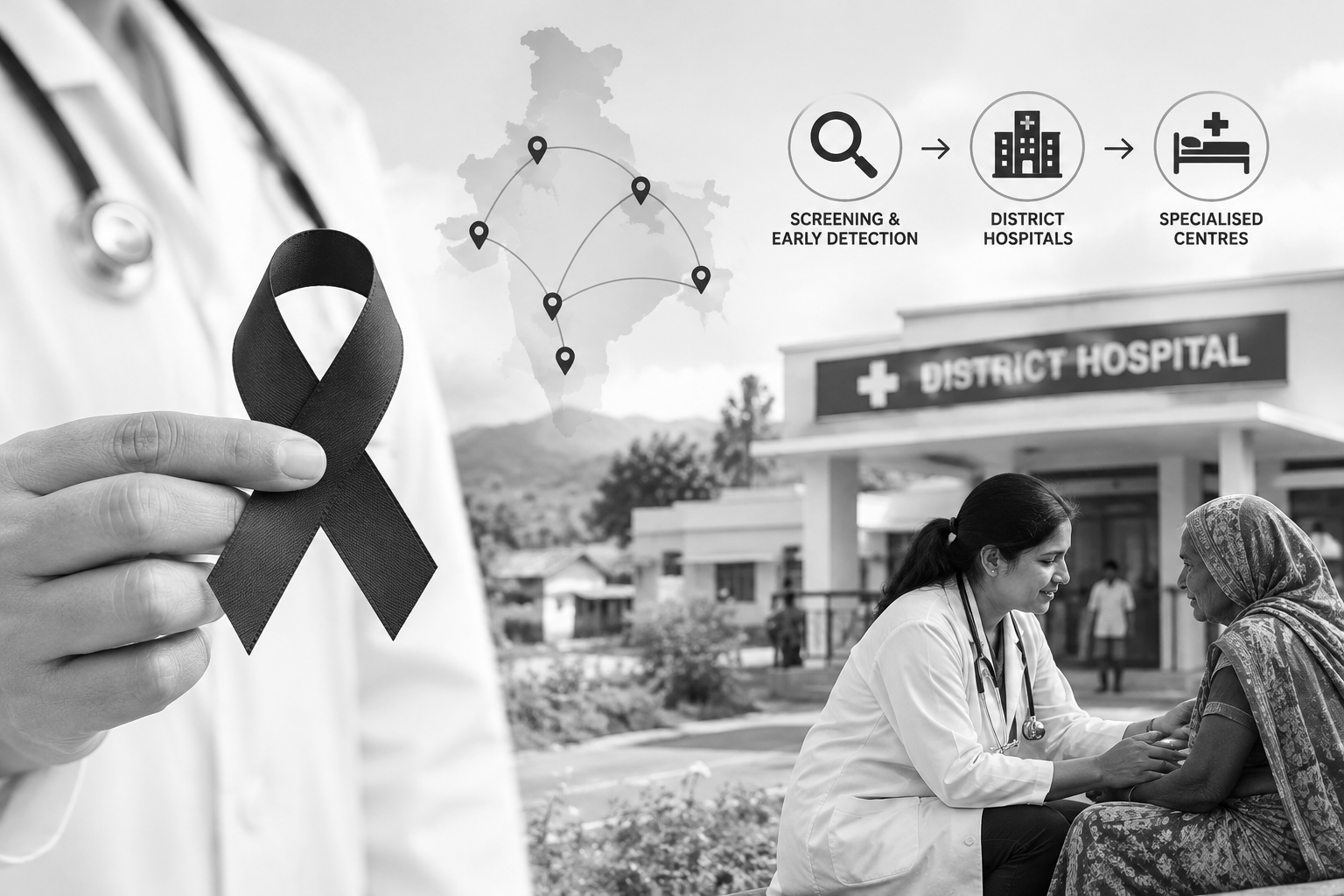
He also stressed the importance of a stronger referral mechanism connecting primary healthcare facilities, diagnostic services and specialised hospitals.
According to the Ministry of Health and Family Welfare, cancer treatment services are currently available in only about 5 per cent of district hospitals. With around 70 per cent of cancer patients estimated to live in rural areas, experts said improving services closer to communities is critical.
ICS chairperson Jyotsna Govil said the organisation, which has worked for cancer patients for 75 years, has consistently focused on making cancer care more affordable.
Professor Ravi Mehrotra, former director of the ICMR-National Institute of Cancer Prevention and Research, said essential diagnostic services and initial cancer care should be made available closer to patients.
He advocated a hub-and-spoke model, under which district-level facilities provide basic services while specialised centres offer advanced treatment and expertise, with stronger linkages between the two.