
FMD Outbreaks Fall 70% Since 2019 Under India’s Livestock Health Programme
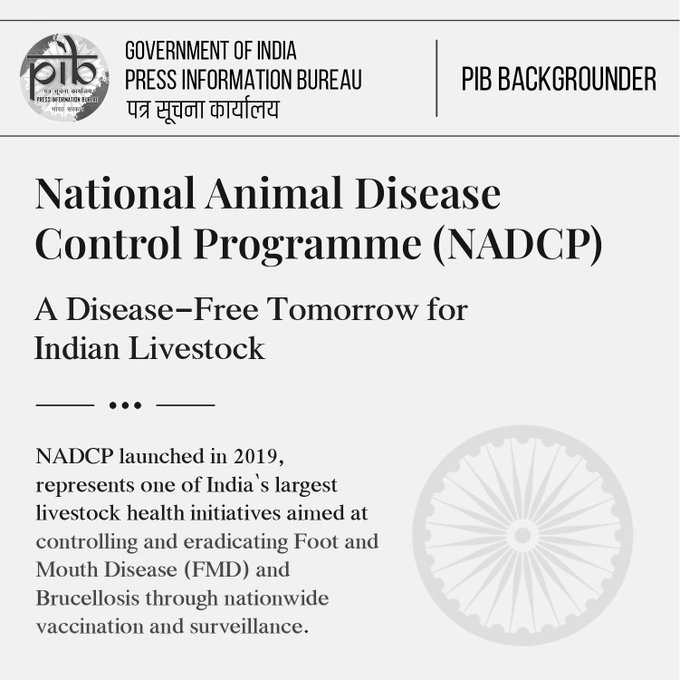
India’s National Animal Disease Control Programme (NADCP) has significantly reduced the incidence of Foot and Mouth Disease (FMD) and Brucellosis through nationwide vaccination, surveillance and digital monitoring, according to the Ministry of Fisheries, Animal Husbandry and Dairying.
Launched in 2019, the programme has administered 147.16 crore FMD vaccine doses, benefiting 8.04 crore farmers. Reported FMD outbreaks declined from 132 in 2019 to 40 in 2025, while Brucellosis outbreaks fell from 22 to 15 during the same period.
Post-vaccination surveillance found protective immunity against FMD serotypes O, A and Asia1 at 78.1%, 71.7% and 77.6%, respectively. The government said there has been no FMD outbreak caused by the Asia-1 serotype in India for the past three years.
Under NADCP, livestock are vaccinated against FMD twice annually, while female bovine calves aged four to eight months receive a one-time Brucellosis vaccination. Since 2024, FMD vaccination has also been extended to migratory sheep and goats in several northern states and Union Territories.
The programme has also strengthened India’s animal-health infrastructure. More than 39 crore livestock have been registered on the Bharat Pashudhan Portal, enabling digital tracking of vaccination and animal health records. Meanwhile, 4,019 Mobile Veterinary Units have provided doorstep services to 136 lakh farmers and treated 276 lakh animals.
The government said improved animal health has accompanied gains in productivity. Average bovine productivity increased 36.63% from 1,640 kg per animal annually in 2014-15 to 2,250 kg in 2024-25. Milk production rose 69.4% to 247.87 million tonnes during the same period.
For 2026-27, the Livestock Health and Disease Control Programme has an outlay of ₹2,010 crore. A separate US$25 million Pandemic Fund project is also strengthening disease surveillance, laboratories and preparedness for zoonotic and transboundary diseases.