
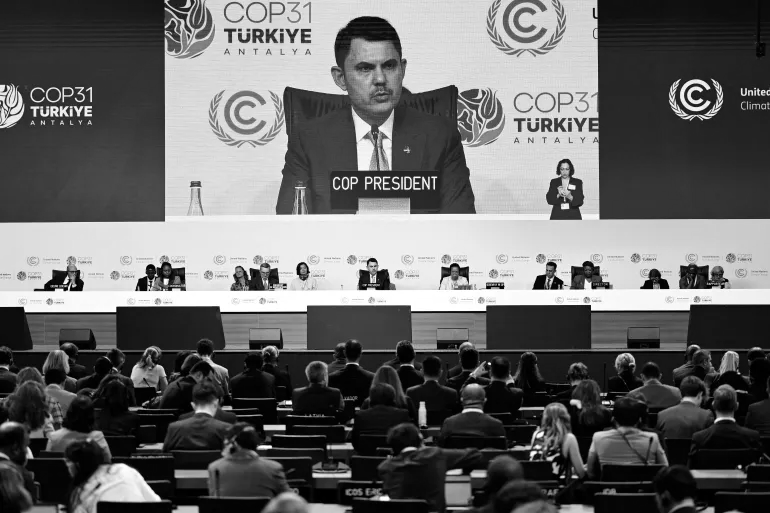
Fossil Fuel Deadlock Pushes COP31 Climate Summit Into Overtime As Nearly 200 Nations Clash
The COP31 climate summit in Antalya, Turkiye, has entered overtime after nearly 200 countries failed to reach an agreement on a final climate deal, with disagreements over fossil fuels, climate finance and energy transition threatening to derail negotiations.
The two-week United Nations climate conference was scheduled to conclude on Friday, November 20. However, a closing session approved some technical decisions while the broader political agreement remained unresolved. COP31 President and Turkiye's Environment Minister Murat Kurum told delegates, “We are close to the finish line, but we are not there yet.” A third draft of the agreement was expected on Saturday.
The biggest disagreement concerns fossil fuels, including coal, oil and natural gas. An initial draft presented by co-host Australia called for accelerating their phase-out. However, a revised version released on Thursday removed all references to fossil fuels following objections from Saudi Arabia and other major oil and gas-producing countries.
The European Union warned that the revised proposal risked turning the summit into a “fossil summit”. Panama and more than a dozen other countries demanded a clear commitment to transition away from fossil fuels, with Panama threatening to walk away from the negotiations.
Another major dispute involves climate finance. The revised draft dropped a proposed $120 billion target to help developing countries adapt to climate change, drawing criticism from poorer nations. Ghana's Environment Minister Zanetor Agyeman-Rawlings said African countries would not accept promises without the resources to implement them.
The draft also proposes increasing electricity's share of global final energy consumption to 35 per cent by 2035. However, it does not specify that the additional electricity must come from renewable sources. Several countries have also opposed expanding carbon capture technology, arguing it is costly and could allow continued fossil fuel use.
Meanwhile, climate groups have criticised the negotiations for lacking ambition. The summit is taking place amid warnings that the world is on course to exceed the 1.5-degree Celsius warming limit under the Paris Agreement. The United States has also been absent for a second consecutive year after President Donald Trump ended US climate cooperation.
The talks are further complicated by geopolitical tensions surrounding the Iran war and rising energy costs.