
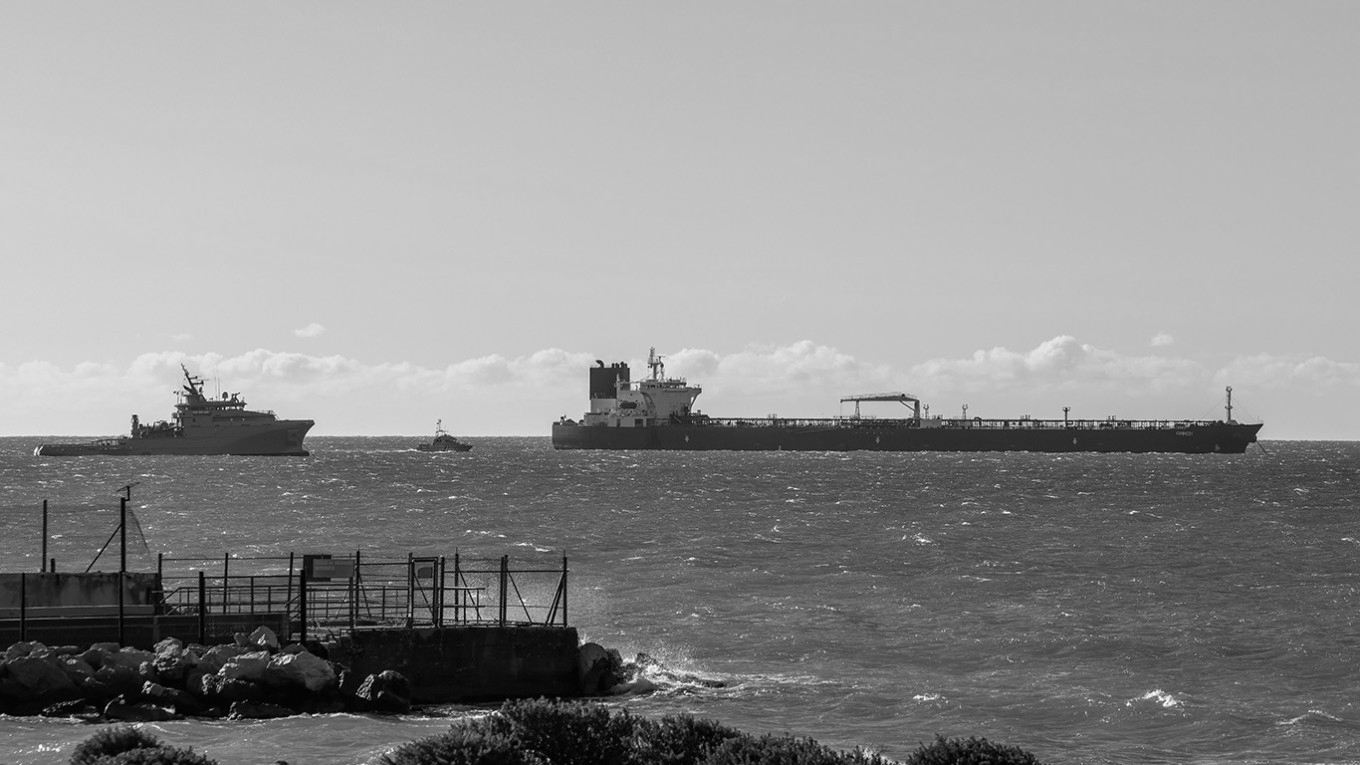
France releases Grinch ‘shadow fleet’ tanker with Indian crew after multimillion-euro fine
French authorities on Tuesday released the oil tanker Grinch , which was intercepted last month in the Mediterranean on suspicion of being part of Russia’s shadow fleet used to evade Western sanctions on oil exports, after its owning company paid a multimillion‑euro penalty and the vessel endured weeks of costly detention.
The EU sanctions on Russia , imposed after its 2022 invasion of Ukraine, target oil revenues through price caps and shipping restrictions, with enforcement relying on member states like France , which actively monitors and pressures suspect vessels.
France’s navy intercepted Grinch on Jan. 22 while it was sailing from Russia’s Arctic port of Murmansk under a false Comoros flag , a common tactic of the shadow fleet that helps obscure the origins and activities of sanctioned shipments. The French military diverted the vessel into the port of Fos‑sur‑Mer near Marseille, where it was held for nearly four weeks amid scrutiny by prosecutors.
French Foreign Minister Jean‑Noël Barrot said on social media platform X that the ship is leaving French waters “after paying several million euros and three weeks of costly immobilisation,” warning that “bypassing European sanctions comes at a price.” Barrot has been one of Paris’s chief spokespeople on sanctions enforcement, using the case to signal that France will pursue both financial and legal measures against sanctions evasion.
During the investigation, the 58‑year‑old Indian captain was handed over to judicial authorities, and Grinch had an Indian crew on board throughout its detention. The captain is due to face trial later this month on charges tied to alleged non‑cooperation and documentation irregularities. French prosecutors and maritime officials said the owning company entered a guilty plea in the Marseille judicial court , which imposed a financial penalty and ordered the company to justify a new flag for the vessel.
The case highlights how France is deploying both military and judicial tools to counter sanctions evasion. In September 2025, French forces detained another shadow fleet tanker, the Boracay , off the Atlantic coast under similar suspicions of irregular flagging; that captain is also scheduled to stand trial.
Russia’s shadow fleet of aging tankers, often owned by opaque entities and frequently reflagged to evade sanctions, complicates tracking, disrupts global oil trade, and raises shipping costs. Western governments, including the US and UK, have sanctioned hundreds of such vessels. The interceptions have fueled diplomatic tensions with Russia, which condemns them as “piracy” and threatens naval protection. Despite this, France’s coordinated legal and enforcement actions signal a continued push to make sanctions evasion costly and uphold the credibility of the international sanctions regime.