
French Unions Unite For Nationwide Strikes As Macron Faces Mounting Pressure
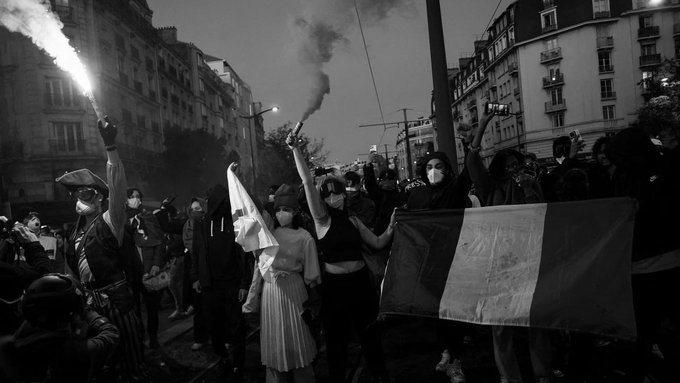
France witnessed nationwide strikes and demonstrations on Thursday, November 5, as major trade unions, students and workers joined forces to demand higher wages, better public services and increased education funding, intensifying pressure on President Emmanuel Macron's government amid weeks of unrest.
The mobilisation, led by five major unions, including the CGT, CFDT, FO, UNSA and FSU, was expected to draw between 500,000 and 700,000 protesters outside Paris, with another 40,000 to 80,000 expected in the capital. More than 250 demonstrations were planned across the country, including in Paris, Lyon and Marseille.
The unions are demanding higher minimum wages, better pensions, job security and protection of public services. The CGT has called for a 10 per cent increase in the minimum wage, while the CFDT is seeking an additional 100 euros in monthly take-home pay. They have also opposed proposed 2027 budget cuts, warning that salary freezes, reduced social security spending and lower public investment could worsen economic hardship.
The strike affected several sectors, including schools, railways, hospitals and energy. France's nuclear electricity production was reduced by around 2.4 gigawatts, while transport services faced disruption. Teachers joined the action over staff shortages, overcrowded classrooms and deteriorating school infrastructure.
Interior Minister Laurent Nuñez announced the deployment of around 70,000 police officers and gendarmes, supported by armoured vehicles, drones and helicopters, to prevent violence. The security measures followed riots and looting on October 17 that damaged shops and public buildings, exposing the government's difficulties in containing the unrest.
The movement began in September with high school students protesting staff shortages at a school southeast of Paris. It subsequently expanded to universities, workers and supporters of the Yellow Vest movement, which initially emerged over fuel prices and living costs in 2018.
The protests come five months before France's May 2027 presidential election, adding to the political challenges facing Macron as public anger over living costs, economic policies and police conduct continues to grow.