
From Saving Daughters To Empowering Them: BBBP's 11-Year Journey Of Social Change
Eleven years ago, the Government of India launched an ambitious campaign to address one of the country's most pressing social challenges, the declining number of girls being born and the deep-rooted gender discrimination that affected their survival, education and opportunities in life. What began as a focused intervention in districts with poor child sex ratios has since evolved into a nationwide movement for behavioural change and girl child empowerment .
As the Beti Bachao Beti Padhao (BBBP) programme completes 11 years, the Centre says the initiative has contributed to measurable improvements in key gender indicators while helping place issues relating to the girl child at the centre of public discourse.
According to the Ministry of Women and Child Development, BBBP has moved beyond being merely a government scheme and has become a broad-based social campaign involving government departments, local administrations, educational institutions, civil society organisations, media platforms and communities across the country.
Launched on January 22, 2015 , at Panipat in Haryana, BBBP was conceived in response to the declining Child Sex Ratio (CSR) and concerns over gender-biased sex selection practices. The initiative was designed to ensure the survival, protection and education of the girl child , while simultaneously encouraging society to challenge discriminatory attitudes and practices.
The programme is jointly implemented by the Ministry of Women and Child Development , Ministry of Health and Family Welfare , and Ministry of Education , reflecting the government's recognition that gender equality requires coordinated interventions across multiple sectors.
One of the most significant indicators highlighted by the government is the improvement in the Sex Ratio at Birth (SRB) .
Data from the Health Management Information System (HMIS) of the Ministry of Health and Family Welfare shows that the national SRB improved from 918 girls per 1,000 boys in 2014-15 to 929 in 2024-25 .
While the increase may appear modest at first glance, policy experts note that changes in sex ratio trends often occur gradually and require sustained efforts over long periods. The improvement is viewed by the government as evidence of continued action against gender-biased sex selection and increased awareness regarding the value of the girl child.
The campaign has consistently emphasised that every girl deserves a safe and dignified birth, and officials say the programme has helped bring greater attention to monitoring pregnancies, strengthening enforcement mechanisms and encouraging community participation in preventing discriminatory practices.
The government's efforts have also been supported by wider improvements in maternal healthcare, institutional deliveries and awareness programmes focused on women's health and child welfare.
Education has been another major pillar of the BBBP initiative.
According to data from the Unified District Information System for Education (UDISE), girls' enrolment at the secondary level increased from 75.51 per cent in 2014-15 to 80.2 per cent in 2024-25 .
The increase reflects improvements in retention rates and the transition of girls from elementary to secondary education. Government officials attribute this progress to sustained awareness campaigns, enhanced educational infrastructure, scholarship support, community engagement and efforts aimed at reducing social barriers that often discourage girls from continuing their studies.
Over the years, the campaign has sought to convey a simple but powerful message — educating a girl not only transforms her own life but also contributes to the social and economic development of families and communities.
The emphasis on education has become increasingly important as India seeks to expand women's participation in the workforce and strengthen its human capital base.
Perhaps the most notable transformation in BBBP over the past decade has been its evolution from a government programme into a broader social movement.
In its early years, the initiative concentrated on districts identified as having low child sex ratios. Gradually, the campaign expanded its reach across the country, focusing not only on statistical improvements but also on changing societal attitudes toward girls.
Mass awareness campaigns, community mobilisation activities, educational outreach programmes and local-level engagement helped create conversations around issues that were often ignored or treated as private family matters.
The programme encouraged communities to celebrate the birth of girls, support their education and reject discriminatory practices. Through collaboration with local governments, schools, health institutions and civil society groups, the campaign sought to make gender equality a shared social responsibility rather than solely a government objective.
Officials say this emphasis on behavioural change remains central to the programme's philosophy.
A significant policy development in recent years has been the integration of BBBP into Mission Shakti , the Centre's umbrella programme for women's safety, security and empowerment.
Under this framework, BBBP operates as part of the Sambal vertical , which focuses on creating safer and more supportive environments for women and girls.
The integration is intended to improve coordination among different programmes and ensure that interventions addressing gender discrimination, education, safety and empowerment function within a unified framework.
Officials believe this approach enables more efficient utilisation of resources while ensuring that support mechanisms remain available throughout different stages of a girl's life.
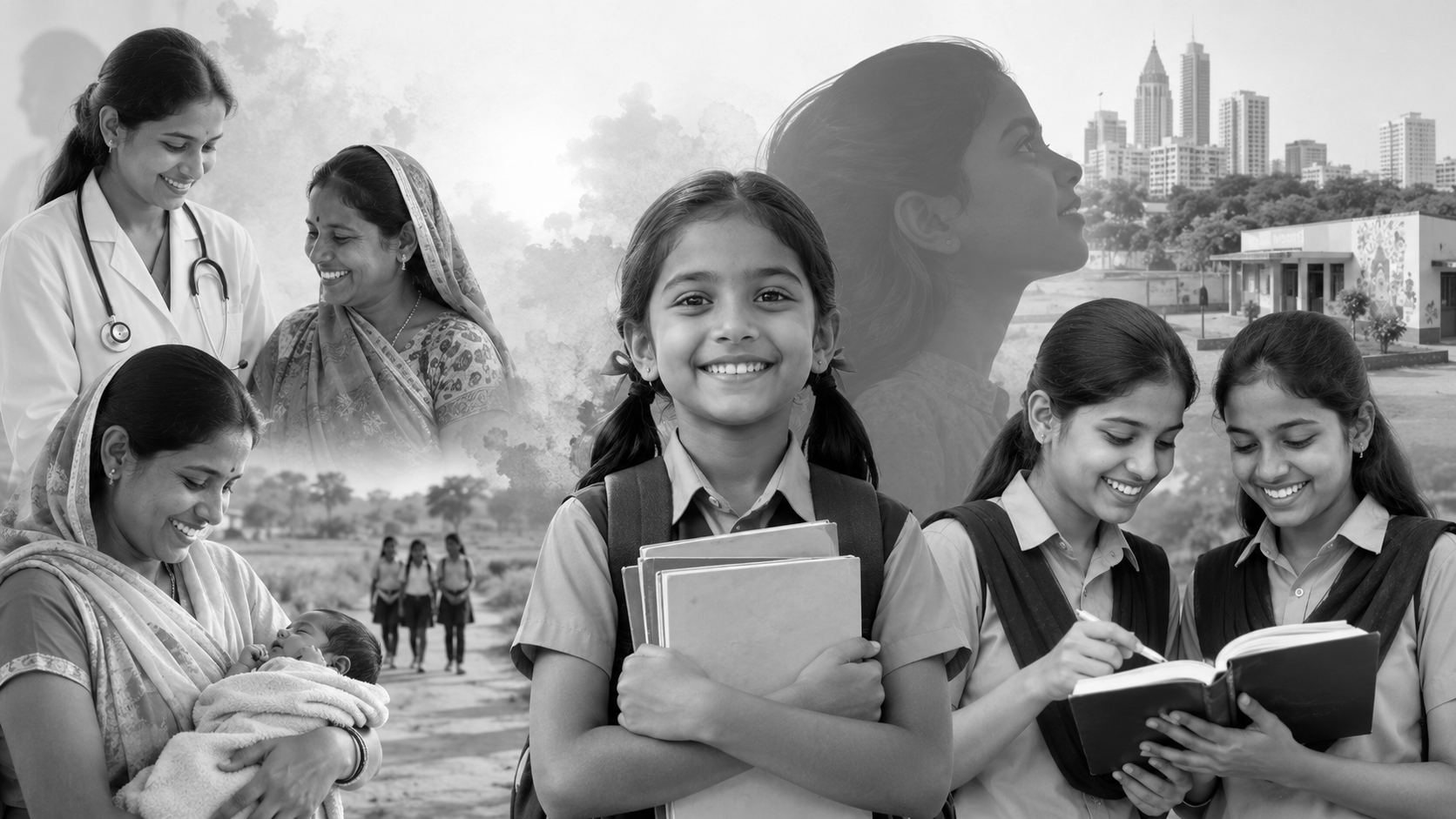
A defining feature of BBBP is its lifecycle approach , which recognises that challenges faced by girls evolve over time.
The programme begins with promoting safe pregnancies and dignified births, followed by efforts to ensure proper nutrition, healthcare and early childhood care. It then extends to school enrolment, retention in education, skill development and eventual economic and social empowerment.
Rather than addressing isolated issues, the initiative seeks to create an enabling environment that supports girls at every stage of their development.
Government officials argue that this integrated approach is essential because gender inequality often manifests in multiple forms, ranging from health disparities and educational barriers to social restrictions and economic exclusion.
The programme has also undergone independent assessment.
A third-party evaluation commissioned through NITI Aayog examined the performance of the BBBP component under Mission Shakti and concluded that the initiative remains relevant and effective in addressing critical gender-related challenges.
The evaluation reportedly highlighted the importance of integrated service delivery, convergence among departments and data-driven implementation strategies.
The findings have been cited by the government as validation of the programme's overall direction and its continuing relevance in addressing issues affecting women and girls.
Independent evaluations are considered particularly important because they provide external assessments of programme outcomes and identify areas requiring further strengthening.
Another aspect often overlooked in public discussions is the programme's district-focused implementation model.
The government provides support to districts based on performance indicators linked to the Sex Ratio at Birth , enabling local administrations to undertake targeted awareness campaigns and interventions.
This district-level focus reflects the understanding that gender-related challenges vary significantly across regions and require context-specific responses.
Officials say the strategy allows local authorities to identify problem areas, monitor progress and implement corrective measures more effectively.
By encouraging district administrations to take ownership of outcomes, the programme aims to create accountability while fostering innovation at the grassroots level.
Despite the progress reported by the government, experts acknowledge that significant challenges remain.
Gender stereotypes continue to influence social attitudes in many parts of the country. Issues such as child marriage, school dropout rates among adolescent girls, nutritional disparities and unequal economic opportunities continue to require sustained policy attention.
Improving numerical indicators is only one part of the broader challenge. Ensuring that girls have equal opportunities to learn, work, lead and participate in decision-making remains a long-term societal goal.
Policymakers increasingly emphasise that genuine empowerment must go beyond access to services and include the ability of women and girls to exercise choice, pursue aspirations and participate fully in economic and public life.
The government's latest assessment of BBBP positions the programme within the broader vision of women-led development , a concept that emphasises women's active role in shaping economic growth and social transformation.
Officials say the achievements recorded over the past eleven years demonstrate the importance of sustained advocacy, institutional support and community participation in addressing gender inequality.
As India continues its development journey, the experience of Beti Bachao Beti Padhao offers insight into how public policy, social mobilisation and community engagement can work together to address deeply embedded social challenges.
While the journey towards complete gender equality remains ongoing, the government maintains that the programme has helped create greater awareness, improve key indicators and strengthen the foundations for a future in which every girl is valued, protected, educated and empowered to realise her full potential.