
From Tiny Pores to Early Diagnosis: Indian Scientists Make Medical Breakthrough
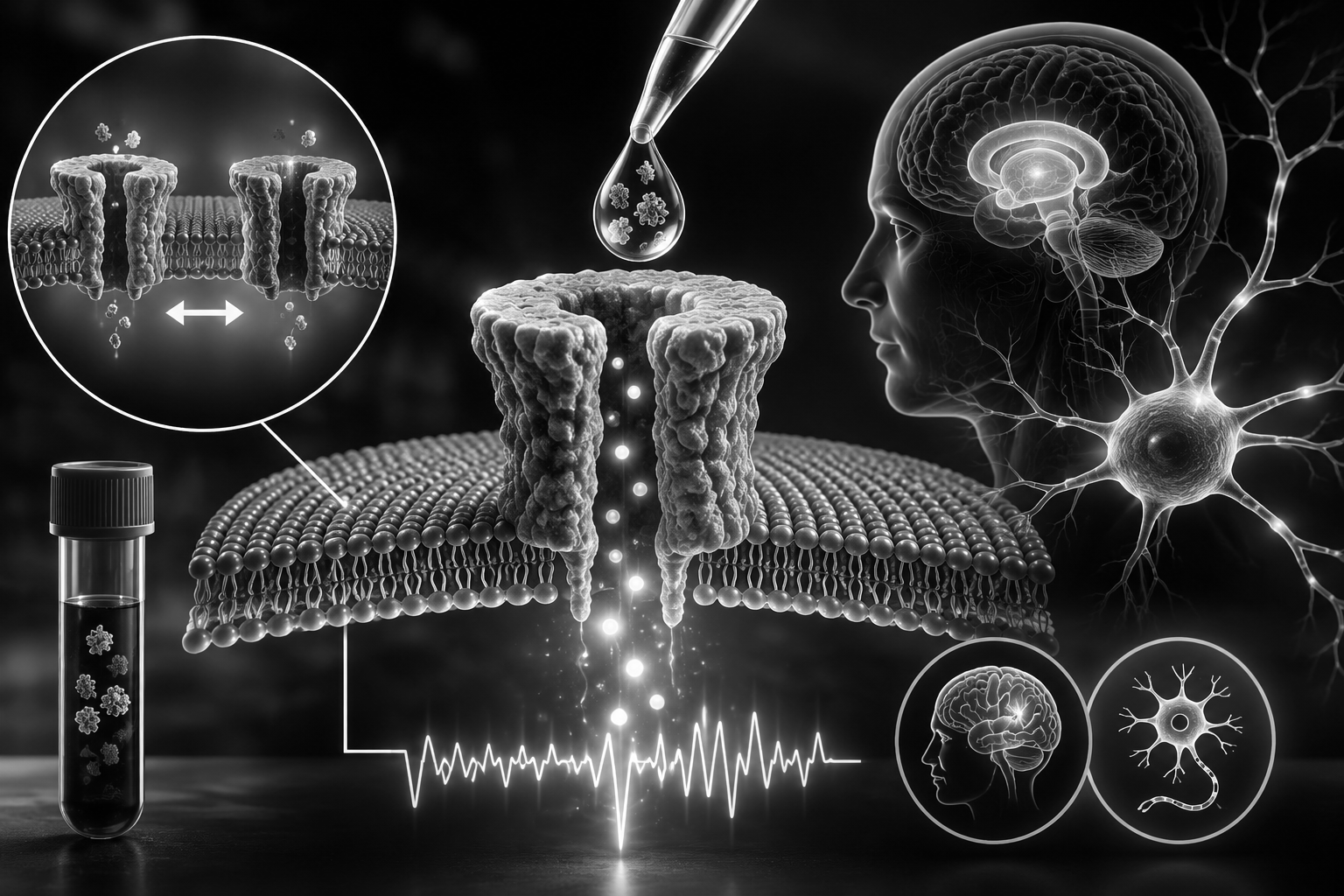
Scientists at the BRIC-Rajiv Gandhi Centre for Biotechnology (BRIC-RGCB) have developed a new nanopore-based sensing technology that could open the door to earlier and more precise detection of biomarkers associated with neurodegenerative diseases such as Parkinson’s disease and amyotrophic lateral sclerosis (ALS).
The breakthrough addresses one of the biggest challenges in biomarker detection: many disease-related molecules are present in the body at extremely low concentrations, making them difficult to identify using conventional techniques.
A research team led by Dr Mahendran K R, with contributions from PhD student Varsha Shaji and postdoctoral researcher Dr Neethu Puthumadathil, has developed what it calls “self-assembling dual-diameter” nanopore sensors. The technology uses short peptides that naturally assemble into pores of different sizes, allowing the sensors to detect biomolecules with varying shapes and dimensions.
The researchers found that the sensors can distinguish disease-associated forms from non-disease-associated forms even when the molecules are present in complex mixtures of proteins and at very low concentrations. The findings have been published in Nature Nanotechnology.
The technology could eventually move beyond laboratory research. Scientists said the nanopore platform could be developed into point-of-care devices capable of detecting biomarkers linked to diseases, including cancer, directly from biological fluids such as blood.
The nanopore architecture is inspired by nature and differs from the computational nanopore designs pioneered by Nobel Laureate Prof David Baker. Researchers said combining nature-inspired structures with computational design could potentially produce even more sensitive sensors.
BRIC-RGCB Director Dr Beena Pillai said early and accurate detection remains a major challenge in managing Parkinson’s and ALS, adding that the work demonstrates how nanotechnology and biotechnology can address an important unmet need in healthcare.
The study was conducted with researchers from Constructor University in Germany and CSIR-Indian Institute of Chemical Biology in Kolkata, with support from India's Department of Biotechnology, Department of Science and Technology, ICMR and CSIR.