
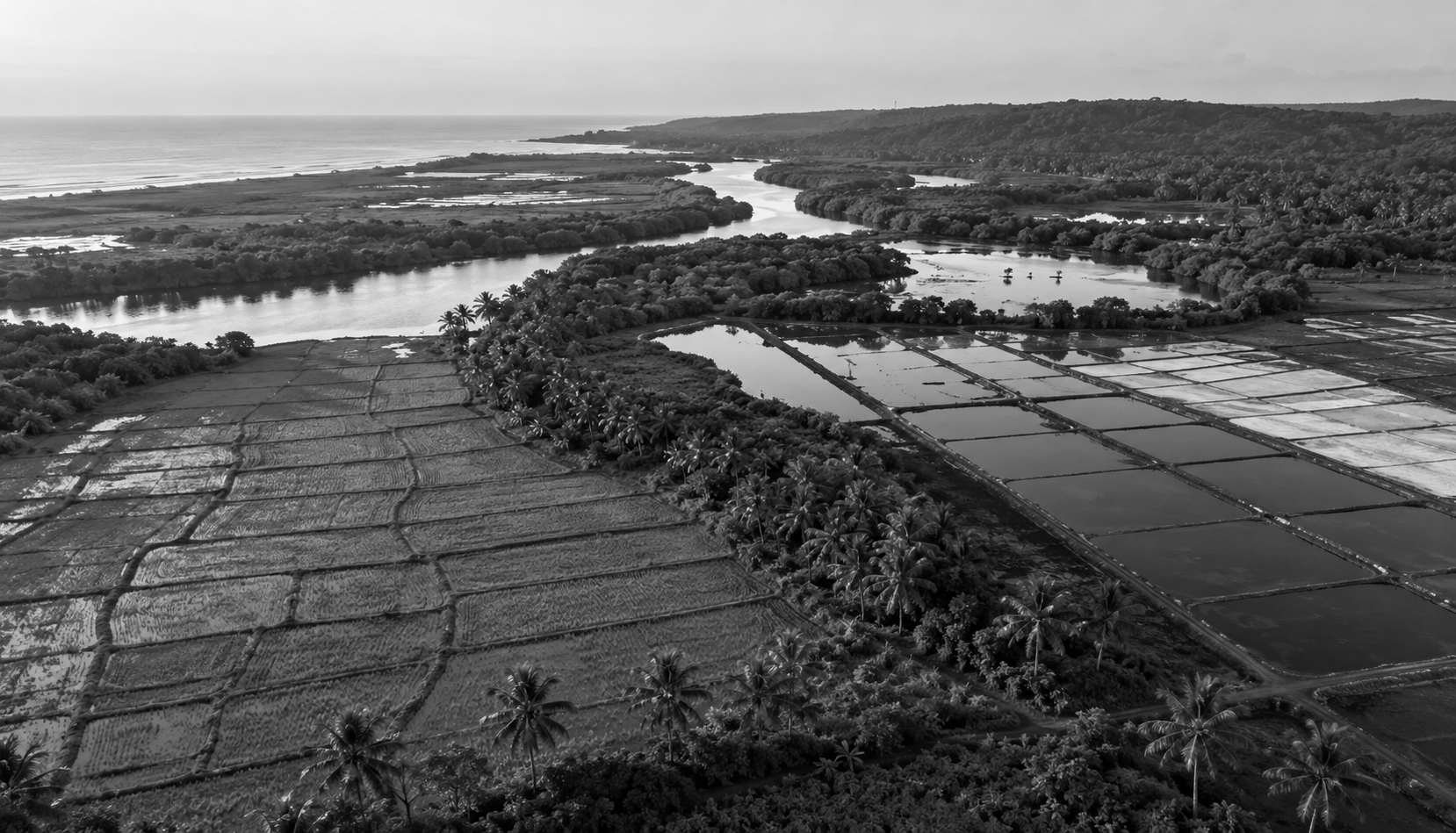
Goa Expands Eco Protection, Declares 1.03 Crore Sq Metres NDZ
In a significant move aimed at balancing development with environmental protection, the Goa government has notified 1.03 crore square metres (103.78 lakh sq m) of ecologically sensitive land in South Goa's Salcete taluka as a No Development Zone (NDZ) under the Regional Plan. The decision, announced by Town and Country Planning (TCP) Minister Vishwajit Rane , is being seen as one of the state's most ambitious conservation measures in recent years, particularly as Goa faces increasing pressure from urbanisation, tourism-related infrastructure and climate change.
The newly protected area includes paddy fields, salt pans, wetlands and other environmentally sensitive landscapes spread across seven villages in Salcete. According to the notification, Talaulim accounts for the largest share with 29.13 lakh square metres , followed by Majorda (17.64 lakh sq m) , Seraulim (16.81 lakh sq m) , Loutolim (16.71 lakh sq m) , Utorda (9.92 lakh sq m) , Orlim (9.49 lakh sq m) and Calata (4.08 lakh sq m) . Together, these parcels cover 103.78 lakh square metres , or approximately 10.38 square kilometres , now protected from future developmental activities.
Rane said the notification is part of the government's ongoing exercise to identify and preserve ecologically fragile areas under Goa's Regional Plan. Earlier this month, the TCP Department began notifying environmentally sensitive zones across the state, including mangroves, khazan lands, orchards, water bodies, rivers, fish farms and sand dunes , signalling a broader push towards sustainable land-use planning.
Environmental experts have welcomed the move, noting that the protected paddy fields serve as natural flood buffers by absorbing excess monsoon rainfall, recharging groundwater and reducing the risk of urban flooding. These functions are becoming increasingly important as extreme weather events and intense rainfall episodes become more frequent along India's western coast.
The inclusion of traditional salt pans and parts of Goa's historic Khazan land system further enhances the ecological significance of the notification. These landscapes support biodiversity, fisheries, migratory birds and salinity management, while also acting as natural safeguards against coastal erosion and sea-level rise.
The decision carries added importance for Salcete , one of Goa's fastest-urbanising regions and home to several major tourist destinations. Conservationists have long warned that unchecked construction could threaten agricultural heritage, biodiversity and natural drainage systems. By restricting development in these sensitive areas, the government aims to preserve Goa's unique environmental assets while ensuring sustainable growth.
Beyond conservation, the notification is expected to strengthen climate resilience , support food security , protect rural livelihoods and safeguard the natural landscapes that form the backbone of Goa's tourism-driven economy. As development pressures continue to mount, the move represents a crucial step towards securing the state's ecological future for generations to come.