
Godavari Pushkaralu 2027: Is Andhra Pradesh Ready For 10 Crore Devotees?
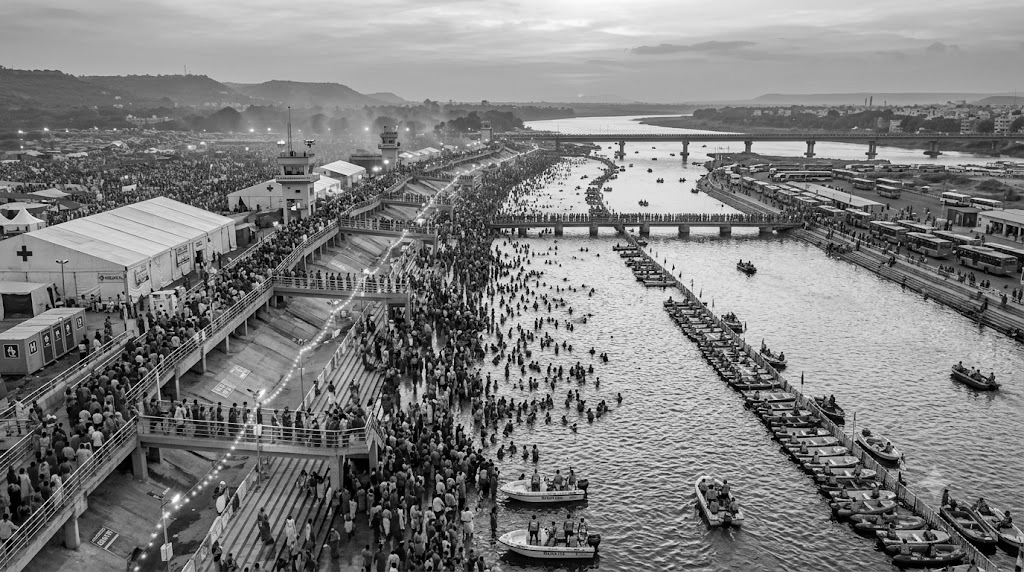
Andhra Pradesh is preparing for what could become one of the largest religious gatherings in the state’s history, with the Godavari Pushkaralu 2027 scheduled from June 26 to July 7, 2027. The 12-day festival is expected to attract an estimated 8 crore to 10 crore devotees, according to the latest government review, putting enormous pressure on infrastructure, transport, accommodation, medical services, sanitation, security and crowd-management systems.
The sheer scale of the proposed arrangements has prompted the N. Chandrababu Naidu government to approach Pushkaralu as much more than a traditional religious festival. The government is looking at the event as a massive public-infrastructure and tourism project, with preparations spread across six Godavari-region districts. The Chief Minister has also suggested branding the event as ‘Akhanda Godavari Pushkaralu’ and involving local communities in its organisation.
The preparations assume a level of footfall substantially higher than the previous Godavari Maha Pushkaralu. Around 4.86 crore devotees attended the 2015 event, whereas officials are now preparing for almost double that number over the 2027 festival period. The state is also considering the possibility of nearly one crore pilgrims arriving on a single day, making crowd distribution one of the most critical challenges.
The government has identified 4,932 works with an estimated value of ₹4,026 crore, of which ₹899 crore has already been allocated. The works are being taken up largely by the Urban Development, Roads and Buildings, Water Resources, Energy and Panchayat Raj departments. Officials have been directed to mobilise the remaining funds and explore Central assistance wherever required. With only about 10 months remaining, the Chief Minister has stressed that projects must be completed within the deadline without compromising quality.
The geographical spread of the preparations is itself significant. Of the identified works, 1,869 are in East Godavari, 625 in West Godavari, 1,501 in Konaseema, 426 in Eluru, 321 in Kakinada and 190 in Polavaram. This district-wise distribution indicates that the government intends to spread the pilgrim load across the wider Godavari region instead of allowing the entire crowd to converge on a few traditional pilgrimage centres.
One of the most visible components will be the development of 440 bathing ghats. The plan includes upgrading 259 existing ghats and constructing 181 new ones across the six districts. The objective is not simply to provide more bathing points but to create a network capable of dispersing pilgrims and reducing dangerous crowd concentrations at individual locations.
The emphasis on crowd distribution is particularly important because the memory of the 2015 Godavari Pushkaralu stampede continues to influence preparations. The tragedy at Rajamahendravaram’s Pushkar Ghat on the opening day highlighted the risks associated with sudden crowd concentration, restricted movement and inadequate evacuation capacity. Studies of the incident pointed to shortcomings in areas including crowd movement, traffic management and emergency response. For 2027, the challenge is therefore not merely to accommodate millions of people but to ensure that they move safely through ghats, roads, transport hubs and pilgrimage centres.
The East Godavari administration is already planning the festival on a scale comparable to the Maha Kumbh, with an emphasis on permanent infrastructure. New ghats, upgraded roads, sanitation systems and urban facilities are being planned, particularly around important locations such as Rajamahendravaram and Kovvur. The district administration is also looking at short-stay facilities and homestays to address the accommodation requirements of the expected influx.
Accommodation will be one of the most complicated logistical issues. Conventional hotels and lodges cannot possibly absorb the projected number of visitors. The state will therefore have to depend on a combination of hotels, lodges, temporary shelters, community accommodation, short-stay facilities and regulated homestays. Ensuring adequate toilets, drinking water, electricity, fire safety and security at temporary accommodation centres will be as important as increasing the number of beds.
Transport could present an even greater challenge. Millions of devotees are expected to travel by road and rail, while a large number could arrive in private vehicles. The government has proposed 487 green-energy buses for the festival and is working on traffic-management systems, buffer zones and vehicle-control measures. Roads, bridges and approach routes are being reviewed, with the Chief Minister specifically directing officials to ensure pothole-free roads and improved bridges before the festival.
The official East Godavari Pushkaralu portal is already being developed as a one-stop information platform covering ghats, hotels, hospitals and transport by road, train and air. The district administration says it is planning major infrastructure and pilgrim facilities to handle the anticipated influx and aims to organise the event on a scale comparable to the Maha Kumbh.
Technology is expected to become a major part of the crowd-management strategy. Authorities plan to deploy AI-based crowd analytics, CCTV monitoring, drone surveillance and QR-based vehicle identification. These systems could help officials monitor crowd density, identify congested locations, regulate vehicle movement and respond to emergencies in real time.
However, technology will work only if it is backed by trained personnel and clear decision-making protocols. AI alerts and CCTV feeds must translate into immediate action on the ground. If a particular ghat begins reaching dangerous capacity, authorities must be able to close access, divert pilgrims and open alternative routes within minutes. Crowd management will therefore require close coordination among the police, district administration, transport authorities, disaster-management teams and temple officials.
Medical preparedness is another major pillar of the plan. Authorities are proposing 30 temporary field hospitals, along with a large river-rescue network comprising 2,697 rescue boats and 8,955 trained swimmers. These arrangements are intended to address emergencies ranging from drowning incidents and accidents to dehydration, heat-related illness, cardiac emergencies and other health problems.
The timing of the festival makes medical planning particularly important. The Pushkaralu will begin on June 26, towards the end of the summer season, when temperatures can remain high in the Godavari region. Large crowds standing or walking for extended periods could face dehydration and heat-related health problems. Elderly pilgrims and children will require special attention, while ambulance corridors must remain operational even when surrounding roads experience severe congestion.
River safety will require special vigilance. A holy dip is at the heart of Pushkaralu, but the enormous number of pilgrims entering the river creates inherent risks. The deployment of thousands of trained swimmers and thousands of rescue boats is therefore significant, but their effectiveness will depend on strategic positioning, communication systems, lighting, barriers and clearly regulated access to the water.
Sanitation could become one of the most visible tests of the government’s preparedness. A festival involving several crore people over 12 days will generate enormous quantities of solid waste and place tremendous demand on toilets, drinking-water points, sewage systems and garbage collection. The government has directed officials to ensure clean river water, sanitation and drinking-water facilities, while also stressing an eco-friendly approach to the festival.
Protecting the Godavari itself will be critical. The success of the festival cannot be measured only by the number of devotees who take a holy dip. Authorities will also have to ensure that plastic waste, untreated sewage and other pollutants do not damage the river. Regular waste collection, segregation, disposal and strict controls around the ghats will be essential throughout the 12-day period.
The government is also attempting to give Pushkaralu a broader tourism dimension. A proposed temple tourism circuit is expected to connect major religious destinations such as Pithapuram, Annavaram, Dwaraka Tirumala and Antarvedi with the festival. The idea is to encourage devotees to explore the wider cultural and spiritual heritage of the state instead of restricting their visit to the river ghats.
Such a strategy could create substantial economic opportunities for the Godavari region. Hotels, restaurants, transport operators, local traders, artisans, tour operators and homestay owners could benefit from the unprecedented visitor flow. If roads, accommodation and tourism facilities are upgraded properly, the infrastructure created for Pushkaralu could continue supporting tourism long after the festival ends.
District administrations are already looking at connecting bathing ghats with nearby temples and improving supporting facilities. Eluru district, for example, has been examining existing bathing locations and proposals involving additional ghats, changing rooms, toilets, drinking water, CCTV systems, roads and sanitation facilities. Such district-level planning will be crucial because the success of the event will ultimately depend on how effectively local authorities implement the larger state-level strategy.
Another important aspect is the emphasis on permanent infrastructure rather than temporary festival arrangements. Roads, bridges, drainage systems, water supply networks, ghats and urban facilities can provide long-term benefits to residents if they are designed properly. This could make the ₹4,026-crore development programme more than a one-time expenditure, provided the projects are selected and executed with long-term regional needs in mind.
At the same time, the government faces a demanding deadline. The Chief Minister has directed officials to accelerate all works and complete them within the remaining 10 months, while maintaining quality. The challenge will be to ensure that construction activity itself does not create last-minute congestion, incomplete roads or unsafe conditions in areas that will soon receive massive crowds.
The government also has an important opportunity that was not available to the same extent in 2015: time for testing and rehearsal. Before the first major crowds arrive, authorities can conduct mock drills for stampede prevention, river rescue, medical evacuation, traffic diversions and communication failures. Simulated high-footfall exercises could reveal bottlenecks that may otherwise remain hidden until the festival begins.
The question of whether Andhra Pradesh is ready for 10 crore devotees therefore cannot be answered simply by looking at the number of projects sanctioned. Readiness will depend on whether those projects are completed, whether facilities are operational and whether agencies can work together under extreme pressure.
The government has already announced an ambitious framework: 4,932 works worth ₹4,026 crore, 440 bathing ghats, 30 temporary field hospitals, 2,697 rescue boats, 8,955 trained swimmers and 487 green-energy buses, supported by AI-enabled crowd monitoring, CCTV networks, drones and QR-based vehicle management.
Yet the projected 8 crore to 10 crore devotees should be understood as a planning estimate rather than a guaranteed final attendance figure. Actual footfall will depend on religious observance, weather, transport availability, crowd distribution and the timing of pilgrim arrivals. What matters for the administration is preparing for the highest plausible demand rather than assuming that the crowd will remain evenly distributed throughout the 12 days.
The Godavari Pushkaralu 2027 will consequently be a test on several fronts at once religious, administrative, infrastructural, environmental and economic. Andhra Pradesh is attempting to transform a traditional river festival into a modern mega-event capable of handling crowds on a scale comparable to some of the world’s largest gatherings.
With June 26, 2027 approaching and only around 10 months available for execution, the next phase will be decisive. The state has the plans, the funding commitments and the proposed infrastructure blueprint. The real test will be whether every ghat, road, hospital, rescue team, bus route, accommodation centre, sanitation facility and surveillance system is ready before the first major wave of pilgrims arrives.
For Andhra Pradesh, the success of Pushkaralu will ultimately not be determined by how many devotees visit the Godavari. It will be determined by how safely, efficiently and respectfully the state manages them. If the preparations are completed on schedule and the lessons of 2015 are fully incorporated, the 2027 festival could establish Akhanda Godavari Pushkaralu as a benchmark for managing mega religious gatherings in India.