
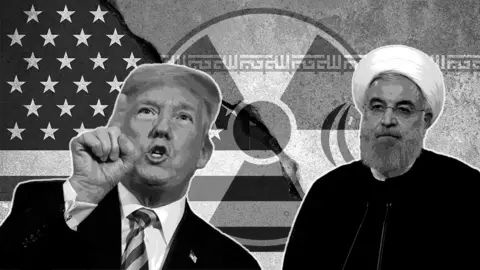
'Great Progress or Great Fiction?’ Trump, Iran, and the Nuclear Deal
The first round of US-Iran nuclear talks has concluded with both sides claiming victory, considerable confusion, and at least one impromptu advertisement for American agriculture.
Donald Trump , never one to undersell a moment, declared the opening round of negotiations produced "great progress." Vice President JD Vance offered the slightly more measured verdict of a "very good foundation." Both men, however, were careful not to mention the rather significant detail that the actual hard part has not yet begun.
Then came the inspection drama. Trump announced, with characteristic certainty, that Iran had agreed to allow nuclear inspections and that the IAEA would be on the ground within hours. It was a bold claim. It was also, according to Iran, entirely fictional. Tehran responded swiftly and flatly: it had made no such announcement whatsoever. So either the President of the United States misread the room, or Iran has a creative relationship with its own decisions. Either way, the foundation Vance described appears to be built on something considerably less stable than concrete.
Meanwhile, the frozen assets question has produced its own theatre of contradictions. Iran announced that Tehran, not Washington, will decide how its released frozen funds are spent. This would come as news to the American side, which had spent considerable energy implying otherwise. Two parties, one agreement, and apparently two completely different agreements within it. Truly a diplomatic achievement for the ages.
On sanctions, the US Treasury has issued a waiver on Iranian oil sanctions as part of an interim agreement, a meaningful concession that Washington appears to be treating as routine housekeeping. When Trump was asked directly about this waiver, he executed a seamless pivot that would make any television presenter proud, transforming a geopolitical question into a sales pitch. Iran, he explained, is "so desperate for food" that every dollar earned from increased Iranian oil sales would, in his words, " boomerang right into the pockets of American farmers." The real winners, Trump declared, are American farmers. Iran is sitting across the table in a nuclear negotiation and somehow the headline is soybean exports . Remarkable.
While Washington talks crops, Iranian President Pezeshkian is in Islamabad for further talks, accompanied by Foreign Minister Abbas Araghchi . The diplomatic circuit continues regardless of whether anyone agrees on what was agreed.
Now to the Strait of Hormuz , which is open again, in the sense that ships are moving through it, though Iran's definition of open and everyone else's definition of open appear to occupy separate geographies. Tehran has made clear that Hormuz can no longer return to its previous status. Iran will monitor, regulate, and actively influence traffic movements through the strait. On Monday alone, 37 vessels transited and 42 commercial crossings were recorded. Trump posted on Truth Social that 19 million barrels of oil moved through Hormuz , which he presented as evidence of success. Iran presented the same figure as evidence of its administrative authority.
Shipping volumes are surging and tankers carrying Iranian oil are moving faster than before. Iran and Oman are now jointly studying the future administration of the strait, including financial arrangements , which is a polite way of saying they are designing a tolling structure that the global shipping industry will eventually be invoiced for. The phrase "financial arrangements" in this context should be understood as a preview of fees that have not yet been announced but are absolutely being designed.
The picture that emerges from this first round of talks is of two sides who have agreed to keep talking, disagree on what they have agreed , and are both declaring victory loudly enough that neither domestic audience asks too many questions.
Great progress , said Trump. A very good foundation, said Vance. Iran said it announced nothing.