
Greenwich at Kala Bhavana: Reimagining Tagore’s Education for the Global Age
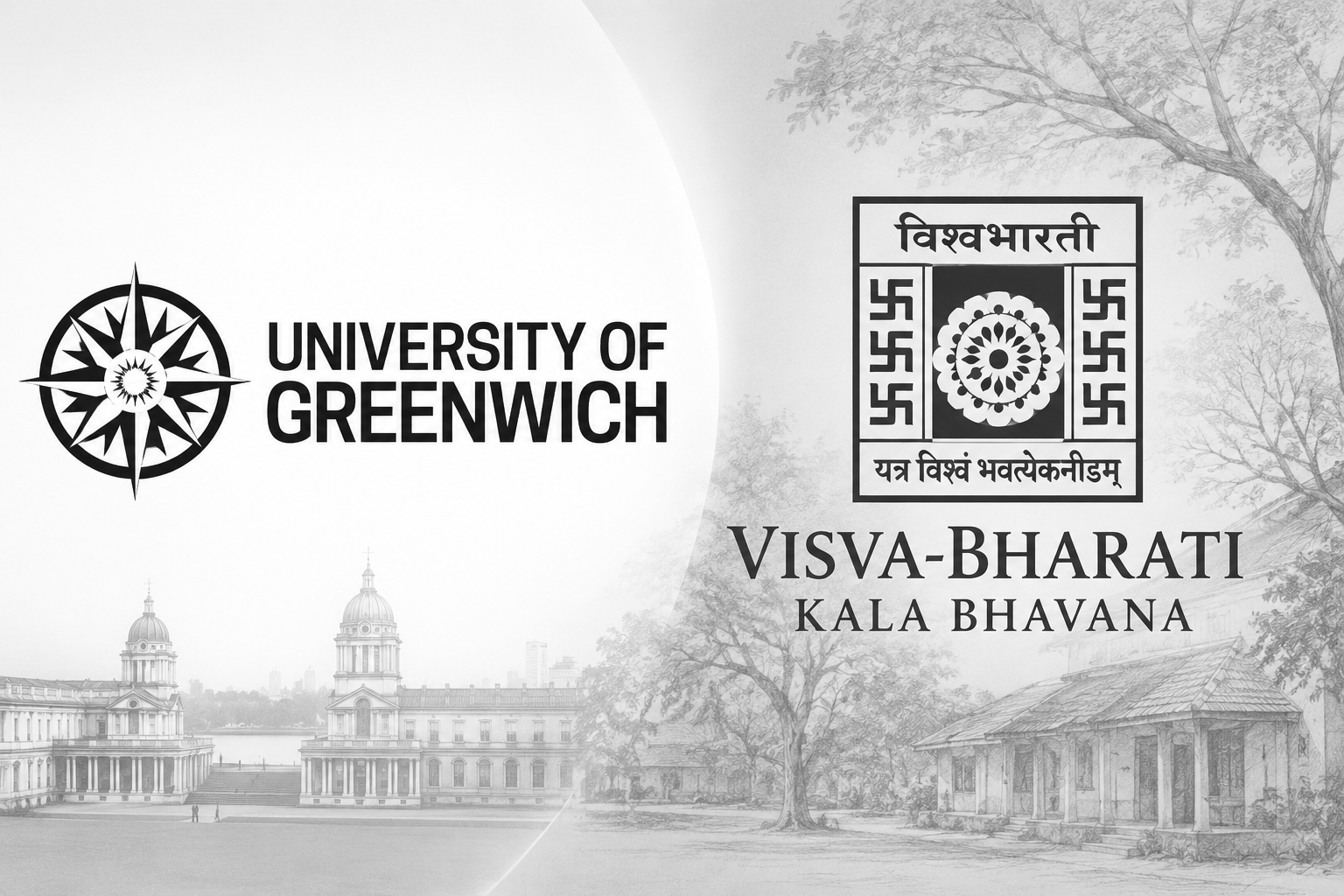
The United Kingdom’s University of Greenwich at Visva-Bharati’s Kala Bhavana in Santiniketan has put a century-old Indian experiment in art and education into a new international spotlight. Two Greenwich Design Department professors, David McDowell Waterworth and Ian Thompson, are currently interacting with Kala Bhavana students through workshops, discussions and sessions on artistic practices under a newly signed memorandum of understanding.
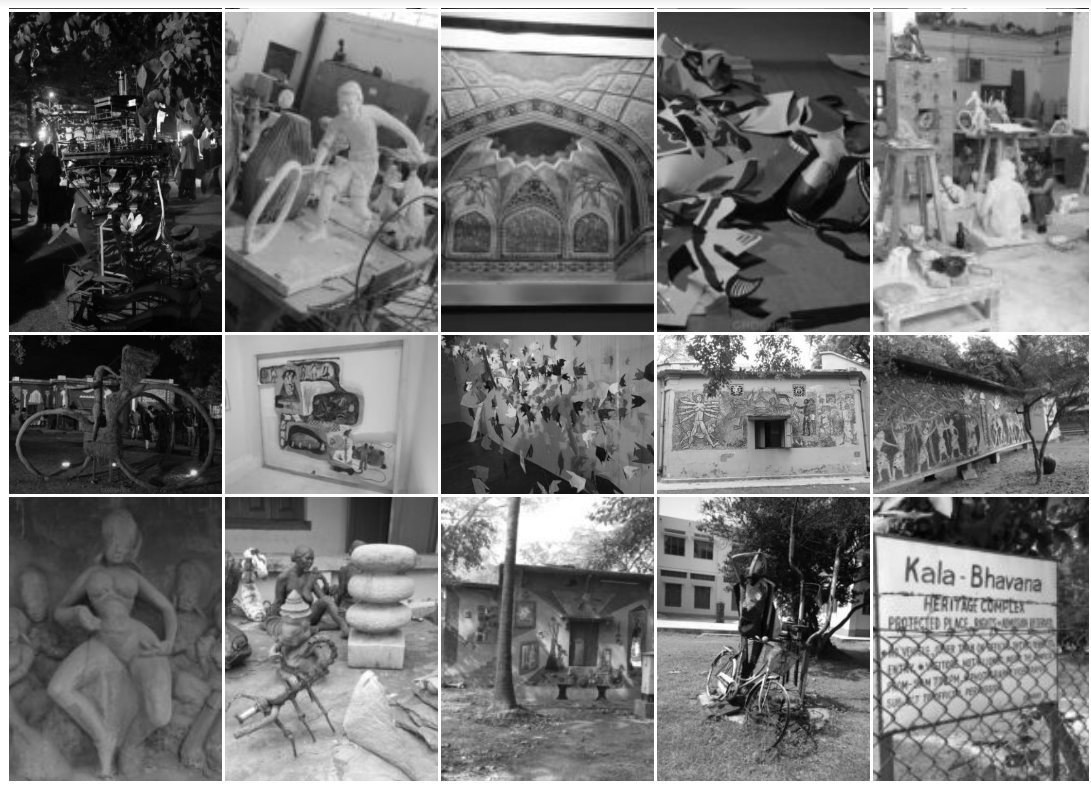
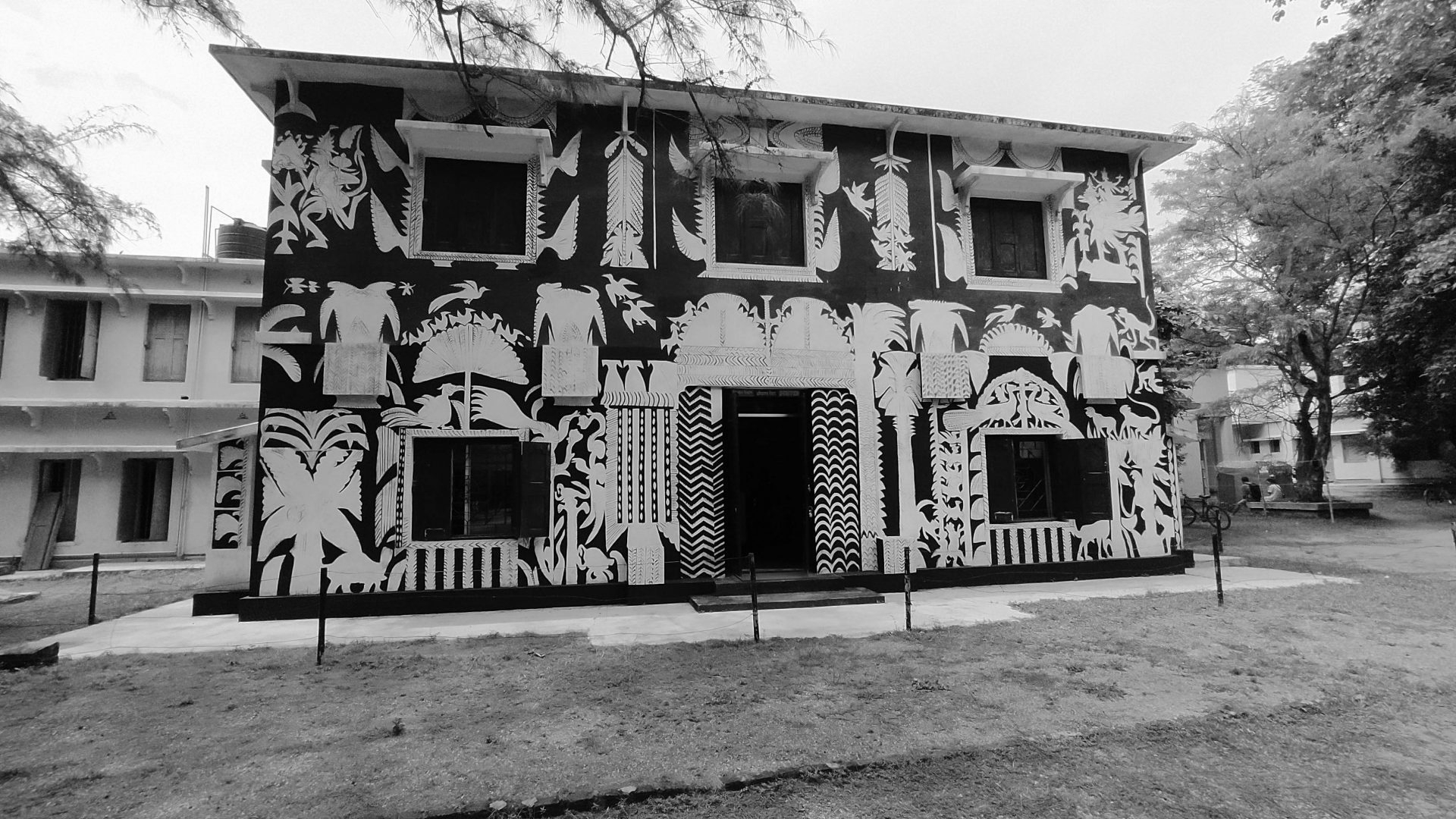
The development may look like another international academic partnership, but its significance is much broader. The Greenwich professors reportedly described the Visva-Bharati campus as an “open gallery”, capturing the distinctive idea that art at Santiniketan was never meant to remain confined to classrooms or galleries. The landscape, architecture, crafts, festivals and community became part of the learning environment. The partnership therefore raises a larger question: Can Tagore’s century-old educational experiment be adapted to the needs of the 21st-century creative economy and the National Education Policy (NEP) 2020?
A university that was designed differently
Tagore established his school at Santiniketan in 1901 with just five students, challenging the rigid, examination-oriented colonial education system. Classes were often held in the open air, while academic learning was combined with music, painting, drama and cultural activities. Visva-Bharati was formally established as a university in 1921, but the educational experiment had already begun.
Tagore did not seek to eliminate academic education or examinations. His objective was to expand the purpose of education. He wanted students to develop intellectually, creatively, emotionally, physically and socially. Nature became part of learning, art became a means of observation and expression, and community and culture became integral to education. The aim was not merely to produce qualified individuals but well-rounded human beings capable of thinking, creating, cooperating and contributing.
Kala Bhavana turned the philosophy into an artistic experiment
Kala Bhavana was established in 1919, before Visva-Bharati itself became a university. It transformed Tagore’s philosophy into a distinctive experiment in visual education. Rather than merely reproducing Western academic traditions, it sought to develop a modern Indian artistic language rooted in local culture, nature and Indian traditions while remaining open to global influences.
Nandalal Bose, who joined Santiniketan in 1919, played a foundational role. His work extended beyond conventional painting into murals, illustrations, posters, stage design and crafts. Later, artists such as Benode Behari Mukherjee and Ramkinkar Baij strengthened Kala Bhavana’s reputation as a centre of Indian modernism. Baij’s monumental works, including Santhal Family and Mill Call, demonstrated how sculpture could become part of the landscape itself.
Thus emerged one of Kala Bhavana’s defining ideas: the environment could become the gallery.
Indian roots, global outlook
Kala Bhavana was never culturally isolated. Santiniketan welcomed influences from Japan, China, Persia, Bali, Burma and the West, while international teachers and artists participated in its academic environment. Tagore’s philosophy was therefore not about choosing between Indian and Western traditions. It was about remaining rooted without becoming closed.
That makes the Greenwich collaboration particularly relevant. British educators can experience Indian artistic traditions, rural aesthetics, crafts and Tagorean pedagogy, while Kala Bhavana students gain exposure to contemporary British design practices and international creative networks. Visva-Bharati has also highlighted academic links with institutions in Thailand, France and the Netherlands.
The Tagore model is bigger than art
Tagore’s educational philosophy was never intended only for artists. Kala Bhavana represents its strongest application to visual art and design, but the broader model included academic learning, music, literature, drama, nature, culture and community engagement.
The idea of creating a “complete human being” did not mean producing a perfect person. It meant developing curiosity, creativity, emotional sensitivity, physical awareness, social responsibility, cultural confidence and openness to the world.
Why NEP 2020 brings Tagore back into the conversation
NEP 2020 does not simply revive Tagore’s educational system, but several of its principles closely resonate with the Santiniketan experiment. NEP emphasises holistic and multidisciplinary education, experiential learning, creativity, critical thinking, Indian Knowledge Systems, environmental awareness, community engagement and internationalisation.
Tagore emphasised nature, art, culture, experience and community. NEP seeks to integrate many of these principles into contemporary education. The two are not identical, but their convergence makes Kala Bhavana particularly relevant today.
Tagorean education does not mean abandoning degrees
The Tagorean approach is not an informal alternative to recognised education. Kala Bhavana functions within Visva-Bharati’s formal university structure, offering programmes including BFA, MFA and PhD-level pathways in fine arts and design.
The important distinction is between the qualification and the method of education. Students receive formal university degrees, examinations and academic credits, while their learning can incorporate nature, creativity, interdisciplinary practice and experiential methods.
What could India gain from taking the model further?
India’s major gap is that Tagore’s educational philosophy has not been converted into a widely recognised, research-backed and internationally transferable Tagorean pedagogy comparable in global visibility to Montessori or Waldorf education.
That creates an opportunity to study nature-based learning, art-integrated education, Indian Knowledge Systems, craft, environmental education, rural development, creative industries and technology-enabled cultural education.
Why foreign universities interested?
For foreign universities, Kala Bhavana offers something difficult to reproduce elsewhere: a living environment where art, landscape, craft, culture and education intersect. It provides opportunities for research into Indian design traditions, traditional materials, creative practices and experiential education.
For India, partnerships can provide students with international exposure, contemporary design methodologies, global networks, new technologies and collaborative research. The immediate Greenwich programme involves workshops and artistic exchange; there is no public indication yet of a joint or dual degree.
From craft to AI: where the model could go
The future need not involve simply recreating early 20th-century Santiniketan. Tagore’s principles could be adapted through Indian craft and digital design, traditional sculpture and 3D technology, folk performance and immersive theatre, textiles and sustainable fashion, or Santiniketan heritage and virtual reality.
Such projects could simultaneously advance NEP goals involving Indian knowledge, experiential learning, multidisciplinary education, creativity, sustainability and internationalisation.
The knowledge-exchange question India must not ignore
International interest in Indian cultural knowledge also creates responsibilities. As foreign institutions engage with Indian crafts, indigenous aesthetics and traditional knowledge, India must ensure that collaboration remains knowledge exchange rather than knowledge extraction.
Questions of intellectual property, artisan recognition, community participation and equitable commercial benefits will become increasingly important as traditional knowledge enters global creative markets.
The larger significance of the Greenwich–Kala Bhavana partnership
Visva-Bharati, founded in 1921, and the University of Greenwich, established in 1890, represent different educational histories, but their current interaction brings them together around creativity, design and international exchange. Visva-Bharati became a UNESCO World Heritage Site in 2023, with Santiniketan recognised for its distinctive integration of education, art, architecture, landscape and cultural life.
The Greenwich professors’ description of the campus as an “open gallery” captures the essence of Kala Bhavana. Its significance lies not simply in preserving Tagore’s legacy but in asking whether that legacy can evolve.
The real opportunity is therefore not merely to let the world study Tagore. It is to study, modernise and take Tagore’s educational ideas to the world combining his vision of the whole human being with NEP 2020, contemporary technology and global creative education.