
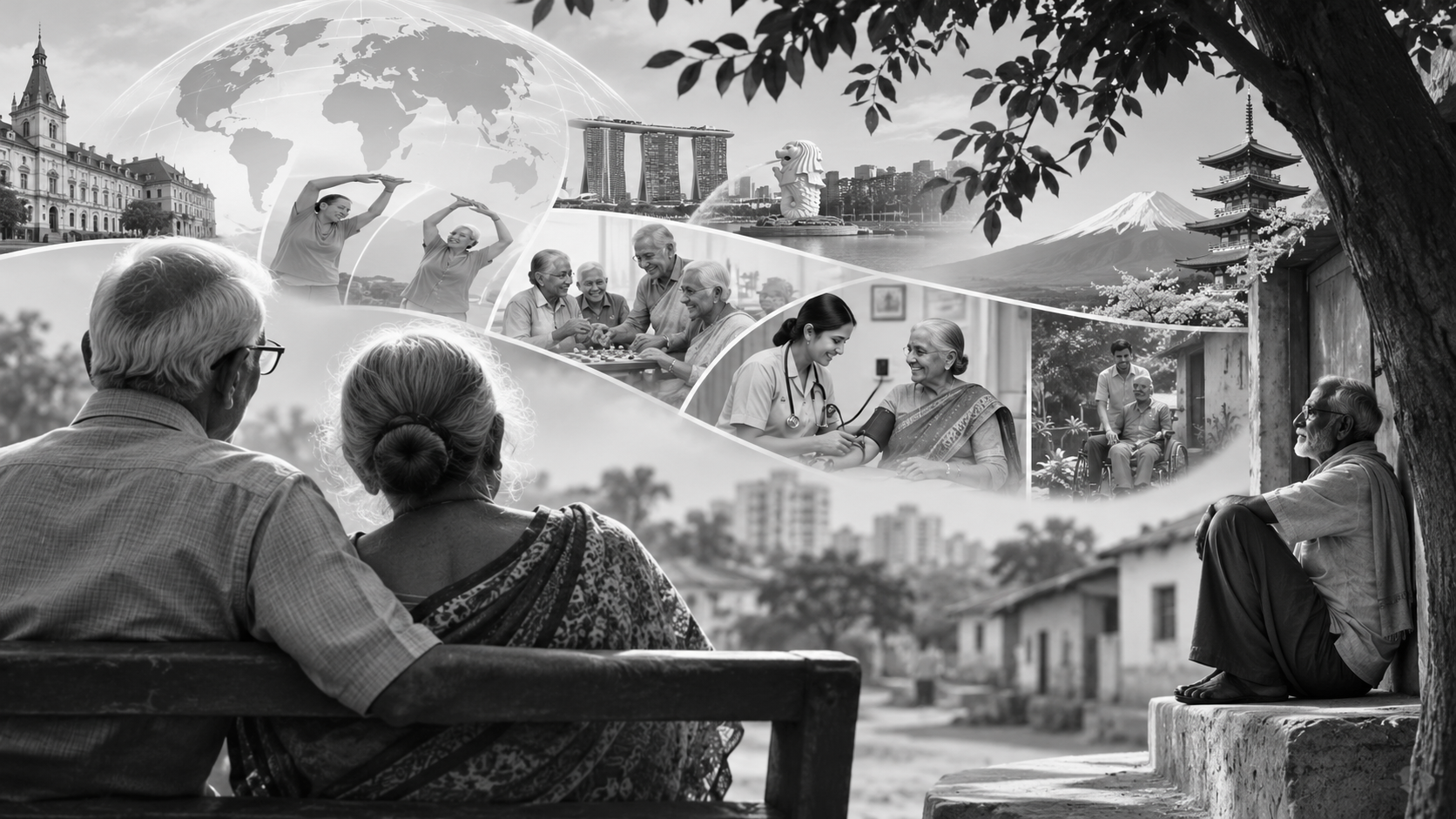
Growing Old Alone: The World’s Ageing Challenge and India’s Unprepared Future
As life expectancy increases and family structures change, growing old alone is emerging as a major social challenge across the world. Migration, smaller households, declining birth rates and changing lifestyles are transforming the way societies care for older generations. What was traditionally considered a family responsibility is increasingly becoming a concern for governments, healthcare institutions and community organisations. India, despite having a relatively young population, is approaching a significant demographic transition, raising questions about its preparedness to support millions of senior citizens in the coming decades.
A World Growing Older
According to the UNFPA India Ageing Report 2023, India's population aged 60 and above is projected to increase from approximately 149 million in 2022 to 347 million by 2050, accounting for more than one-fifth of the country's population. The report also highlights the vulnerability of older women, who are more likely to experience widowhood, financial dependence and social isolation. Around 8.6% of elderly women and 2.5% of elderly men live alone, according to its analysis of LASI data. The concern is not that everyone living independently experiences loneliness, but that many older people lack dependable assistance during illness, emergencies and everyday difficulties.
Internationally, several indices assess how countries are preparing for ageing. The Natixis Global Retirement Index examines retirement finances, material wellbeing, health and quality of life across 44 countries. Its 2025 edition placed Norway first, followed by Ireland and Switzerland. The Active Ageing Index, developed by the United Nations Economic Commission for Europe and the European Commission, measures employment, social participation, independent living and the capacity for active ageing. Meanwhile, HelpAge International's Global AgeWatch Index 2015 placed India 71st among 96 countries, although this is a historical ranking rather than a current assessment. The WHO's Age-Friendly Cities framework further emphasises accessible housing, transport, healthcare and public spaces as essential elements of healthy ageing.
How Other Countries Are Preparing
Countries have adopted different approaches to support their ageing populations. Japan operates a long-term care insurance system that provides eligible older people with home assistance, rehabilitation, day-care and residential services. Its community-based integrated care model connects healthcare, housing and everyday support. Germany relies on mandatory social long-term care insurance, helping finance professional care and supporting families dealing with significant care responsibilities. Sweden and Denmark place considerable emphasis on municipal services, offering home assistance, meals and rehabilitation to help older residents remain independent.
Singapore combines family responsibility with government-backed retirement savings, healthcare financing and neighbourhood-based Active Ageing Centres. Its Age Well SG programme aims to help senior citizens remain active and socially connected. South Korea, which introduced long-term care insurance in 2008, provides home-based and residential care to eligible older people. Australia follows a government-supported system combining home assistance and residential facilities, while the United States relies on a mixture of Medicare, Medicaid, private insurance and family caregiving. China is expanding community-based services alongside family and institutional care. The Netherlands and Norway also offer organised long-term care and publicly supported services. Despite differences in funding and delivery, these countries increasingly recognise that elderly care requires coordinated healthcare, financial protection and community support.
India's Distinctive Challenge
India's situation is different because of its population size, economic diversity and continued dependence on family-based care. Migration for employment and education, smaller households and changing lifestyles are weakening the assumption that children will always be available to look after ageing parents. A large section of the workforce has also spent its working life in the informal sector without access to employer-backed pensions or substantial retirement savings.
The NITI Aayog's Senior Care Reforms in India paper, published in 2024, highlights several vulnerabilities. It reports that 75% of older people have one or more chronic diseases, 24% have at least one limitation in daily activities and 48% face difficulties with activities such as shopping, managing money or travelling independently. Around one in three older people experience depressive symptoms, while 78% reportedly live without pension cover. The paper also identifies digital exclusion as a major concern, with approximately 85.8% of older people described as digitally and computer illiterate. These findings underline the need for affordable healthcare, financial security and accessible support services.
Government Initiatives and Remaining Gaps
India has introduced several measures to protect senior citizens. The Maintenance and Welfare of Parents and Senior Citizens Act, 2007 provides a legal mechanism for eligible parents and senior citizens to seek maintenance. The Atal Vayo Abhyuday Yojana supports elderly welfare through institutional and community-based programmes, while the Rashtriya Vayoshri Yojana provides assistive devices to eligible older people with age-related disabilities. Other initiatives include the Integrated Programme for Senior Citizens, the National Programme for Health Care of the Elderly, the Indira Gandhi National Old Age Pension Scheme and the expansion of Ayushman Bharat–PM-JAY to eligible people aged 70 and above.
The Elderline helpline 14567 provides information, emotional support and assistance in cases of abuse, neglect and abandonment. Government updates reported more than 29 lakh calls received between FY 2021–22 and FY 2025–26, while 35,480 candidates were trained under the geriatric caregiver training programme during FY 2023–24 to FY 2025–26. However, helplines and welfare benefits cannot replace regular assistance with meals, medication, mobility and medical appointments. The larger challenge is ensuring that existing programmes reach vulnerable people consistently.
NGOs: Bridging the Care Gap
Non-governmental organisations are playing an important role in extending healthcare, companionship and support to older people. HelpAge India, through its mobile healthcare units, telehealth services and community programmes, reported supporting more than two million older people in its 2024–25 annual report. Its 161 mobile healthcare units operated across 2,845 villages in 23 States and Union Territories, reaching more than 13 lakh older people. Agewell Foundation works through a volunteer network and says it interacts with more than 25,000 older people daily. Dignity Foundation focuses on day-care, dementia support and activities that reduce loneliness, while Nightingales Medical Trust provides specialised eldercare and dementia-related services. Organisations such as Dementia India Alliance and Silver Innings Foundation also contribute through awareness, caregiver support and social inclusion.
Building an Age-Friendly Future
India needs a coordinated approach that combines government programmes, family support, professional caregiving and community participation. Expanding geriatric healthcare, improving pension coverage, training caregivers and establishing neighbourhood day-care centres should become priorities. Local authorities could identify older people living alone and connect them with health workers, volunteers and emergency services. Affordable home-care facilities, dementia support and rehabilitation services are equally important.
Technology can supplement these efforts through telemedicine, emergency-alert devices, medication reminders and remote health monitoring, but it cannot replace human companionship. India can also draw lessons from Japan's long-term care system, Germany's social insurance model, Singapore's community centres and Nordic countries' municipal services.
As the elderly population expands, the responsibility for their wellbeing cannot rest entirely on families or charitable organisations. Growing old should not mean growing isolated, financially insecure or forgotten. India's real test will be whether it can build a society in which older people have the freedom to live independently and the assurance that dependable support will be available whenever they need it.