
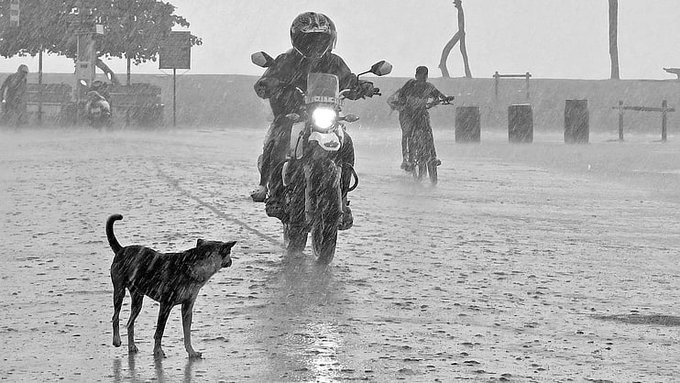
Heavy Rains in Kerala Leave Two Dead, Red Alert Issued for Northern Districts
The southwest monsoon remained active over Kerala on Monday, bringing heavy rain, strong winds, and widespread disruption , while authorities intensified disaster preparedness and emergency response measures as the India Meteorological Department issued multiple weather alerts across the state.
The IMD has issued a red alert for three northern districts for Tuesday , warning of extremely heavy rainfall exceeding 20 cm in 24 hours . Kozhikode, Kannur, and Kasaragod are expected to face the heaviest impact, while Malappuram and Wayanad are under an orange alert. Several central and southern districts remain under yellow alerts due to the likelihood of isolated heavy rainfall.
At least two rain-related deaths were reported. In Malappuram’s Changaramkulam, a 15-year-old boy , Murshid , died after falling into a water body while fishing. In Palakkad’s Kuzhalmannam, 30-year-old Ramdas died after a well collapsed while he was cleaning it. Police have registered cases of unnatural death and investigations are underway.
Widespread damage was reported across the state, including fallen trees, damaged homes, and waterlogging in urban areas such as Kochi, Kannur, and Thrissur. A banyan tree fell at a school in Pathanamthitta, a coconut tree damaged a house in Thrissur, and a school compound wall collapsed in Thiruvananthapuram.
As a precaution, several tourist destinations have been closed , and authorities have warned residents in landslide-prone, riverbank, and downstream dam areas to remain alert and relocate if advised. Fishermen have been strictly cautioned against venturing into the sea due to wind speeds of 40-60 kmph along the coast.
The Kerala State Disaster Management Authority (KSDMA) has activated round-the-clock control rooms at district and taluk levels. Emergency helplines 1077 and 1070 are operational, with rapid response teams, police, and local bodies placed on standby for rescue and evacuation operations.
Officials said Kerala’s strengthened early warning systems and coordinated disaster response framework are helping manage recurring extreme weather events, even as continuous monitoring of rivers, dams, and landslide-prone zones continues across the state.