
Hyderabad’s Mega Civic Overhaul: GHMC Split into Three Units
In a major administrative overhaul aimed at strengthening urban governance , the Telangana government has officially trifurcated the Greater Hyderabad Municipal Corporation (GHMC) into three separate civic bodies the residual GHMC, Cyberabad Municipal Corporation, and Malkajgiri Municipal Corporation. The government issued formal orders on Wednesday, marking a decisive shift toward decentralized administration . The move comes less than a year after 27 peripheral municipalities were merged into GHMC, expanding its jurisdiction from 650 square kilometres to 2,053 square kilometres . Managing such a vast urban expanse under a single civic body had become increasingly complex, prompting authorities to opt for restructuring to improve efficiency and responsiveness.
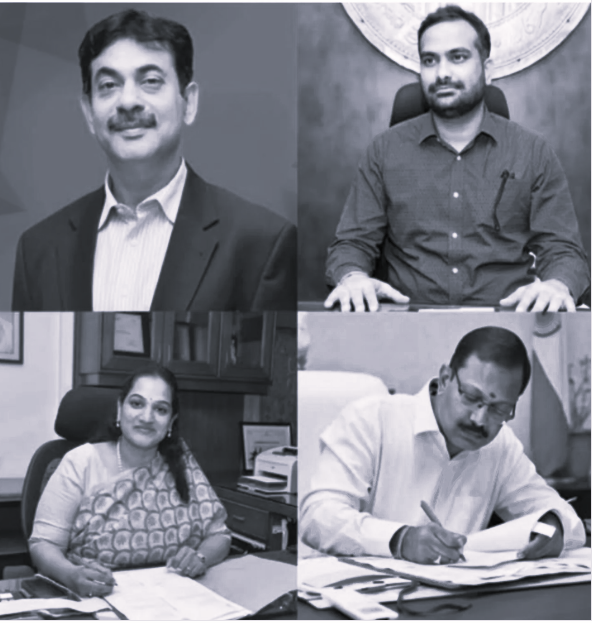
Special Chief Secretary Jayesh Ranjan (IAS) has been appointed as the Special Officer for all three corporations and formally assumed charge. In the absence of elected councils, he will oversee the transition and ensure continuity in civic administration. With significant experience in IT, industries, and urban development, his leadership is expected to streamline governance and guide Hyderabad’s growth toward global standards . The government has also appointed separate IAS officers as Commissioners R.V. Karnan will continue to head GHMC, G. Srijana will lead Cyberabad, and Vinay Krishna Reddy will serve as Commissioner of Malkajgiri.
Under the new structure, GHMC will retain the Old City and central regions with 6 zones , 30 circles , and 150 wards . The Cyberabad Municipal Corporation will cover the western IT corridor with 16 circles and 76 wards , while the Malkajgiri Municipal Corporation will administer eastern and northern Hyderabad with 14 circles and 74 wards . The division is designed to enhance service delivery , strengthen local accountability , and improve coordination among civic and planning authorities.
The trifurcation also presents financial and administrative challenges. Liabilities estimated at nearly ₹5,000 crore will need to be apportioned among the three entities. The separation of assets, staff, and digital governance systems will require careful coordination to ensure a smooth transition. Nevertheless, the government maintains that the reform will accelerate civic services such as sanitation, road maintenance, water approvals, and building permissions.
With the GHMC council’s term having ended, the restructuring carries significant political implications . Separate elections for the three corporations are likely in April or May, potentially reshaping local dynamics and fund allocation priorities. Urban planners describe the move as a strategic step toward managing Hyderabad’s rapid expansion as a major economic hub, marking the beginning of a new chapter in the city’s governance.