
IAEA Chief Says Assad-Era Syrian Reactor Was Configured for Nuclear Weapons Programme
The International Atomic Energy Agency (IAEA) has found that a reactor secretly constructed in Syria during the rule of former President Bashar Assad was configured in a manner highly suited to producing fissile material that could potentially be used in nuclear weapons, giving fresh weight to long-standing international concerns over Damascus’ undeclared nuclear activities.
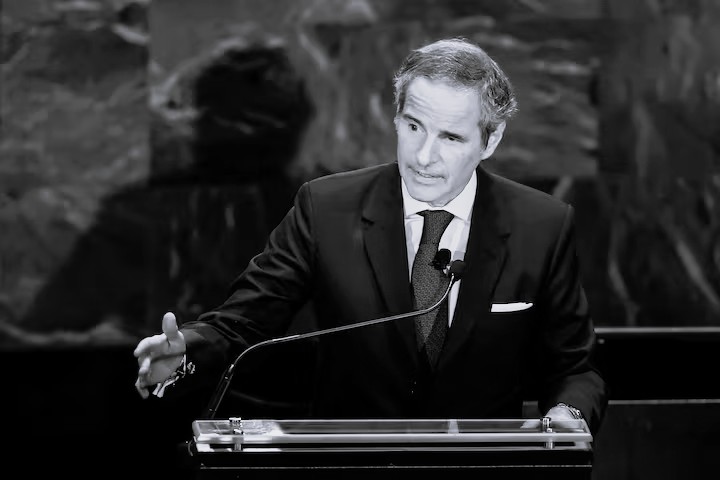
IAEA Director General Rafael Grossi said the reactor’s configuration and technical characteristics were highly efficient for producing fissile material that could be used directly in nuclear weapons. However, he stressed that the agency could not determine the intentions of the Assad-era authorities. The reactor was never declared to the IAEA and Syria had denied allegations surrounding the facility.
The findings concern a facility in Deir al-Zor in eastern Syria that was destroyed by an Israeli airstrike in 2007, before it became operational. The site had long been suspected of being an undeclared nuclear reactor, with investigators linking its construction to North Korean assistance. The latest IAEA assessment confirms earlier conclusions that the facility was indeed a reactor under construction and that Syria had manufactured fuel for it domestically.
The reactor’s significance lies in its potential to produce fissile material, particularly plutonium, which can be separated from spent nuclear fuel and used in nuclear weapons. Grossi said the facility was almost complete, with fuel yet to be loaded, but cautioned that the technical design alone does not establish that Syria intended to build a nuclear bomb.
The investigation gained momentum after Assad’s ouster in late 2024, when Syria’s new authorities agreed to cooperate with the IAEA and provide access to previously undeclared sites. During an inspection in August 2026, inspectors found that newly uncovered cooling infrastructure was consistent with a nuclear reactor, providing further physical evidence supporting the agency’s assessment.
Inspectors also examined another previously undeclared location identified by Syria in a July 17 letter. They verified approximately 73 metric tonnes of natural uranium metal, including about 55 tonnes in the form of fuel rods. The material was found concealed behind walls and in difficult-to-access areas. The IAEA has since placed it under safeguards and surveillance and installed monitoring cameras.
Natural uranium is not directly usable in a nuclear weapon, but experts say it could potentially be diverted and further processed for weapons purposes. Grossi said the Syrian government will decide whether the material remains in the country, while the IAEA’s priority is knowing its location and status continuously.
The latest investigation marks a major shift from years of Syrian denial. Grossi welcomed the new government’s transparency and cooperation, saying the access and information provided have enabled the agency to clarify and resolve outstanding safeguards questions concerning Syria’s past nuclear activities.