
ICC Unseals Warrants For Taliban Chief, 3 Others Over Women’s Rights Abuses
The International Criminal Court (ICC) on Monday unsealed arrest warrants for four senior Taliban leaders accused of the crime against humanity of gender persecution against women, girls and people whose gender identity or expression does not conform to Taliban policies in Afghanistan.
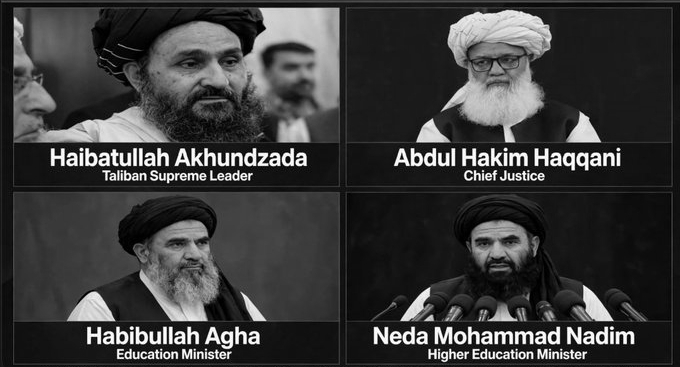
The warrants target Taliban supreme leader Hibatullah Akhundzada, Afghanistan's Supreme Court chief Abdul Hakim Haqqani, Education Minister Habibullah Agha and Higher Education Minister Neda Mohammad Nadim. The ICC said the warrants were issued on July 8 and September 9, 2025, but remained sealed until October 5, 2026. The existence of the warrants against Akhundzada and Haqqani had already been made public last year.
The court said there were reasonable grounds to believe the four suspects ordered, induced or solicited persecution on gender grounds against girls, women and other people who did not conform to the Taliban's policies on gender, gender identity or expression. They are also accused of persecution on political grounds against people perceived as “allies of girls and women.”
According to the ICC, the alleged crimes were committed in Afghanistan after the Taliban seized power on August 15, 2021, and continued at least until January 20, 2025. The judges said Taliban policies resulted in severe violations of fundamental rights, in connection with alleged acts including murder, imprisonment, torture, rape and enforced disappearance.
The court said women and girls were specifically deprived of fundamental rights through Taliban decrees and edicts, including access to education, privacy and family life, as well as freedoms of movement, expression, thought, conscience and religion. People whose sexuality or gender identity was considered inconsistent with Taliban policy were also targeted.
Since returning to power, the Taliban have barred girls from education beyond the sixth grade and restricted women's access to employment and public life. The Taliban have also imposed restrictions affecting women's ability to appear in public and move freely.
The Taliban rejected the ICC's authority and the allegations. Spokesperson Zabihullah Mujahid said Afghanistan does not recognise the court or its decisions and is instead bound by Islamic Sharia and its own courts.
The warrants are unlikely to lead to immediate arrests because the Taliban remain in control of Afghanistan and the ICC has no police force of its own to enforce arrest warrants. All four suspects are currently listed by the ICC as at large.
Former ICC prosecutor Karim Khan announced in January 2025 that he had sought warrants for Akhundzada and Haqqani, citing what he described as ongoing persecution of Afghan women, girls and members of the LGBTQI+ community. Rights groups had welcomed the initial warrants when they were issued under seal.