
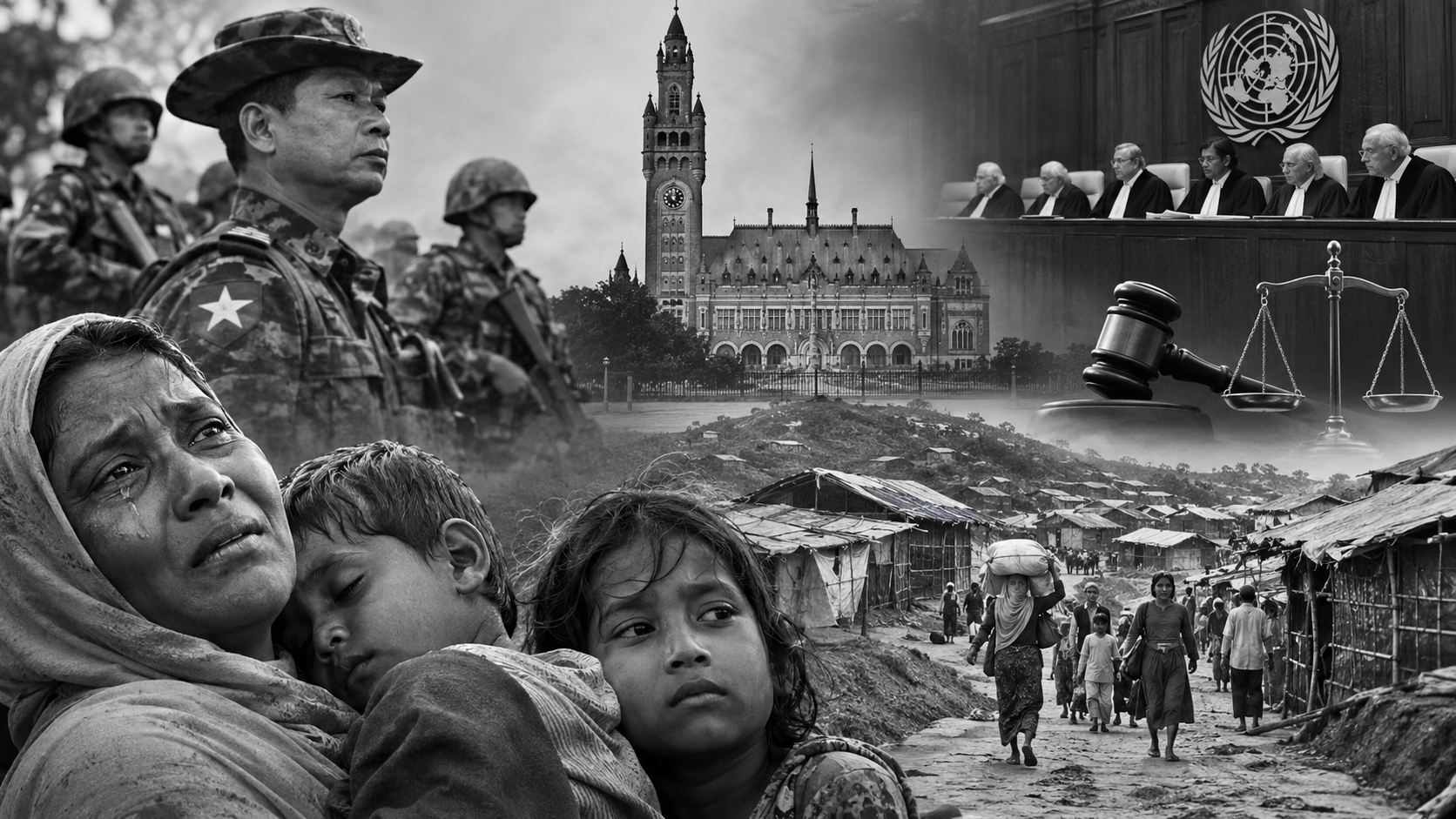
ICJ Genocide Verdict Puts Myanmar Under Global Pressure Over Rohingya Crisis
The International Court of Justice's (ICJ) landmark ruling holding Myanmar responsible for committing genocide against the Rohingya minority has intensified international pressure on the country's military-backed administration, with human rights organisations demanding sanctions and accountability, India reiterating its support for the safe return of displaced refugees and Myanmar dismissing the judgment as unfair. The verdict has renewed calls for international intervention, reparations and a lasting solution to the humanitarian crisis, with more than 1.2 million Rohingya refugees living in Bangladesh and hundreds of thousands remaining displaced inside Myanmar.
In a historic 9-6 majority judgment delivered on November 19, the United Nations' highest judicial body found Myanmar responsible for genocide against the Rohingya during the 2017 military operations in northern Rakhine State, violating the 1948 Genocide Convention. Presided over by Yuji Iwasawa, the court cited evidence of killings, sexual violence, attacks on children and measures intended to prevent births. It also found Myanmar had violated its January 2020 order to preserve evidence. The proceedings were initiated by The Gambia in November 2019, with 11 additional countries subsequently intervening.
The ICJ directed Myanmar to investigate suspected perpetrators, prosecute those responsible, prevent further violations and facilitate the safe, voluntary and dignified return of displaced Rohingya. It also ordered reparations, with compensation arrangements to be determined in subsequent proceedings. Myanmar must submit a report on restitution measures within two years.
Responding to the verdict, India's External Affairs Ministry spokesperson Randhir Jaiswal said New Delhi had taken note of the judgment and consistently supported safe, speedy and sustainable repatriation. He highlighted India's assistance to refugee camps in Bangladesh through Operation Insaniyat, which delivered relief supplies in five tranches, and its support for the Rakhine State Development Programme.
Myanmar rejected the ruling as unfair. Presidential spokesperson Khine Khine Soe questioned the 9-6 majority, arguing that the decision was not unanimous. The government maintains that its military operations were counterterrorism measures against insurgents.
Meanwhile, Justice for All, Amnesty International and Human Rights Watch called for sanctions, an arms embargo, accountability and refugee protection. Amnesty Secretary General Agnes Callamard urged governments to stop military assistance and weapons transfers. However, enforcement remains uncertain as China and Russia could veto Security Council action.
Bangladesh hosts approximately 1.2 million Rohingya refugees, including 1,174,975 in Cox's Bazar camps and 33,043 on Bhasan Char. Food insecurity, overcrowding, inadequate healthcare and restricted education remain major concerns. The World Food Programme warned that 35 per cent could face crisis-level hunger or worse between September and December 2026.
Inside Myanmar, approximately 225,000 Rohingya remain in IDP camps, while more than 519,200 people in Rakhine State, mostly Rohingya, remain stateless. The 1982 Citizenship Law has deprived most Rohingya of nationality, restricting movement, education, employment, healthcare and property rights. Renewed fighting between Myanmar's military and the Arakan Army has further complicated repatriation.
Separately, ICC prosecutors requested an arrest warrant for President Min Aung Hlaing in 2024 over alleged crimes against humanity. For the Rohingya, the ICJ verdict represents a significant legal development, but lasting justice will depend on accountability, restored citizenship, security and the ability to return home voluntarily.