
IIT Madras Breakthrough Delivers Cellular-Level 3D Map of Human Brainstem
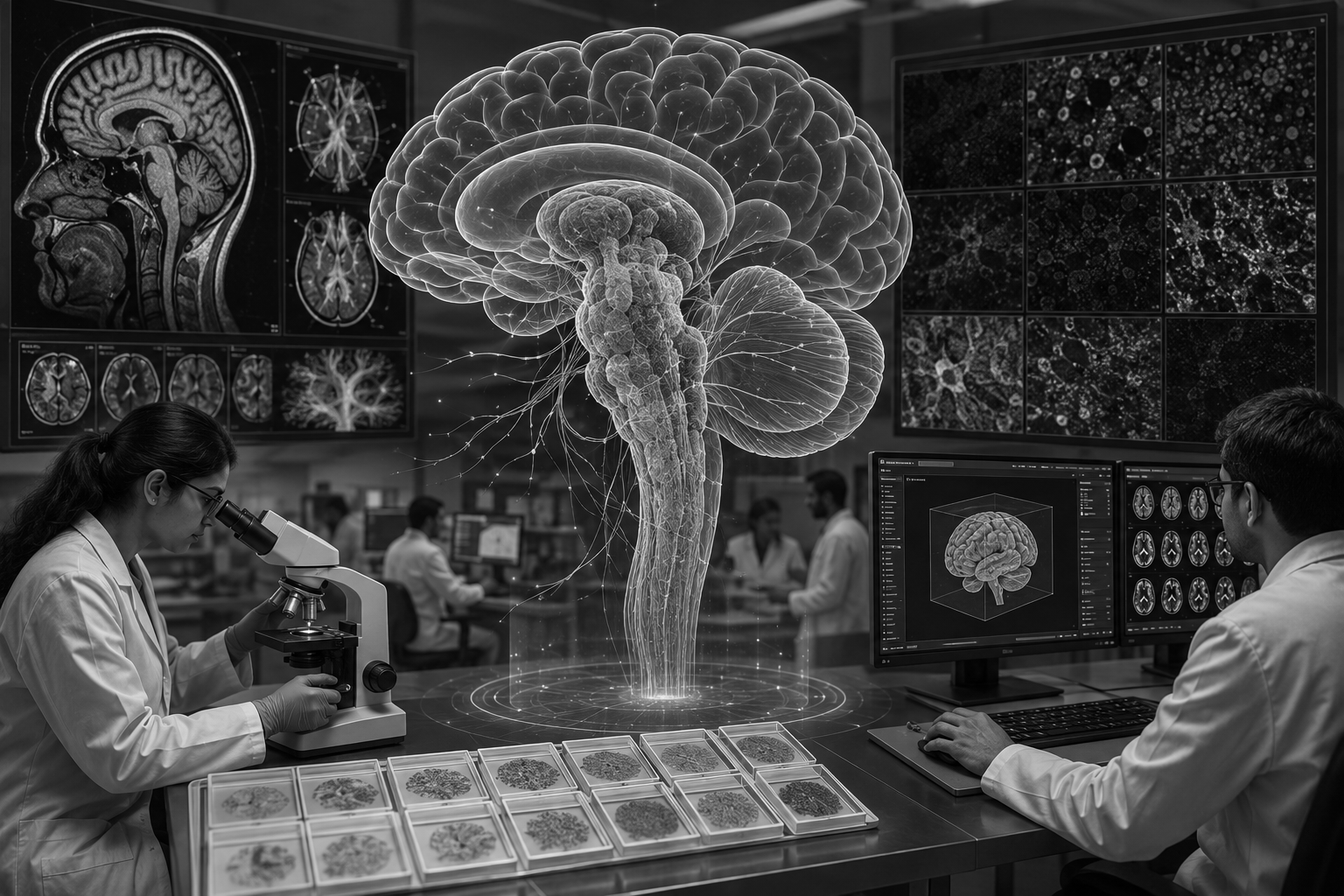
In a significant breakthrough for global neuroscience research, IIT Madras has unveiled ANCHOR (Atlas of Neurochemical Characterization of the Human Brainstem with 3D Reconstruction) , the world's most detailed three-dimensional atlas of the human brainstem. Developed by the institute's Sudha Gopalakrishnan Brain Centre (SGBC) , the atlas provides an unprecedented cellular-level view of one of the most critical yet least understood regions of the human brain, opening new possibilities for studying neurological disorders and brain development.
The landmark achievement was announced during the 3rd BRICS Neuroscience Symposium 2026 , held at the IIT Madras campus from June 5 to 7. The symposium brought together leading neuroscientists, clinicians and researchers from BRICS nations and beyond, highlighting growing international collaboration in brain science and neurotechnology.
ANCHOR has been created using SGBC's advanced high-throughput brain imaging and computing platform, which transforms entire human brains into highly detailed 3D cell-resolution atlases. The project represents one of the most comprehensive efforts ever undertaken to map the human brainstem, a structure that connects the brain to the spinal cord and controls essential functions such as breathing, sleep, heart rate, consciousness and motor movements.
The atlas spans the human lifespan, covering prenatal, childhood and adult brains , and includes detailed reconstructions of more than 200 brainstem nuclei and fiber tracts . Researchers generated these maps from hundreds of serial brain sections and employed eight complementary immunostains across more than 500 sections to identify distinct neurochemical cell types and neural pathways with exceptional precision.
A major strength of ANCHOR lies in its ability to integrate MRI, histology and neurochemical architecture within a single framework. This enables scientists to move seamlessly from large-scale brain structures visible in MRI scans to microscopic cellular features, bridging the gap between clinical imaging and fundamental neuroscience research.
The atlas has been made publicly accessible through an online platform, allowing researchers, clinicians and students worldwide to explore and utilize the data. Experts believe the resource could accelerate research into Alzheimer's disease, dementia, Parkinson's disease, brainstem lesions and other neurological disorders , while also supporting improved diagnosis, neurosurgical planning and AI-driven brain analysis.
Speaking at the launch, Ajay Kumar Sood , Principal Scientific Adviser to the Government of India, described the atlas as a major milestone in neurobiology and praised the collaborative model behind the project. He noted that the resource could help identify specific cell populations affected by brainstem disorders and contribute to future clinical applications.
The project involved contributions from several institutions, including CMC Vellore, Kilpauk Medical College, MediScan Systems, and Shri Ramachandra Institute of Higher Education and Research . IIT Madras Director V. Kamakoti said the initiative places the institute at the frontier of understanding the human brain, while Infosys co-founder Kris Gopalakrishnan emphasized the importance of making advanced scientific resources accessible and inclusive.
With more than 200 researchers, engineers and technicians working alongside 20 international collaborators , SGBC is pursuing an ambitious mission to create comprehensive human brain maps across different ages and diseases. The centre now aims to image over 100 whole human brains , positioning India as a key contributor to global brain-mapping efforts and advancing the quest to better understand the most complex organ in the human body.