
IIT Madras, UC San Diego Develop Injectable Hydrogel for Chronic Disease Treatment
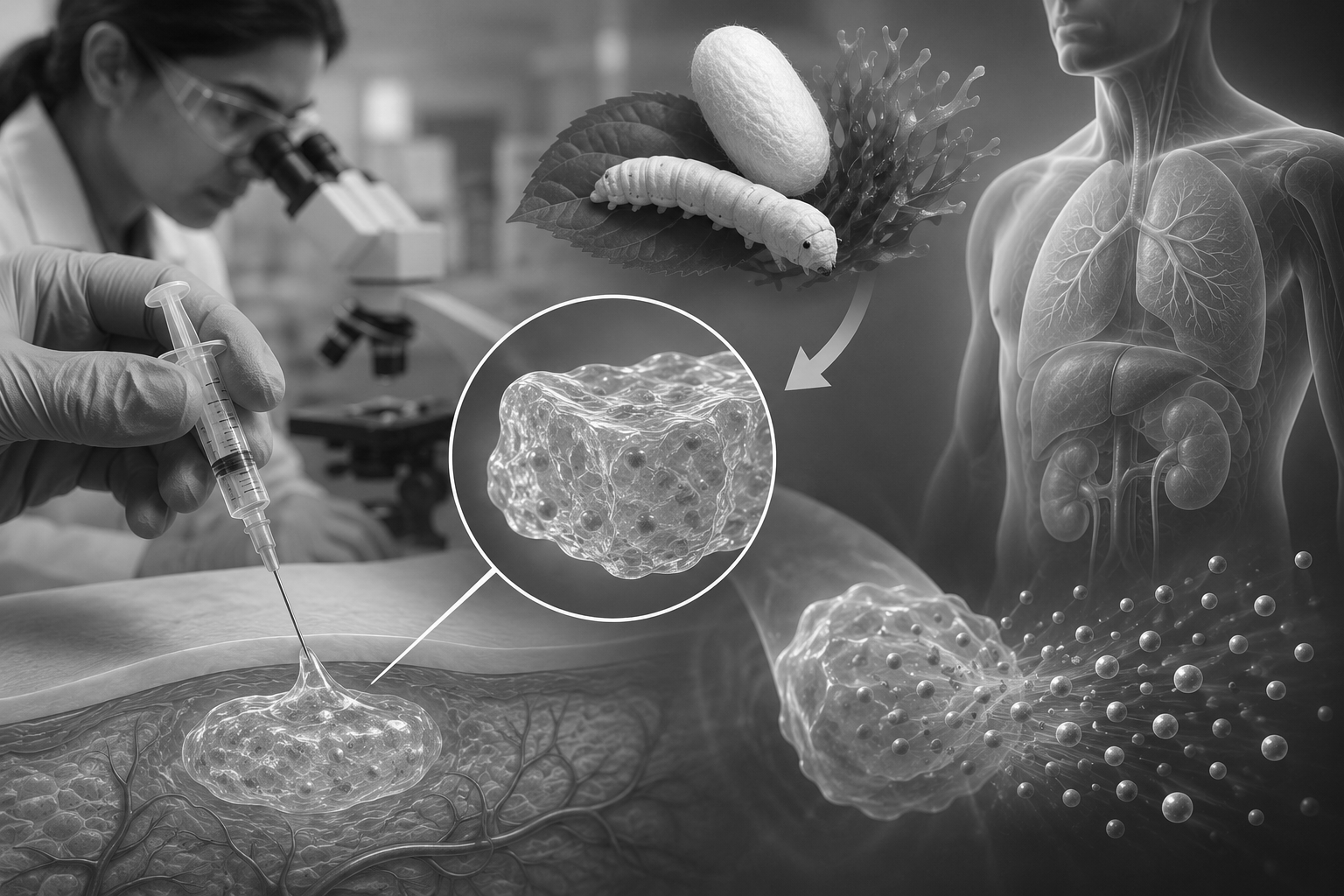
A team of researchers from IIT Madras has developed a patented injectable hydrogel made from silk cocoons and seaweed that could pave the way for more effective and affordable treatment of fibrosis and other chronic degenerative diseases. The innovation, which enables the targeted delivery of drugs directly to diseased tissues, has attracted attention for its potential to dramatically reduce treatment costs while minimizing side effects associated with conventional therapies.
The research was published in the scientific journals ACS Applied Bio Materials and Materials Today Bio and was led by Varshiny Gopinath and Prof. Vignesh Muthuvijayan of IIT Madras in collaboration with Prof. Mahadevan Rajasekaran from the University of California San Diego Health . The hydrogel combines silk fibroin derived from silkworm cocoons with seaweed-based biomaterials to create a biodegradable and biocompatible platform for sustained drug delivery.
According to the researchers, the technology is designed to address the growing burden of fibroproliferative diseases , including pulmonary, liver, kidney and muscle fibrosis. These conditions are estimated to be associated with nearly 45 per cent of deaths globally . Existing treatment options often require prolonged medication, can cause significant side effects and frequently fail to effectively halt disease progression at the affected site.
The newly developed hydrogel seeks to overcome these limitations through a minimally invasive injectable therapy . Once administered, the material transitions from a liquid into a gel at body temperature, allowing it to conform precisely to the treatment site. The hydrogel then releases antifibrotic and anti-inflammatory drugs in response to inflammation and can remain active locally for several days. This targeted approach reduces the need for repeated oral or systemic drug administration.
One of the most significant aspects of the innovation is its potential economic impact. Researchers estimate that treatment costs, which currently range between USD 2,000 and USD 3,000 , could be reduced to approximately USD 300 if the technology reaches commercial deployment.
However, despite the promising findings, the hydrogel remains at an early stage of development. IIT Madras has classified the innovation at Technology Readiness Level (TRL) 4 , indicating that it has been validated in laboratory conditions but has not yet undergone human clinical trials. The technology has not entered Phase 1, Phase 2 or Phase 3 clinical testing , nor has it received regulatory approval for patient use.
Researchers said the next phase will involve advanced preclinical studies , including testing in disease models and patient-derived organoids, optimization of dosage and drug-release kinetics, long-term safety evaluations and manufacturing scale-up. IIT Madras is also exploring commercialization pathways through technology transfer, industry licensing and potential startup creation , although no pharmaceutical company has yet been announced as a partner.
Beyond fibrosis, follow-up studies have indicated potential applications in treating sarcopenia , an age-related condition characterized by progressive muscle loss. While experts caution that several years of testing and regulatory review remain before the technology can reach hospitals, the development represents a significant step forward in the field of targeted drug delivery and regenerative medicine.