
In A First, All 28 CM’s Join NITI Aayog Governing Council Meet as Modi Charts Viksit Bharat Blueprint
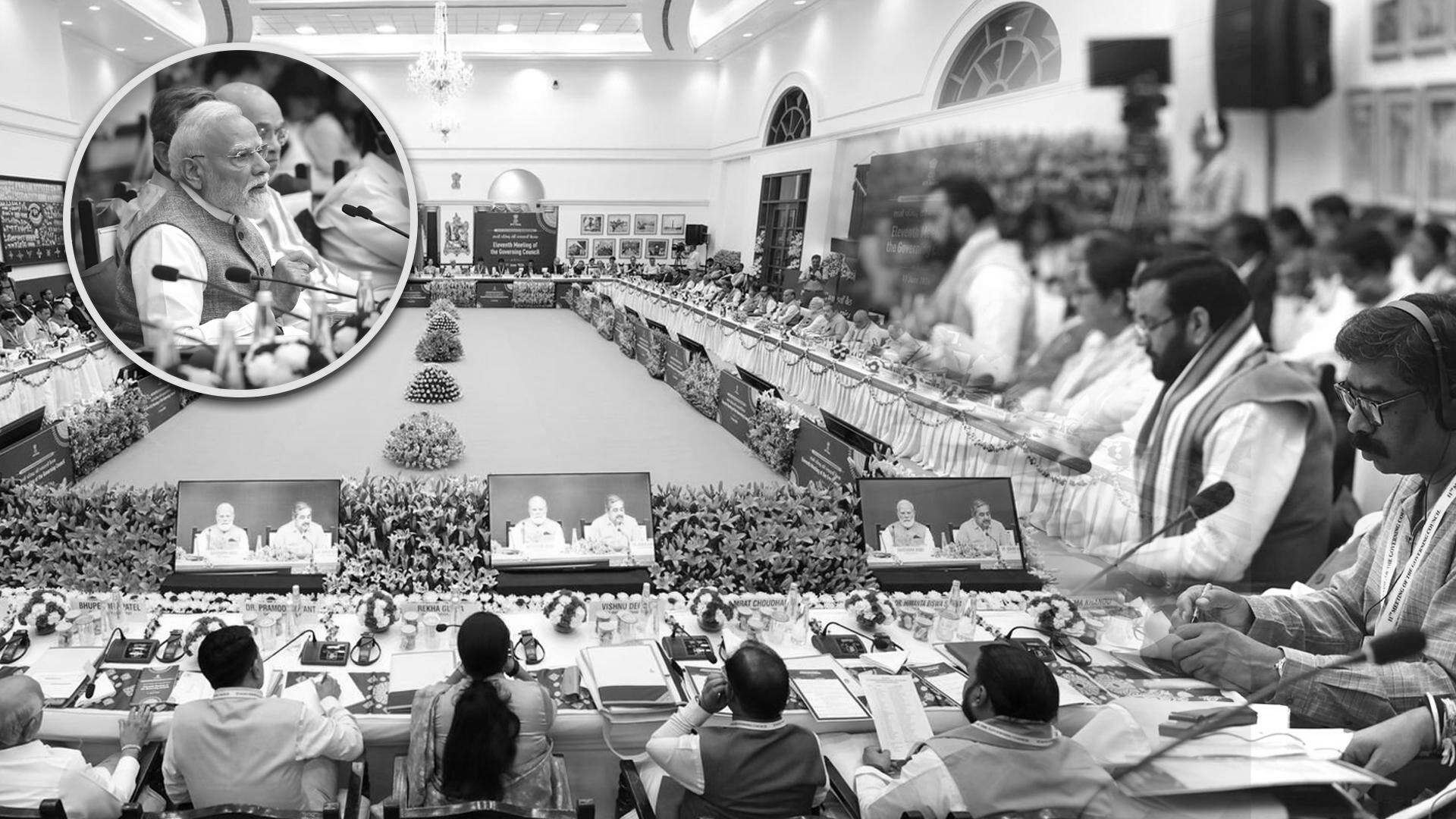
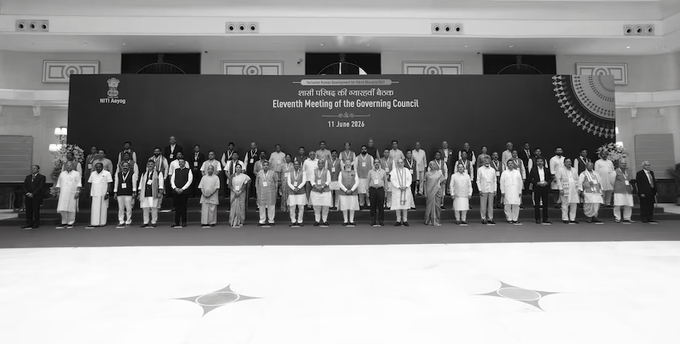
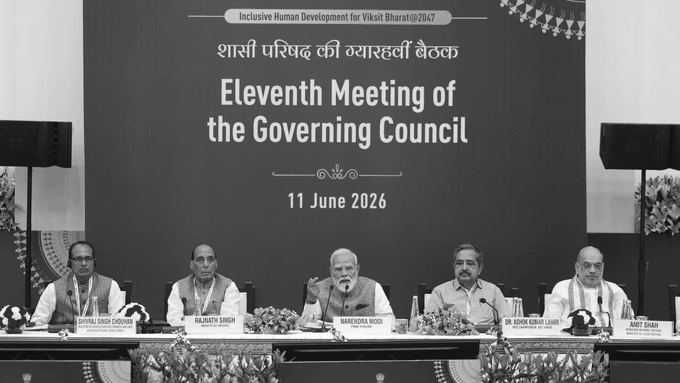
In a landmark moment for India's federal democracy, the 11th Governing Council Meeting of NITI Aayog convened on Thursday at the Rashtrapati Bhavan Cultural Centre in New Delhi, under the chairmanship of Prime Minister Narendra Modi . For the first time since the Council's inception, Chief Ministers from all 28 states participated in the meeting, joined by Lieutenant Governors and Administrators of Union Territories, making it one of the most representative gatherings of India's federal leadership in recent memory. Among the attendees were four newly sworn-in chief ministers, DK Shivakumar, Joseph Vijay, Suvendu Adhikari and VD Satheesan , reflecting a changed political landscape and a new spirit of Centre-state cooperation.
The meeting was organised around the theme "Inclusive Human Development for Viksit Bharat @2047," with a focus on the well-being and development of every Indian regardless of age, region, gender, or socio-economic background. Discussions centred on the Inclusive Human Development Framework, anchored around four core pillars: Foundational Human Capital and Future-Ready Skills; Productive Employment, Entrepreneurship and Decentralised Growth; Health, Nutrition and Wellbeing; and Equity and Dignity for All.
NITI Aayog Vice Chairman Ashok Kumar Lahiri , briefing the media after the meeting, said the Prime Minister stressed that India cannot become Viksit Bharat without all states becoming developed. Modi underscored that India's development goals could only be achieved through close collaboration between the Centre and states, framing cooperative federalism as the backbone of the Viksit Bharat mission.
A central theme of the Prime Minister's address was India's demographic dividend , with nearly 70 crore Indians under the age of 25 , he urged states to transform this into a development dividend through education, skilling and capacity-building initiatives. Modi also declared that women-led development is a cornerstone of the Viksit Bharat vision, and noted that India continues to move forward on its growth trajectory even amid global uncertainty. He added that India has signed free trade agreements with many countries to create new opportunities for growth and exports.
On the economic front, the Prime Minister urged states to focus on the One District One Product (ODOP) initiative and develop export-oriented strategies, while also identifying defence manufacturing as an emerging sector where India is establishing a distinct identity, encouraging states to formulate policies to leverage the opportunities it presents. The discussions also focused on charting an implementation roadmap leveraging key enablers including governance, Digital Public Infrastructure (DPI) , convergence, partnerships and data-driven systems, alongside a structured mechanism to track short, medium and long-term outcomes for accountability and measurable impact.
Modi drew attention to concerns arising from El Niño conditions and appealed to states to promote water conservation and encourage natural and organic farming practices. He noted that the purchase of 11 lakh tonnes of organic manure during the current Kharif season reflected growing confidence among farmers in sustainable agricultural methods, and suggested identifying 100 districts in the agriculture sector on the lines of the Aspirational Districts Programme to drive targeted, measurable improvements. The Prime Minister also laid emphasis on district-level monitoring of development indicators and set a call for clear 100-day and five-year targets , while urging states to focus on ease of doing business, branding, data centres and artificial intelligence to equip citizens with future-ready skills.
On the social governance front, the Prime Minister highlighted growing concerns around drug abuse and cyber fraud , calling on states to address these through preventive measures, awareness campaigns and effective governance.
The meeting also became a platform for several chief ministers to place regional demands before the Centre. J&K Chief Minister Omar Abdullah urged the Centre to extend the SASCI 'Pride of Hills' Special Development Assistance to J&K on the same principles applicable to hill states, highlighting the UT's vast hydropower potential of 14,867 MW , the operationalisation of IIT Jammu, IIM Jammu and AIIMS Jammu , and a record tourist arrival of 2.36 crore in 2024. The Council also drew from the recommendations of the 5th National Conference of Chief Secretaries held in December 2025, which had deliberated on themes including early childhood education, schooling, skilling, higher education, and sports and extracurricular activities.
The Prime Minister noted that the discussions were constructive and reflected the aspirations, hopes, experiences, best practices and challenges of states. With all 28 states at the table for the first time, the 11th Governing Council meeting marked not just a policy milestone but a statement of national unity, a country moving, as its leadership reiterated, as one Team India toward 2047.