
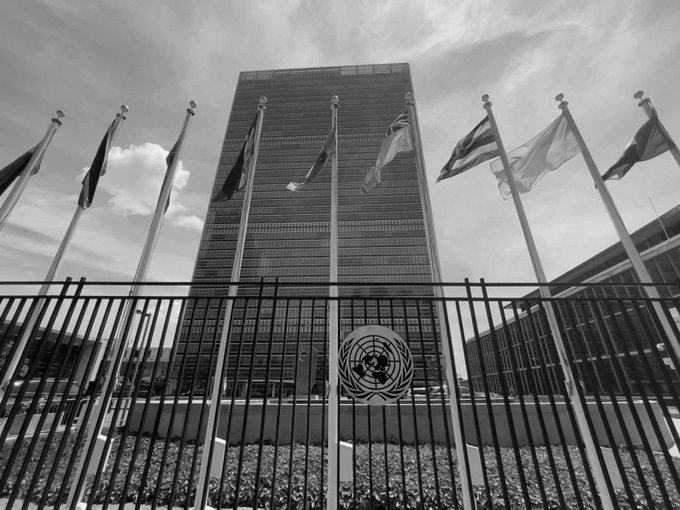
India And 32 Other Nations Vote Against UN Resolution Seeking Death Penalty Moratorium
India has voted against a United Nations General Assembly resolution calling for a global moratorium on the death penalty, joining 32 other countries, including the United States, China, Pakistan, Iran and Saudi Arabia. The proposal, introduced by Mexico, secured 133 votes in favour, while 33 countries opposed it and 16 abstained.
The resolution, titled ‘Moratorium on the use of the death penalty’, was adopted through a recorded vote on Friday, November 13. It called on countries to suspend executions as a step towards the eventual abolition of capital punishment. It also urged nations that have already abolished the death penalty not to reintroduce it.
India's opposition reflects its position that there is no international consensus against capital punishment and that sovereign countries have the right to determine their own legal systems and punishments. India's representative at the UN, First Secretary Bhavika Mangalanandan, said Article 6 of the International Covenant on Civil and Political Rights (ICCPR) permits the death penalty subject to restrictions.
She said capital punishment in India is imposed only in “rarest of rare” cases and follows rigorous legal procedures, including judicial safeguards. India has maintained that lawful capital punishment after due process should not be equated with torture or unlawful killings.
The resolution expressed concern over the continued use of capital punishment and a significant increase in reported executions during 2025, despite a broader international trend towards restricting the practice.
It urged countries to progressively reduce the number of offences punishable by death, remove mandatory death sentences and ensure that capital punishment is not imposed for crimes committed by people below 18 years of age. The same protection was sought in cases where a person's age at the time of the offence cannot be established accurately.
It also called for restrictions on executions involving pregnant women, people with mental or intellectual disabilities and older persons.
India also opposed a paragraph in a separate UN resolution on extrajudicial executions that it said wrongly linked lawful capital punishment with torture and arbitrary killings. However, it supported the broader resolution seeking to prevent unlawful executions.