
India Backs FATF Credibility at UN, Urges Nations to End Terror Financing
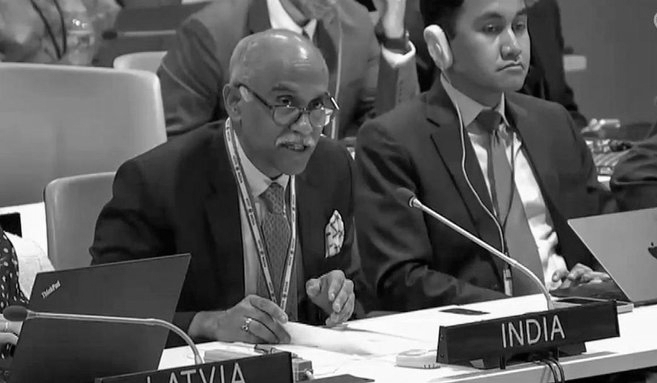
India strongly defended the Financial Action Task Force (FATF) at the United Nations , saying attempts to undermine the global watchdog's credibility reflect a " fear of scrutiny " rather than genuine concerns. The remarks, made by India's Permanent Representative to the UN, Parvathaneni Harish , were widely seen as a veiled reference to Pakistan .
Speaking at a 2026 Counter-Terrorism Week side event on countering terror financing, Harish described the FATF as an "indispensable pillar" of the global framework against money laundering and terrorist financing , stressing that its assessments are technical, evidence-based, and rooted in internationally accepted standards .
Explaining India's position, Harish said countries receiving adverse FATF assessments should address identified deficiencies, strengthen domestic enforcement, improve financial transparency, and take irreversible action against terror-financing networks instead of questioning the watchdog's credibility.
"The answer to FATF scrutiny is not politicised activism in UN forums but credible compliance," he said, adding that states allowing their territory, institutions, or financial systems to be misused for terrorism must stop "exporting instability" and fulfil their international obligations.
Harish also warned that crowdfunding platforms, cryptocurrencies, prepaid instruments, and social media tokens are increasingly being exploited by terrorist groups to move funds. He called for a risk-based regulatory framework anchored in FATF standards while ensuring legitimate financial inclusion and innovation are not hindered.
Highlighting India's efforts, he said the country has brought virtual asset service providers under its anti-money laundering framework, tightened verification requirements for cryptocurrency exchanges, and contributed to FATF's best practices on countering terror financing.
Separately, UN Secretary-General António Guterres warned that terrorists are increasingly exploiting artificial intelligence, digital platforms, criminal networks, and drones , urging greater international cooperation to counter evolving terrorist threats.