
India Calls for Community-Led Rangeland Restoration, Puts Pastoralists at Centre
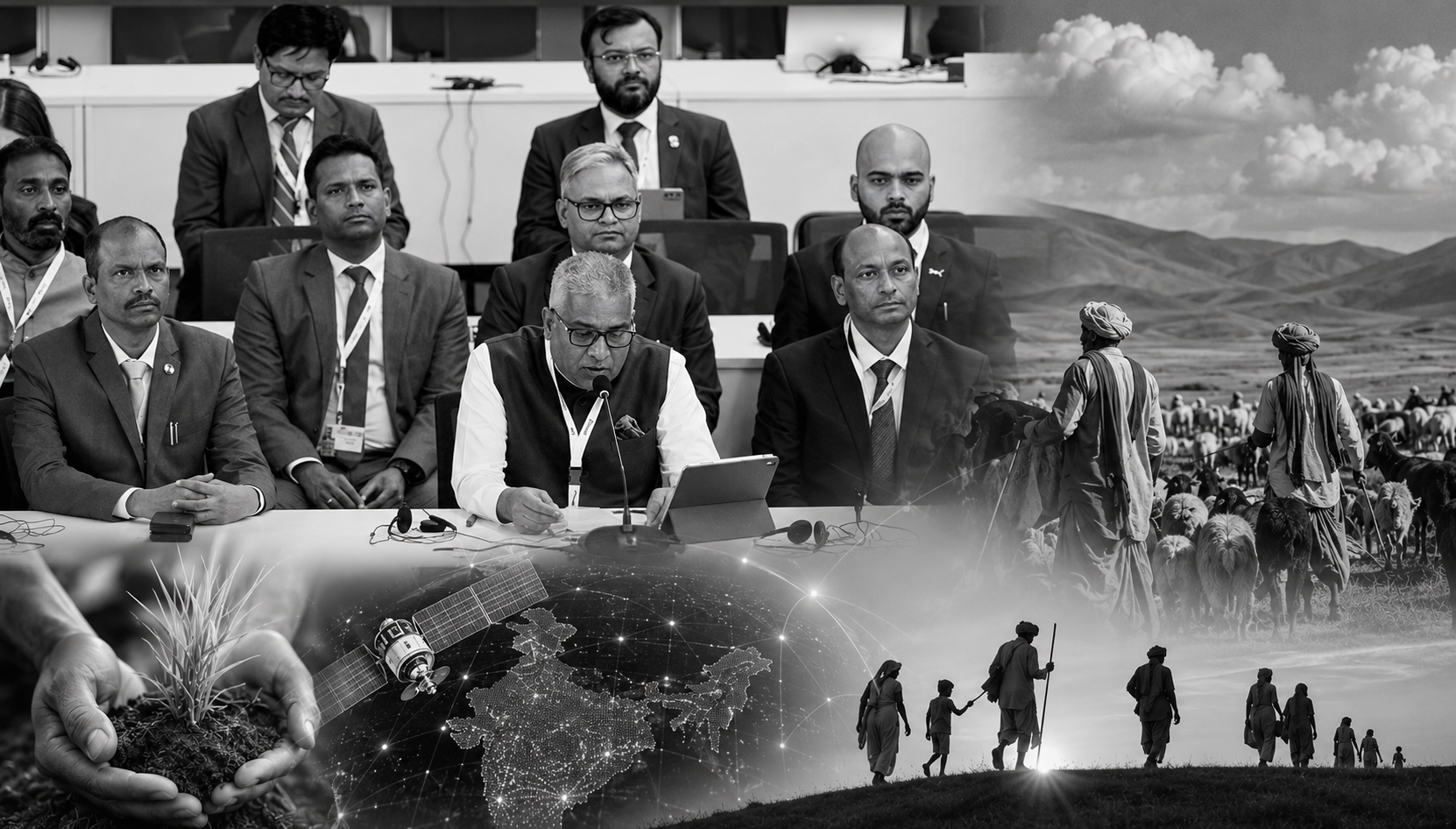
India has called for a community-led model of rangeland restoration, placing pastoralists at the centre of conservation, sustainable grazing and land-management efforts as the country showcased its approach at the 17th Conference of Parties (CoP17) of the United Nations Convention to Combat Desertification (UNCCD) in Ulaanbaatar, Mongolia. Union Minister for Environment, Forest and Climate Change Bhupender Yadav said successful restoration must begin by recognising pastoralists as “custodians, not merely beneficiaries”, arguing that durable ecological recovery depends on combining community stewardship, traditional knowledge, secure tenure and modern science.
The intervention comes as rangelands gain greater global attention. They cover 54% of the Earth’s terrestrial surface, support around 500 million pastoralists directly and provide livelihoods and benefits to another two billion people through associated value chains. Yet roughly half of the world’s rangelands are considered degraded, driven by land conversion, unsustainable practices and climate pressures. The focus is particularly significant in 2026, the International Year of Rangelands and Pastoralists.
Yadav said India’s rangelands stretch from Himalayan pastures and Central Indian savannas to the Thar, Kachchh and Southern sholas, supporting livestock, biodiversity and ecological functions. The country has approximately 10 million hectares of permanent pastures and grazing lands, where deep-rooted grasses can support soil-carbon storage, water infiltration and groundwater recharge.
India’s approach integrates landscape management, watershed development, sustainable grazing, fodder development and livelihood support, backed by scientific planning. Satellite-based Desertification and Land Degradation Atlases help map grasslands and guide restoration, while recognition of grazing rights and Community Forest Resource rights can strengthen community stewardship.
Yadav highlighted Rajasthan’s Orans, community-protected sacred groves that demonstrate traditional conservation. India has around 25,000 such groves covering approximately 0.6 million hectares, with many protected under statutory provisions. They also help conserve critical habitats, including those of the Great Indian Bustard.
The government is simultaneously broadening recognition of open ecosystems. India recently launched its first Guide to Grasslands and Other Open Natural Ecosystems, reflecting a policy shift away from viewing treeless landscapes simply as degraded or less valuable areas.
India has also linked grassland restoration with wildlife conservation through the cheetah reintroduction programme and proposed expansion into landscapes such as Banni in Gujarat. At CoP17, the wider international agenda is similarly connecting restoration with biodiversity, drought resilience, food security and sustainable livestock systems.
Financing remains a major challenge. UNCCD’s new Rangelands Flagship Initiative seeks to expand public and private investment in rangeland conservation and restoration, focusing on knowledge, investment and institutions.
Against this backdrop, Yadav called for dedicated, accessible finance, technology and knowledge for developing countries pursuing Land Degradation Neutrality. India also offered to share its experience through South-South cooperation, reinforcing its message that lasting restoration must empower the communities who have long managed these landscapes.