
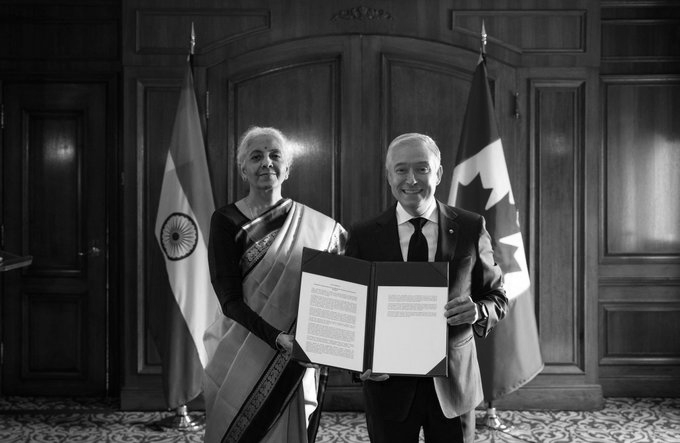
India, Canada Target 2026-End Trade Deal, Set $70 Billion Goal for 2030
India and Canada are stepping up efforts to reshape their economic relationship, with both countries targeting the conclusion of a Comprehensive Economic Partnership Agreement (CEPA) by the end of 2026. The renewed push gained fresh momentum during Finance Minister Nirmala Sitharaman's visit to Canada, where she underlined the growing importance of closer economic cooperation amid global uncertainty.
Speaking after the inaugural India-Canada Economic and Financial Dialogue in Toronto, Sitharaman said the rapidly changing geopolitical and economic landscape had made stronger partnerships increasingly important for building resilient, sustainable and inclusive economies. She said the relationship was now moving beyond traditional trade in goods and services towards deeper cooperation in investment, finance, capital markets and regulatory matters.
The current negotiations mark a significant revival after trade talks were paused in August 2023 amid a sharp deterioration in bilateral relations. The process regained momentum in 2026 following a meeting between Prime Minister Narendra Modi and Canadian Prime Minister Mark Carney in New Delhi.
In Toronto, Sitharaman held discussions with her Canadian counterpart François-Philippe Champagne, covering macroeconomic developments, financial-sector cooperation and broader international issues. The two sides reaffirmed their commitment to conclude CEPA negotiations by the end of 2026 and support the goal of expanding bilateral trade to CAD 70 billion by 2030.
Since negotiations resumed, the two countries have completed three formal rounds, covering goods and services, intellectual property, rules of origin, sanitary measures and technical barriers. However, neither side has publicly announced the closure of any major chapter.
Agriculture is expected to remain one of the toughest areas, with Canada seeking greater access for agri-food exports while raising concerns over tariffs, certification and regulatory barriers. Both countries also have sensitive domestic sectors they may be reluctant to expose to greater competition.
The dialogue also widened cooperation into cross-border payments, fintech, financial stability, capital markets, critical minerals and energy security. Sitharaman said officials had identified specific areas for follow-up and would continue working towards concrete outcomes.
For both countries, the challenge now is to convert renewed political momentum into a meaningful agreement despite the toughest commercial issues still awaiting resolution.