
India Cracks Down on Chinese Apps Linked to Remote EV Shutdowns
India has ordered the removal of three Chinese-linked mobile applications after reports emerged that they were being used to remotely disable battery-operated vehicles, raising fresh concerns over cybersecurity vulnerabilities in the country's rapidly expanding electric mobility sector.
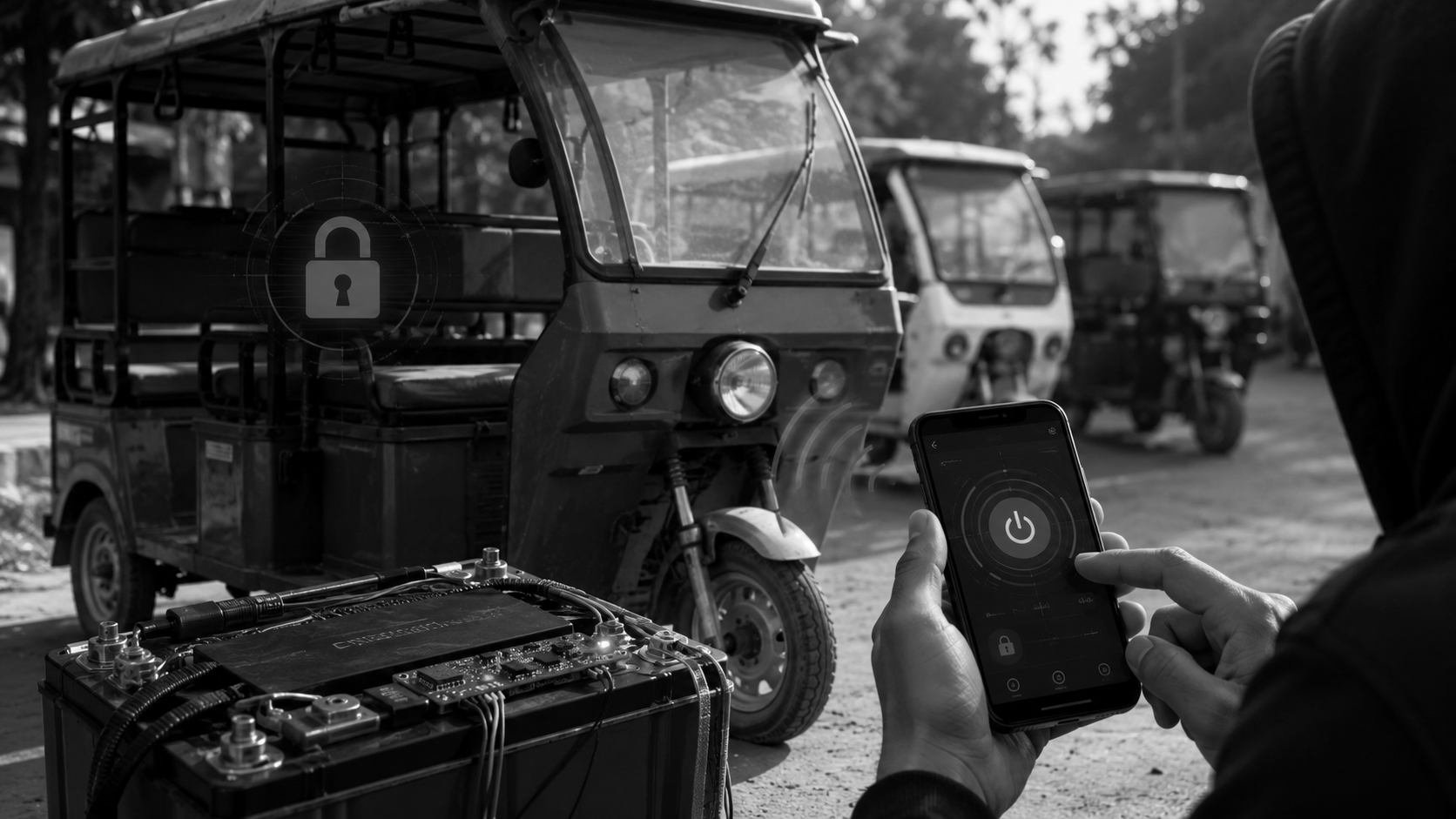
The Centre has directed app stores to take down BAT-BMS , Lossigy and Epoch-i-ion , following viral videos that allegedly showed e-rickshaws being rendered inoperable through remote commands issued via smartphone applications. Government sources said any other app found facilitating similar misuse would also face blocking action, underscoring New Delhi's growing focus on the security of connected technologies.
Speaking on the sidelines of a CII Cybersecurity Summit , IT Secretary S. Krishnan said the government had acted after the issue came to its notice and stressed that app stores must exercise greater diligence before hosting applications capable of interacting with critical hardware systems.
At the centre of the controversy is BAT-BMS , a battery management application developed by a Chinese company and widely used with Bluetooth-enabled lithium-ion batteries. Such applications are designed to help users monitor battery health, voltage, current, charging cycles and temperature. However, they also provide access to battery controls, including the ability to switch the battery's discharge function on or off.
Authorities believe these features were exploited to remotely disconnect batteries powering e-rickshaws and other electric vehicles. Videos circulating online purportedly showed pranksters or unauthorized users connecting to nearby vehicles and shutting down their battery systems, leaving drivers stranded on roads.
The incident has exposed broader weaknesses in parts of India's EV ecosystem. Industry experts note that many low-cost battery packs used in e-rickshaws rely on imported Battery Management Systems (BMS) that often lack robust security safeguards. In some cases, default passwords remain unchanged, while weak authentication protocols and limited encryption make unauthorized access easier.
Cybersecurity specialists warn that the issue goes beyond a few mobile applications. As electric vehicles become increasingly connected through software, wireless communication and cloud-based monitoring systems, vulnerabilities in battery management platforms could potentially affect road safety, passenger security and operational reliability .
The government's intervention marks a significant shift in regulatory thinking. Earlier actions against Chinese apps largely centred on data privacy and national security concerns. This case, however, highlights the risks posed when software gains the ability to interact directly with physical infrastructure and moving vehicles.
With India now among the world's largest markets for e-rickshaws, the episode is expected to accelerate discussions on mandatory cybersecurity standards , stronger authentication requirements, security audits of imported battery software and tighter certification norms for connected EV components. Industry observers say the crackdown could become a defining moment in shaping cybersecurity regulations for India's fast-growing electric vehicle ecosystem, where digital safety is emerging as an equally important concern alongside battery performance and roadworthiness.