
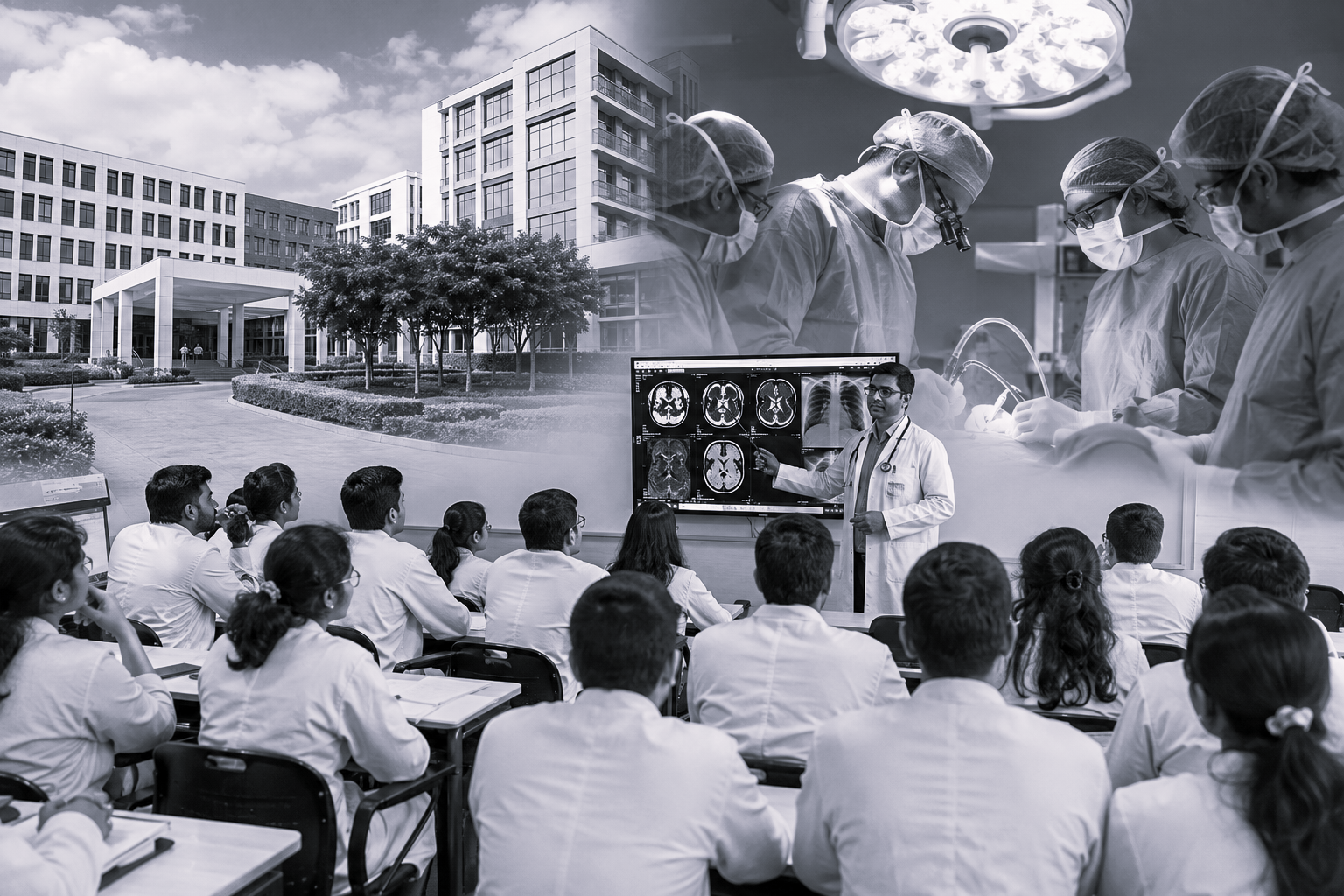
India Expands PG Medical Capacity to 86,360, Eyes 5,000 More Seats
India now has 86,360 postgraduate (PG) medical seats, with Karnataka leading the country with 10,092 seats, while the Centre has ruled out any proposal to convert all Diplomate of National Board (DNB) diploma programmes into full-fledged postgraduate degree seats, Union Health Minister J P Nadda informed the Lok Sabha on Friday. The announcement comes as the government pushes ahead with an ambitious plan to strengthen the country's specialist healthcare workforce by adding 5,000 more PG seats between 2025-26 and 2028-29.
Replying to a question in the Lok Sabha, Nadda said the National Medical Commission (NMC) and the National Board of Examinations in Medical Sciences (NBEMS) have confirmed that India currently has 86,360 PG medical seats, adding that no proposal is under consideration to convert all NBEMS diploma programmes into DNB degree seats.
The expansion comes after the COVID-19 pandemic exposed acute shortages of specialist doctors. Between 2020-21 and 2025-26, India added 29,080 PG seats, taking the country's postgraduate capacity up by nearly 50%. However, demand continues to outpace supply, with over 2.4 lakh candidates appearing for NEET-PG 2025 for just 86,360 seats, meaning only about one in three aspirants is likely to secure a postgraduate seat.
To bridge this gap, the Centre has approved Phase-III of the Centrally Sponsored Scheme to create 5,000 additional PG seats in state and central government medical colleges, standalone PG institutes and government hospitals. With a cost ceiling of ₹1.5 crore per seat, the programme could involve an investment of nearly ₹7,500 crore. The expansion is expected to strengthen key specialties such as General Medicine, Anaesthesiology, General Surgery, Paediatrics, Obstetrics & Gynaecology, and Radiology, where demand surged after the pandemic.
Nadda said new courses and seat increases are approved under the Post Graduate Medical Education Regulations (PGMER), 2023, and Post Graduate Minimum Standards Requirements, 2024, subject to prescribed norms on faculty, infrastructure, hospital facilities and clinical material. He added that NBEMS is expanding specialist training through relaxed accreditation norms, new PG courses, the Joint Accreditation Scheme, and by encouraging district hospitals to seek accreditation.
The government has not announced a state-wise allocation of the proposed 5,000 seats, which will be sanctioned based on institutions meeting NMC standards. While southern states already account for a major share of PG capacity, experts expect much of the future expansion to benefit states with relatively lower specialist density and rapidly expanding government medical college networks.
On fee regulation, Nadda said fees in private medical colleges and deemed universities remain under the jurisdiction of state governments and Union Territories, while the NMC's 2022 fee guidelines for 50% of seats are under judicial review. In contrast, NBEMS courses, including DNB, DrNB, FNB and diploma programmes, have a uniform annual fee of ₹1.25 lakh.
According to the state-wise data, Karnataka (10,092) tops the list, followed by Maharashtra (9,216), Tamil Nadu (8,023), Uttar Pradesh (7,437), Telangana (5,248), Rajasthan (5,025), Andhra Pradesh (4,782) and Delhi (4,729). Together, these figures underline the government's effort to expand specialist medical education while addressing regional disparities in healthcare infrastructure.