
India Extends Excise Duty Exemption on E22, E25, E27 and E30 Ethanol-Blended Petrol
India has achieved its E20 ethanol blending target five years ahead of schedule, and the government has made clear it has no intention of stopping there. In a decisive push toward higher blends, the Centre on Wednesday exempted E22, E25, E27, and E30 ethanol-blended petrol from central excise duty, clearing the tax runway for the next phase of the country's biofuel ambitions.
The Department of Revenue under the Ministry of Finance zeroed out central excise duty, special additional excise duty, Road and Infrastructure Cess, and Agriculture Infrastructure and Development Cess on petrol blended with 22%, 25%, 27%, and 30% ethanol respectively. The exemption has been granted under Section 5A of the Central Excise Act, 1944 . In practical terms, companies can now produce and sell E22 to E30 petrol without attracting central excise duty on the blended fuel, though applicable taxes on the individual components will still apply separately.
The move comes weeks after the Bureau of Indian Standards notified fuel specifications for E22, E25, E27, and E30 blends, establishing the technical standards required for their use in petrol-powered vehicles. The excise exemption is thus the second half of a two-step regulatory unlock: standards first, tax incentive immediately after.
For most vehicle owners, the immediate impact may be limited. Higher ethanol blends can only be used in vehicles specifically designed, tested, and certified for fuels containing more than 20% ethanol under Automotive Industry Standard (AIS) 171 . Most petrol vehicles currently on Indian roads are designed for blends up to E20. Using higher concentrations in uncertified vehicles could affect engine performance and fuel-system components. Ethanol has slightly lower energy content than petrol, meaning vehicles not built for higher blends may see a mileage drop of around 4% for E22 , though its higher octane level can reduce engine knocking and improve combustion efficiency.
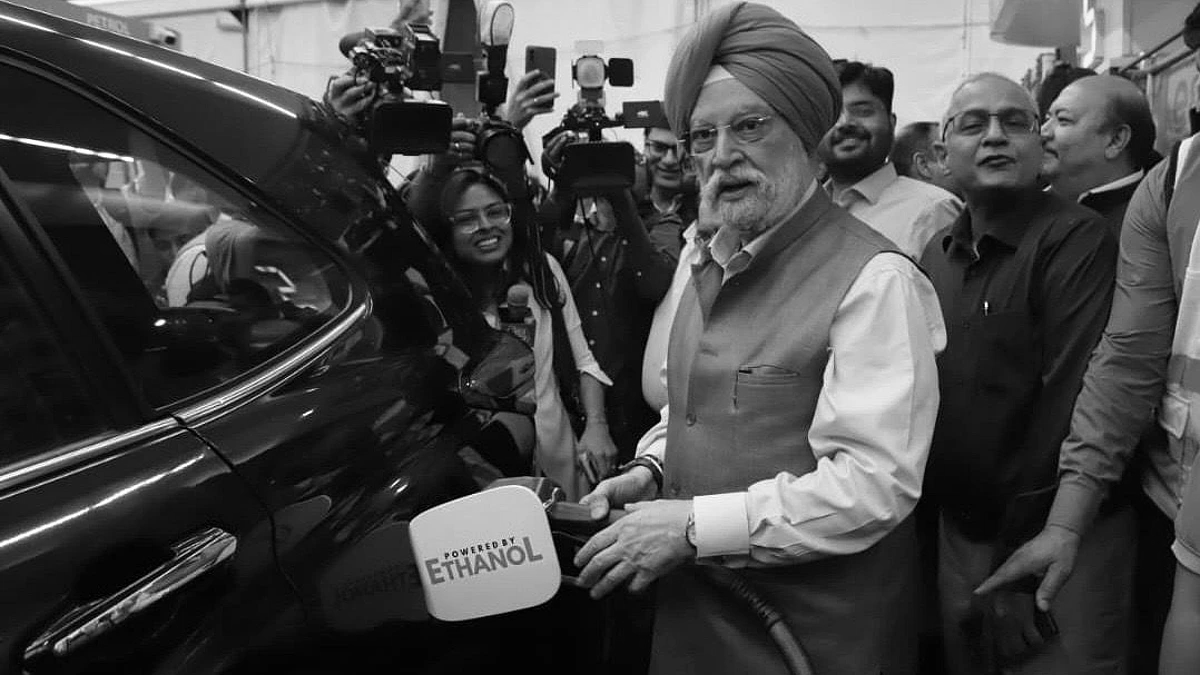
The same week, India formally launched E85 fuel at a Rs 20 per litre discount to normal petrol, a blend of 80–85% ethanol designed exclusively for flex-fuel vehicles. Minister Hardeep Singh Puri announced plans to expand E85 availability to 500 outlets by December 2026 and 5,000 outlets by December 2027 .
India increased ethanol blending from just 1.53% in 2014 to 20% currently , achieving its original target five years ahead of schedule. The programme has saved more than Rs 1.84 lakh crore in foreign exchange and reduced crude oil imports by nearly 302 lakh metric tonnes . If half of all new two-wheelers and passenger vehicles switch to flex-fuel technology, annual ethanol demand could rise by over 312 crore litres , generating roughly Rs 12,403 crore in additional farmer income and cutting CO2 emissions by 66.4 lakh metric tonnes annually.