
India-France Power Play: HAL, Safran Join Forces to Build ‘Aravalli’ Helicopter Engine
India’s new Aravalli helicopter engine is not merely another propulsion project for a future aircraft. Its larger significance lies in an attempt to build deeper Indian capability in one of the most difficult areas of aerospace technology: designing and developing powerful helicopter engines.
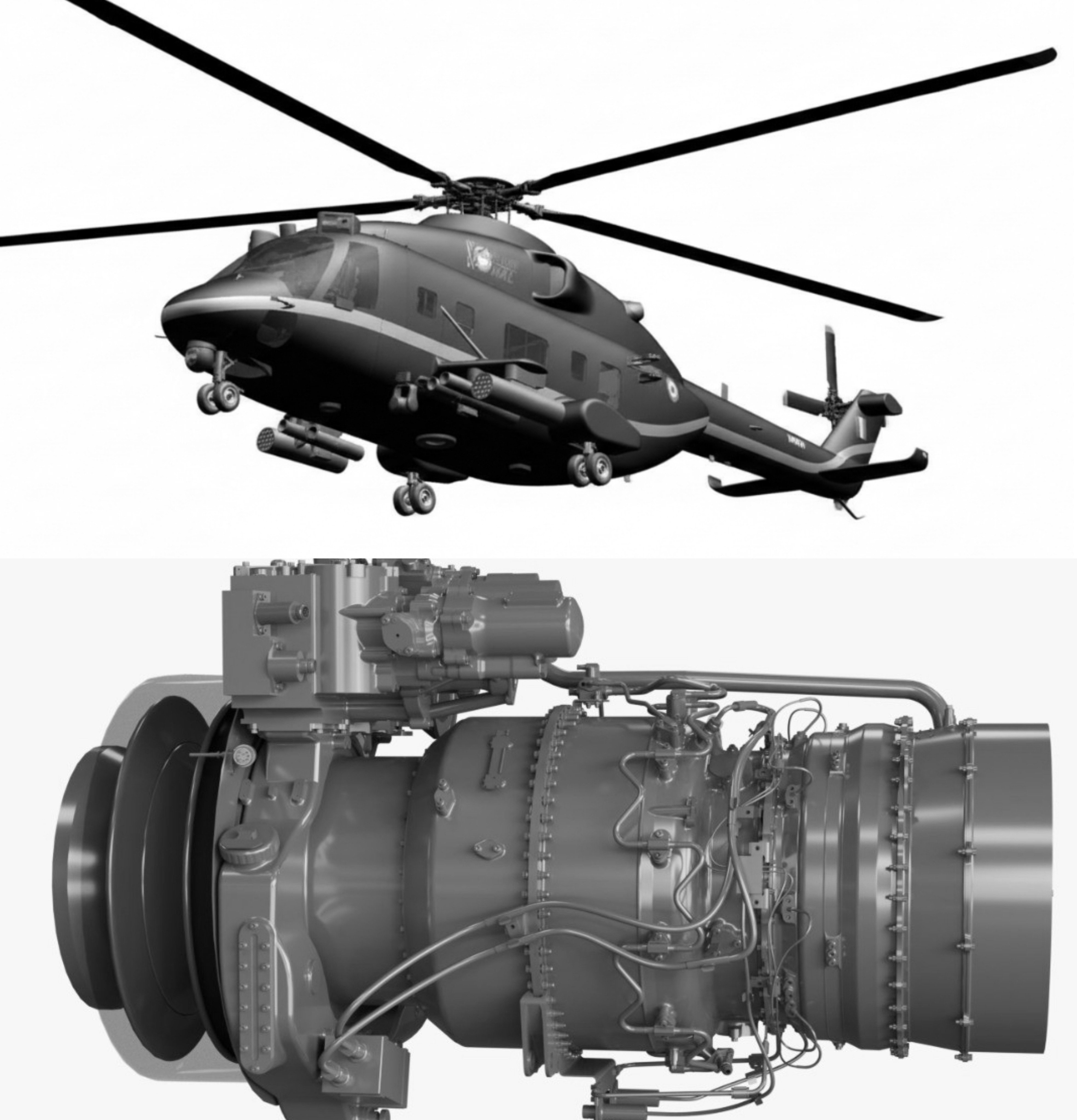
Hindustan Aeronautics Limited (HAL) and France’s Safran Helicopter Engines, through their 50:50 joint venture SAFHAL Helicopter Engines, have signed a contract to jointly design, develop and manufacture the 3,500–4,000 shaft horsepower (shp) engine. Development is expected to be completed by 2032-33.
Aravalli will power HAL’s planned 13-tonne Indian Multi-Role Helicopter (IMRH) and its naval variant, the Deck-Based Multi-Role Helicopter (DBMRH). The platforms are envisaged for military roles as well as potential offshore transportation, utility missions and VVIP transport, giving the engine programme possible applications beyond defence.
The project also represents a shift in India's approach to propulsion. Rather than relying solely on licensed production of foreign-origin engines, Indian engineers will work alongside Safran engineers throughout development. HAL is expected to gain expertise in critical areas such as the high-pressure compressor, power turbine, fuel and oil systems and accessory gearbox. The engine will be manufactured at SAFHAL’s facility in Tumakuru, Karnataka.
Aravalli’s planned power places it in a serious international class. Its 3,500-4,000 shp target is above the roughly 3,000-shp class of America’s GE T901, although the comparison must be treated carefully because the Aravalli is still under development while the T901 builds on decades of GE experience. America’s GE T408, meanwhile, produces about 7,500 shp but serves the much larger CH-53K heavy-lift helicopter and belongs to a different category.
That distinction is important. Aravalli cannot yet be called a world-leading engine because its eventual fuel efficiency, reliability, durability and hot-and-high performance remain to be demonstrated.
Its bigger promise is technological. The programme could strengthen India’s capabilities in engine design, testing, certification, precision manufacturing and maintenance, repair and overhaul, while creating opportunities for Indian suppliers in advanced materials, castings and machining.