
India Gifts Golden Sun Artwork to UN Meditation Room in Geneva
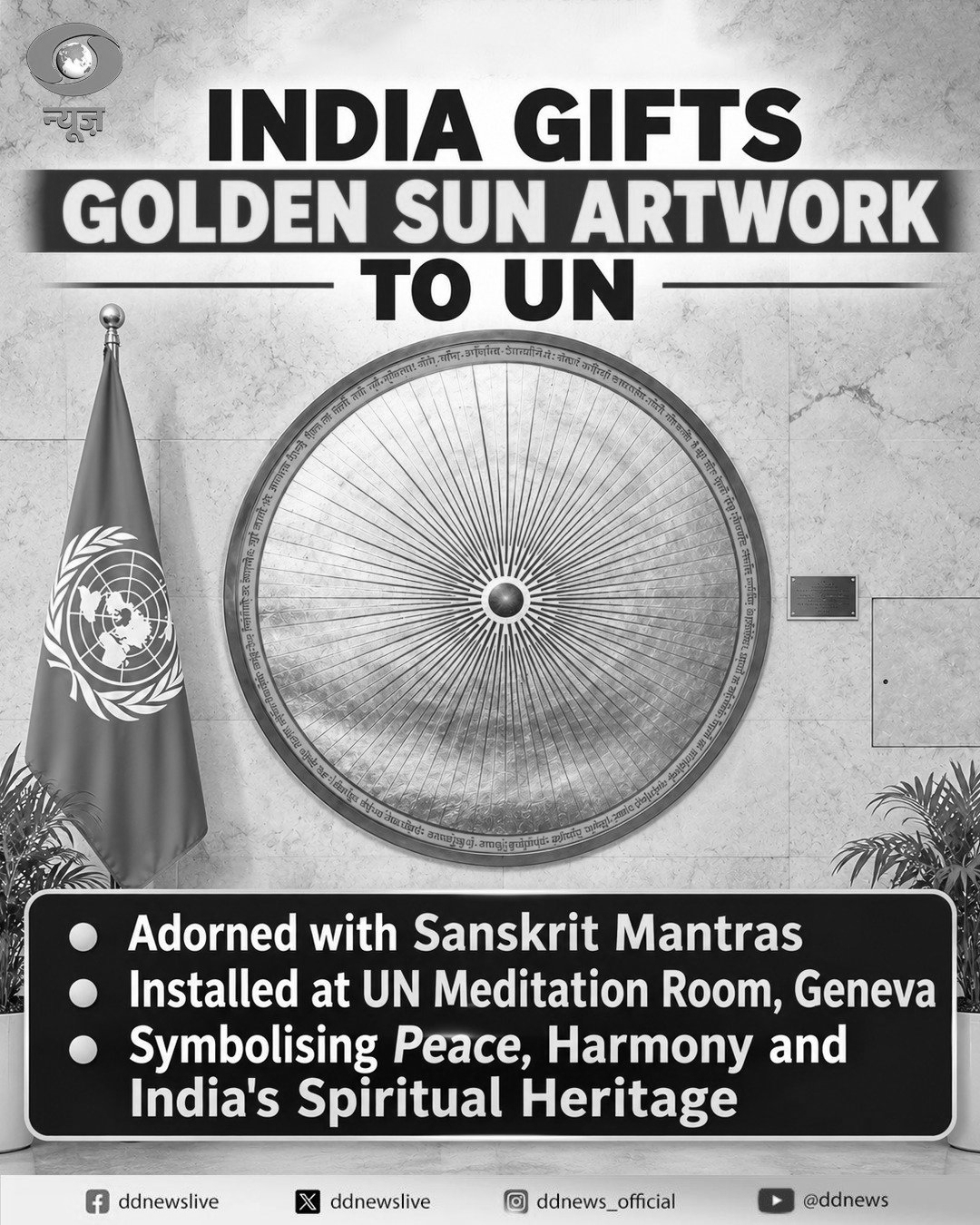
India has gifted a magnificent six-foot-by-six-foot golden sun artwork, adorned with ancient Sanskrit mantras, to the United Nations Office at Geneva, showcasing the country's rich civilisational heritage and timeless philosophy of peace at an international institution. Titled 'The Golden Sun', the artwork was presented by India's Permanent Representative Arindam Bagchi to UN Geneva Director-General Tatiana Valovaya and High Commissioner for Human Rights Volker Türk on November 17 at the newly inaugurated Meditation Room in the Palais des Nations.
Created by Dr Udayraj Gadnis and curated by Jalpa Vithalani, the circular installation features a radiant golden centre surrounded by numerous rays and Sanskrit inscriptions. Its design strongly resembles a Surya Mandala, symbolising the Sun as the source of life, energy, knowledge and spiritual awakening. Rooted in India's ancient traditions, the imagery reflects the belief that light dispels darkness and that inner peace is essential for collective harmony.
The artwork was supported by the Indian Council for Cultural Relations (ICCR), which promotes India's cultural heritage internationally. Established in 1950, the council has strengthened cultural ties through exchanges, scholarships and international programmes.
The Geneva Meditation Room, inaugurated on November 17, provides diplomats, UN personnel and visitors with a space for silence, reflection and renewal. The initiative also reflects the UN General Assembly's decision to declare December 21 as World Meditation Day through Resolution A/RES/79/137, adopted in December 2024, recognising meditation's contribution to health, well-being and global peace.
Bhutan also contributed an artwork titled 'The Center of the Mind', created by artist Kinzang Chojay. Its concentric rings represent different states of consciousness, while emerging light symbolises wisdom and compassion.
The initiative recalls the UN's original Meditation Room in New York, established in 1952 and redesigned under former Secretary-General Dag Hammarskjöld, who envisioned silence as an essential element of international peace.
India's contribution reinforces Vasudhaiva Kutumbakam, or 'the world is one family', highlighting how ancient spiritual traditions can promote universal understanding, coexistence and harmony beyond national and cultural boundaries.