
India, Japan Expand Strategic Partnership With Focus On Defence, Trade And Technology
India and Japan have agreed to significantly expand defence cooperation, strengthen critical supply chains and deepen collaboration in advanced technologies, including semiconductors, artificial intelligence and clean energy, as the two countries seek to respond to growing geopolitical and economic uncertainties in the Indo-Pacific region.
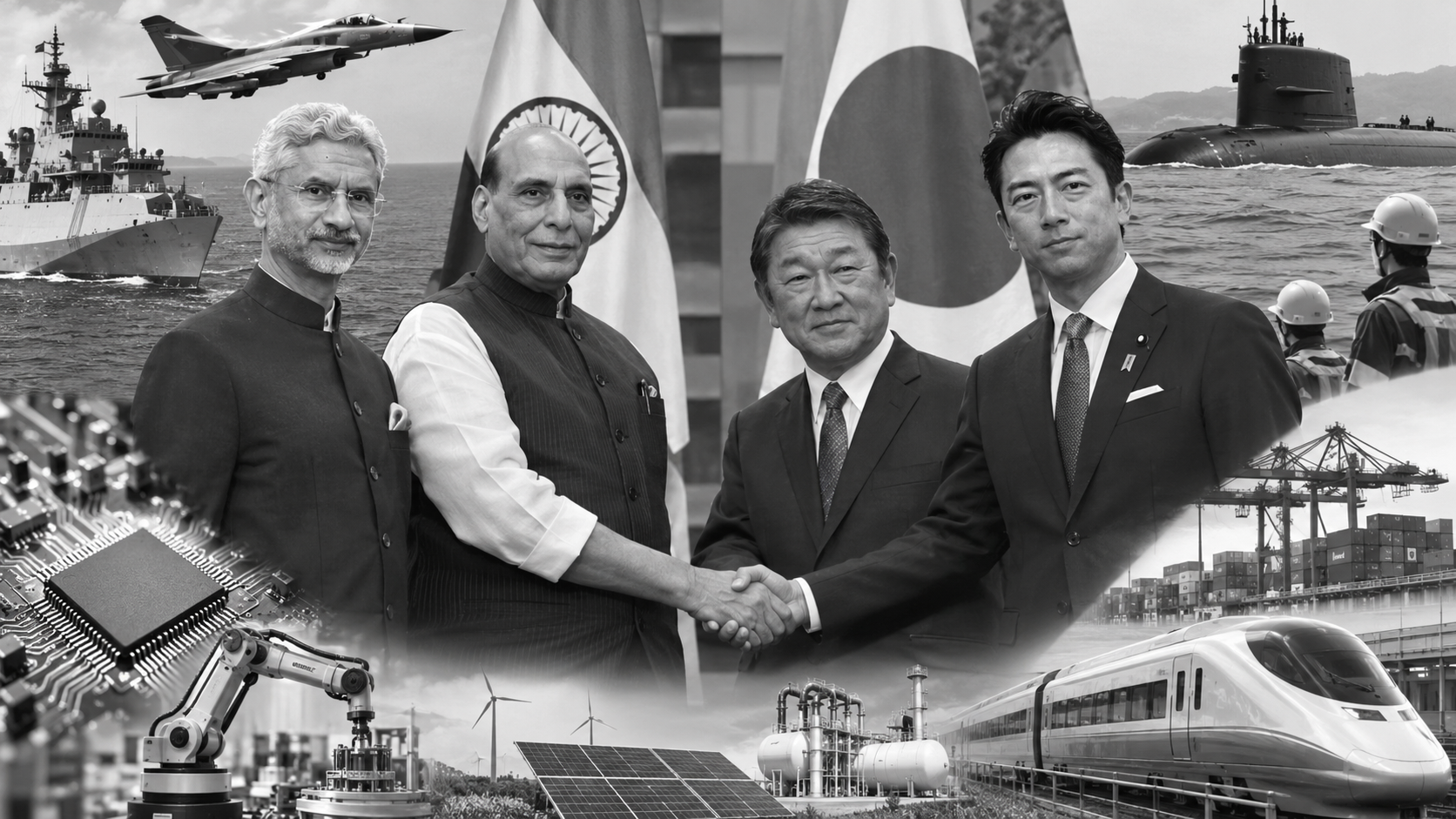
At the fourth India-Japan 2+2 Foreign and Defence Ministerial Dialogue in Tokyo, External Affairs Minister S Jaishankar, Defence Minister Rajnath Singh, Japanese Foreign Minister Toshimitsu Motegi and Defence Minister Shinjiro Koizumi expressed concern over economic coercion, arbitrary export restrictions and supply-chain disruptions. They agreed to accelerate cooperation in missile and underwater technologies, maritime security and defence manufacturing.
A Letter of Intent will facilitate the use of Indian firing ranges by Japan's Self-Defence Forces for military training, including planned live-fire exercises involving surface-to-ship missiles. The countries also agreed to advance DRDO–ATLA defence research, explore joint naval shipbuilding and strengthen mine-countermeasure capabilities. Under the UNICORN project, they will co-develop integrated antenna masts for Indian Navy warships, with India expected to accord Acceptance of Necessity by February 2027. Cooperation will also cover maritime-domain awareness, search and rescue, information-sharing and humanitarian assistance.
The ministers highlighted growing military engagement through Malabar 2026, JAIMEX 2026 and Veer Guardian 26, which marked the first visit of Japanese Air Self-Defence Force fighter aircraft to India. The fifth Coast Guard Commandant-level meeting is scheduled for February 2027.
Economic security emerged as another priority, with both sides identifying semiconductors, critical minerals, information technology, clean energy and pharmaceuticals as strategic sectors. Bilateral trade reached US$27.47 billion in FY 2025–26, comprising Indian exports of US21.43 billion, leaving a trade deficit of US$15.39 billion. India's exports include engineering goods, chemicals, marine products and pharmaceuticals, while Japanese shipments are dominated by machinery, electronics, metals and transport equipment.
The countries are accelerating the review of their Comprehensive Economic Partnership Agreement (CEPA), effective since August 2011. Discussions in March and August 2026 focused on improving market access and expanding Indian exports of textiles, agriculture, pharmaceuticals and services.
Japanese cumulative FDI in India reached US$48.14 billion by March 2026, making Japan the fifth-largest investor. Both countries have set a JPY 10 trillion private-investment target over the decade following their August 2025 summit. Around 1,434 Japanese companies operate nearly 5,200 establishments in India.
Cooperation is expanding in semiconductors, AI and critical minerals, including the Renesas–CG Power semiconductor facility in Gujarat, Toyota Tsusho's rare-earth project in Andhra Pradesh and proposed clean-ammonia cooperation in Odisha. India's semiconductor demand is projected to reach US$150 billion by 2032.
The partnership also encompasses Japanese development assistance exceeding JPY 8.5 trillion since 1958, renewable energy, high-speed rail, digital connectivity and skilled-worker exchanges. The countries aim to facilitate 500,000 people-to-people exchanges over five years, including 50,000 Indian skilled and semi-skilled workers travelling to Japan.
Reaffirming cooperation through the Quad, the ministers supported a free and open Indo-Pacific, counterterrorism efforts and United Nations Security Council reform. They also agreed to commemorate 75 years of diplomatic relations in 2027. The next 2+2 dialogue will be held in India.