
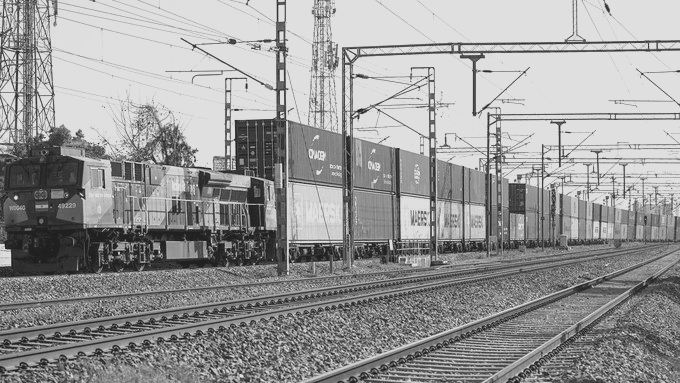
India Joins Elite Heavy-Haul Rail Club, Eyes Lower Logistics Costs
India has joined an exclusive group of nations operating heavy-haul freight railway systems , a milestone that could significantly reduce logistics costs, improve freight efficiency, and strengthen the country's global competitiveness.
Speaking at the International Heavy Haul Seminar 2026 in New Delhi, Dedicated Freight Corridor Corporation of India Limited (DFCCIL) Managing Director Praveen Kumar said India is looking to adopt global best practices and advanced technologies to enhance the safety, reliability, and efficiency of freight operations.
The two-day seminar, organised jointly by DFCCIL and the Centre for Heavy Haul Rail Research and Development, brought together railway experts, policymakers, researchers, and technology providers from around the world. Discussions focused on innovations such as AI-based predictive maintenance, autonomous inspection systems, and advanced monitoring technologies aimed at modernising freight rail operations.
Kumar noted that only a handful of countries, including the United States, China, Australia, Brazil, Sweden, and South Africa, operate heavy-haul freight systems. With the successful implementation of the Eastern and Western Dedicated Freight Corridors (DFCs) , India has now entered that league.
He emphasised that reducing logistics costs has been a core objective of the DFC programme. While global logistics costs typically account for 7-8 per cent of GDP, India's logistics costs remain significantly higher at 13-14 per cent. According to Kumar, studies have already indicated a decline in logistics costs following the operationalisation of the dedicated freight corridors.
Looking ahead, DFCCIL has been entrusted with constructing the proposed East-West Dedicated Freight Corridor , a 2,100-km double-line electrified route connecting Dankuni in West Bengal with the Surat region of Gujarat.
India's entry into the heavy-haul railway club marks a major step in transforming freight transportation, with the potential to lower supply-chain costs, improve industrial competitiveness, and support long-term economic growth.