
India Recasts Pilot Training Strategy to Meet Aviation Workforce Demand
India’s aviation expansion is entering a crucial new phase in which pilot training, safety and workforce development are emerging as important as airports and aircraft. With Indian airlines placing aircraft orders on an unprecedented scale and regional connectivity expanding, the government is now seeking to build a domestic aviation-skills ecosystem capable of producing a much larger pool of professionally trained, safety-conscious and airline-ready pilots.
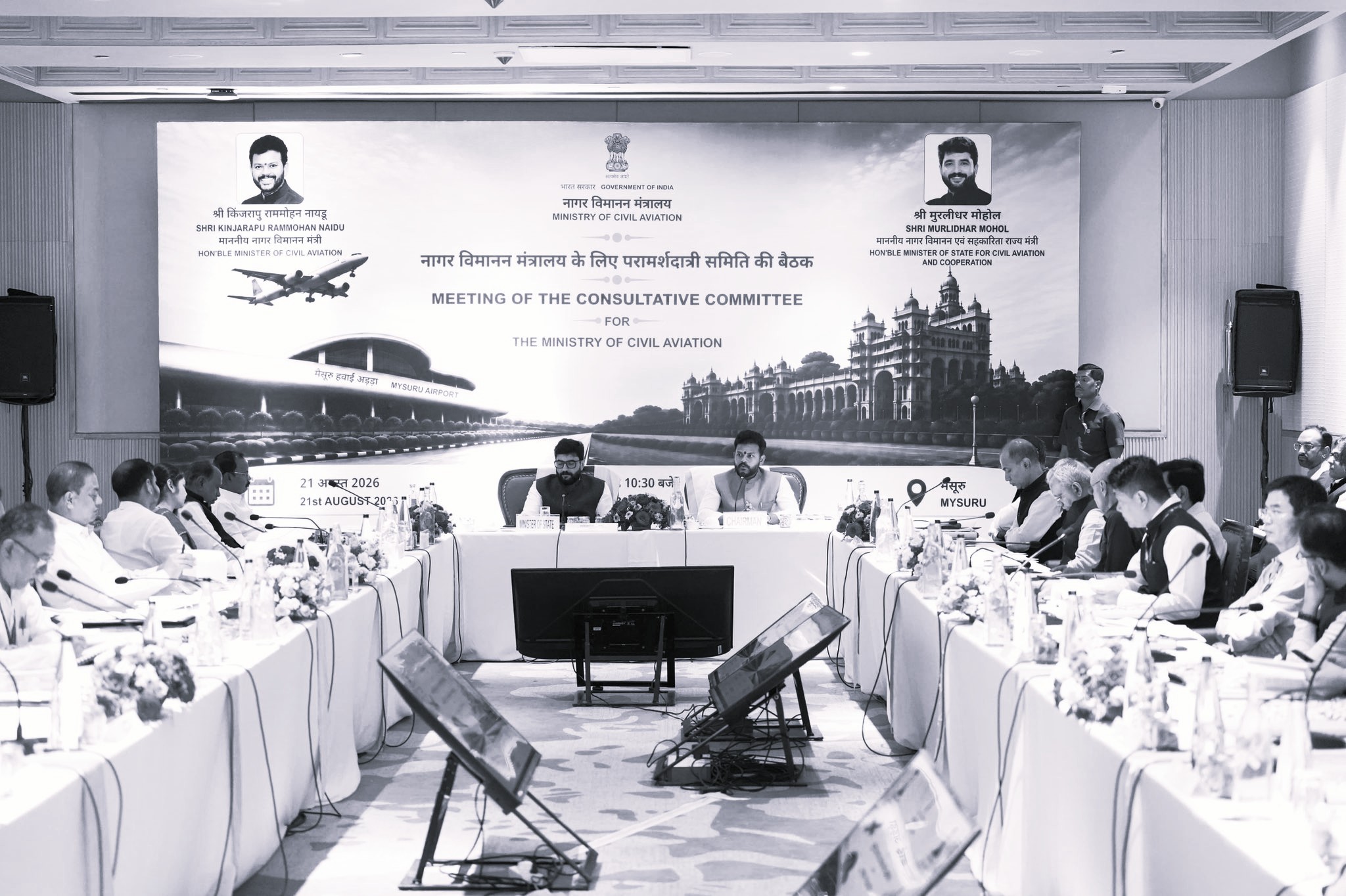
The issue came into focus at the Parliamentary Consultative Committee of the Ministry of Civil Aviation meeting in Mysuru, chaired by Civil Aviation Minister Kinjarapu Ram Mohan Naidu in the presence of Minister of State Murlidhar Mohol. The committee met outside Delhi for the first time since 2017 and discussed the Next Phase of UDAN, Flying Training Organisation (FTO) reforms and the transformation of IGRUA.
Naidu said aviation growth was moving beyond major destinations and airport development to become an engine of regional development and inclusive economic growth, benefiting farmers, exporters, businesses and communities. He also highlighted emerging opportunities in drones, eVTOLs, MRO and air cargo.
The government has committed ₹28,840 crore under the Next Phase of UDAN, following around ₹10,000 crore invested over the past decade in airport development and airline viability-gap funding. The new allocation is for regional connectivity and wider aviation infrastructure, rather than being a dedicated pilot-training budget.
The urgency surrounding pilot training is reflected in the expansion of India's FTO network. The number of FTOs has increased from 32 in 2020 to 41 in 2026, while flying bases have risen from 32 to 63. The government has also introduced an FTO ranking framework to improve transparency and accountability and help aspiring pilots make informed choices.
At IGRUA, aircraft utilisation has reached an average of 1,765 flying hours per aircraft annually, above the global benchmark of around 1,500 hours. The institution has also achieved a budget surplus after more than two decades of recurring deficits, highlighting efforts to improve operational efficiency.
However, the next challenge is not merely producing more pilots but producing airline-ready professionals. India's training framework can draw from international best practices such as ICAO's Competency-Based Training and Assessment, which focuses on decision-making, communication, situational awareness, workload management, problem-solving and teamwork rather than relying solely on prescribed flying hours.
Greater use of evidence-based and scenario-based training, advanced simulators and stronger Crew Resource Management could prepare trainees for emergencies, automation failures, severe weather and high-workload situations. India could also strengthen instructor-development programmes and airline-FTO partnerships to bridge the gap between obtaining a Commercial Pilot Licence and entering airline operations.
Indian students continue to train abroad, making international competitiveness an important concern. Rather than simply discouraging overseas training, India needs to improve domestic infrastructure, instructor quality, simulation and research so that its FTOs can offer globally competitive training at home.
The government's emerging objectives are therefore clear: expand pilot supply, improve FTO quality, strengthen safety, adopt competency-based training, develop instructors, expand simulation, support aviation research and prepare manpower for drones and eVTOLs.
With India expected to require 30,000–40,000 additional pilots over the coming decade, the country's aviation ambitions will depend not only on aircraft and airports, but on its ability to develop a world-class aviation workforce without compromising safety standards.